
Lycia Guide: History, Culture and Nature of the Land of Light
The Lycia Guide is a digital companion for exploring the Land of Light, stretching from the Dalaman River in the west to Kemer in the east. Known today as the Teke Peninsula, this land was home to an Anatolian civilisation whose roots reach back to the Lukka of the Bronze Age. Beyond its turquoise coastline, it draws history lovers and nature enthusiasts with tombs carved into steep cliffs, the traces of the Lycian League that united its cities in a federation, and one of the world’s finest long-distance walking routes.
In this guide you will find the essentials for getting to know the region, from Lycian history and its ancient cities to the stages of the Lycian Way and practical travel tips.
📌 Contents
Lycian History and the Lycian League
Understanding Lycia begins with its distinctive political and cultural past. Known in Hittite texts as the “Lukka”, this Anatolian people were known for their own language, Lycian, a relative of Luwian, and for their fierce devotion to independence.
- The Lycian League: Attested from the 2nd century BC, the League brought the cities of Lycia together in a federal structure. According to Strabo, its 23 member cities were represented by one, two or three votes according to their size. In The Spirit of the Laws, Montesquieu wrote: “Were I to give a model of an excellent confederate republic, I should pitch upon that of Lycia.” The League was later cited as an example in the debates surrounding the drafting of the US Constitution.
- A Distinctive Art: The Lycians blended their Anatolian identity with Persian and Greek influences to create house-shaped rock-cut tombs, pillar tombs and pointed-lid sarcophagi distinctive to Lycia. For more on this tradition, see our Lycian Architecture page.
Open-Air Museum: The Ancient Cities of Lycia
The Lycian landscape is dotted with dozens of ancient cities, each telling a different story. Below are the six great cities which, according to Strabo, held three votes in the League:
The Six Great Cities of the Lycian League
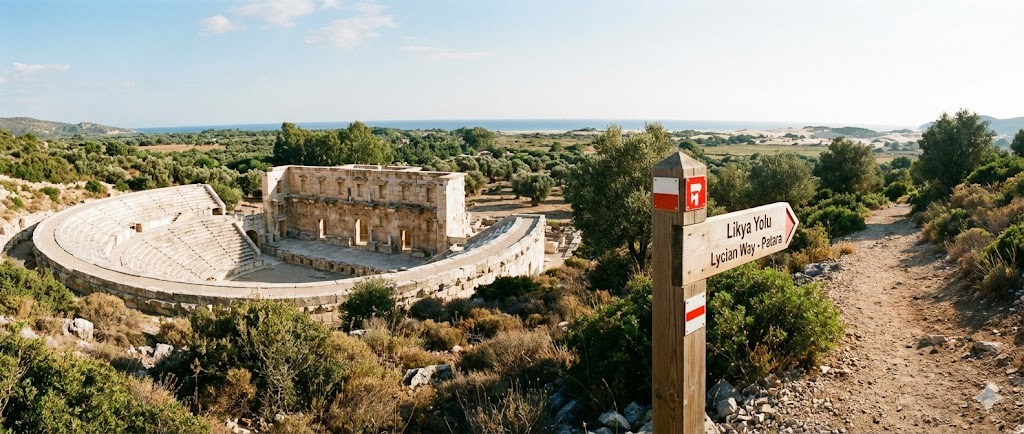
- Patara: The harbour city regarded as the League’s centre in the Roman period, home to its assembly hall. See our Lycian Beaches page for details on the beach.
- Xanthos: Xanthos: Lycia’s leading city in the Classical period and, together with the Letoon, a UNESCO World Heritage Site (Xanthos-Letoon). According to ancient sources, its people twice chose collective death over surrender, first to the Persians and later to the Romans.
- Pinara: A city at the foot of Babadağ, surrounded by hundreds of rock-cut tombs. Its name is said to mean “round” in Lycian.
- Tlos: Traditionally the home of the winged horse Pegasus and the hero Bellerophon, famous for its striking acropolis.
- Myra: A centre of faith known for its rock-cut tombs and the Church of St Nicholas, the saint behind the figure of Santa Claus.
- Olympos: A valley city once used as a pirate refuge, where nature and history intertwine. See our Lycian Accommodation Guide for places to stay.
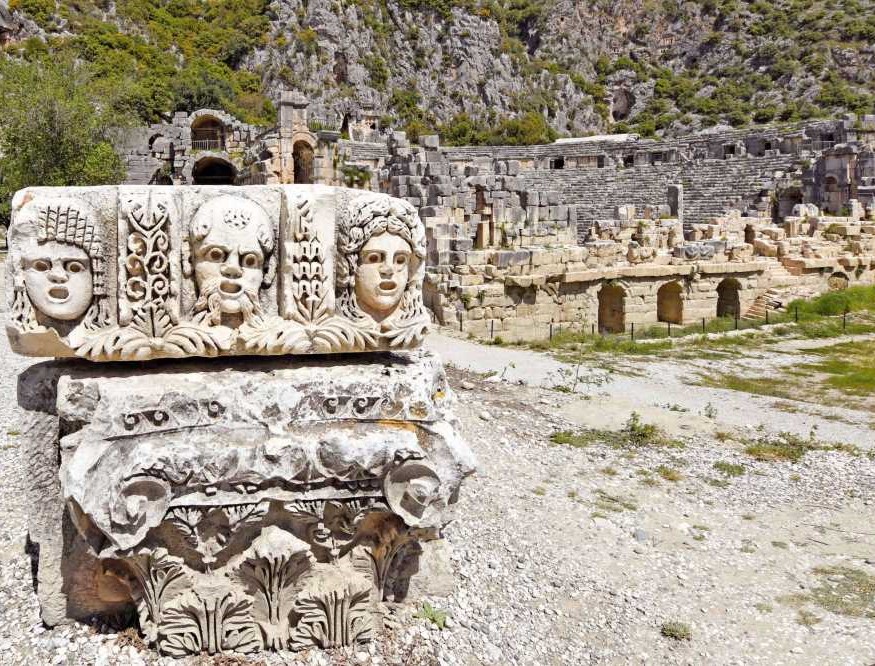
💡Lycia is home to a great many ancient settlements, and this site features 47 of them. Strabo mentions 23 cities voting in the League in his day. You can find the full list and detailed guides to each city via the button below.
Step by Step Freedom: The Lycian Way and Its Routes
Named by The Sunday Times as one of the world’s top ten long-distance walks, the Lycian Way is around 540 kilometres long. Opened in 1999 under the leadership of Kate Clow, the route is today maintained by the Culture Routes Society. The region also offers complementary trails, such as the Fethiye Alternative Walking Routes prepared by Ersin Demirel and Nihat Tokdil.
Sections of the Lycian Way
- Western Section (Fethiye – Kalkan): The most popular stages for their views, starting above Ölüdeniz and continuing past Butterfly Valley to ancient cities. A good place to see maquis plants up close.
- Central Section (Kaş – Kekova – Demre): Stages following the coastline and sunken ruins, closely tied to the sea. Ideal for Lycian Sea activities.
- Eastern Section (Finike – Antalya): Demanding stages through cedar forests, climbing the slopes of Mount Tahtalı (2,366 m). A good chance to see plants of the high mountain zone.
Travel Planning Tips
Keep these four points in mind to explore the Land of Light with ease:
- Museum passes: Foreign visitors can use the Museum Pass Türkiye, or the Museum Pass Mediterranean for this region, to visit sites run by the Ministry of Culture and Tourism. (The MüzeKart is only available to Turkish citizens and residents.) Many unexcavated ancient cities are free to enter.
- Season: The best times for walking are spring (March–May) and autumn (September–November). Summer heat makes walking difficult.
- Equipment: The Lycian Way crosses steep, rocky terrain in places. Ankle-supporting boots, plenty of water and an offline GPS or map app are essential.
- Transport: To explore the region, you can rent a car or use the transfer services offered to Lycian Way walkers.
Cultural Heritage and Responsible Travel
The Lycia Guide is not only a travel resource but also a call to protect this heritage. Not damaging the stones of ancient cities, not climbing on sarcophagi and not moving any archaeological fragment is our debt to future generations. Please read our Sustainable Travel and Ethics Guide for our full set of principles.
🏛️ Official Sources
For the most accurate information on excavation histories, opening hours and the current state of the Lycian Way, please refer to the official sources of the Ministry of Culture and Tourism of the Republic of Türkiye, the UNESCO World Heritage Centre and the Culture Routes Society, founded by Kate Clow, who created the Lycian Way. These sources were also used in preparing this guide.
❓ Frequently Asked Questions
How long does it take to walk the whole Lycian Way?
The full route takes about 25–30 days. We recommend splitting it into sections of 3–4 days and completing it over several trips.
Is there an entrance fee for the ancient cities?
Sites run by the Ministry of Culture and Tourism charge an entrance fee. Foreign visitors can use the Museum Pass Türkiye or the Museum Pass Mediterranean, while the MüzeKart is available to Turkish citizens and residents. Many unexcavated ancient cities are free to enter.
Which are the most impressive tombs in Lycia?
The Tomb of Amyntas in Fethiye and the Lion Tomb (Aslanlı Lahit) in Kaş are among the region’s most iconic monuments.