

Lycian Architecture: The Story of Wood Turned into Stone
Lycian architecture is a great memory carved in stone, recording the Land of Light’s sense of beauty, its social structure and its relationship with death. By translating the details of their wooden houses into limestone, the Lycians created a burial tradition with few parallels in the ancient world. Today it inspires architects and travellers as much as archaeologists.
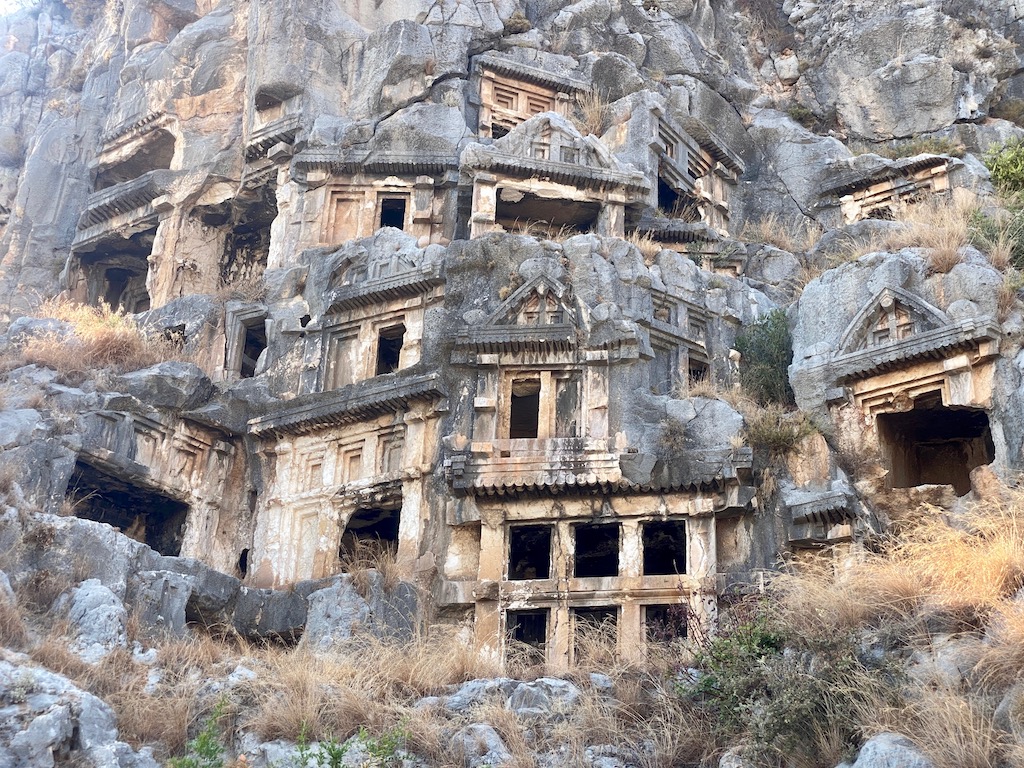
The most distinctive feature of Lycian architecture is the faithful copying of woodwork in stone. None of Lycia’s wooden houses has survived, but thanks to the façades of its rock-cut tombs we know quite well what they looked like.
📌 Contents
🏛️ 1. House-Type Rock-Cut Tombs
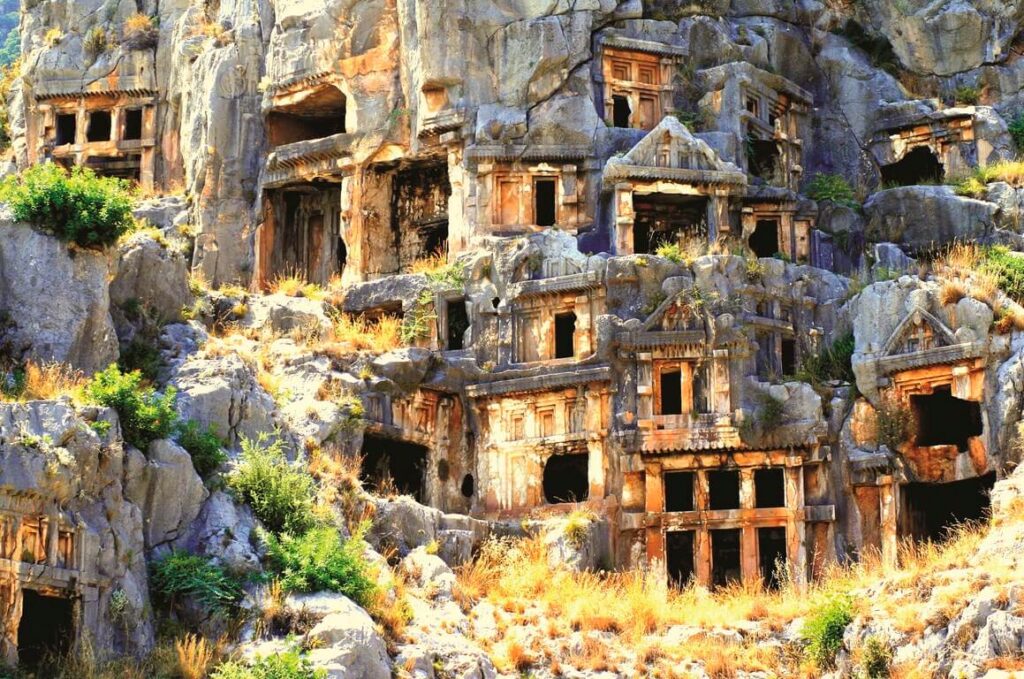
Lycia’s best-known monuments, the rock-cut tombs, recreate the houses of the living in stone. Most date from the 5th and 4th centuries BC.
- Façade details: The round beam ends, door and window frames, roof beams and panelled doors on the tomb façades are faithful stone copies of wooden Lycian houses.
- Myra and Pinara: The cliff beside the theatre at Myra and its sea necropolis, and the hundreds of tombs covering the sheer cliff behind Pinara, are the most impressive examples of this tradition.
- Inside the tomb: Rock-cut tombs usually contain stone benches on which the dead were laid. The interiors are plain compared with the decorated façades.
🏛️ 2. Temple-Fronted Rock-Cut Tombs
In the 4th century BC, Lycian architecture was also influenced by Greek architecture, and some rock-cut tombs were carved with façades like columned temples. The most famous example is the Tomb of Amyntas in Fethiye (ancient Telmessos). With its Ionic columns and pediment overlooking the town, it is one of Fethiye’s landmarks.
🏛️ 3. Lycian Sarcophagi
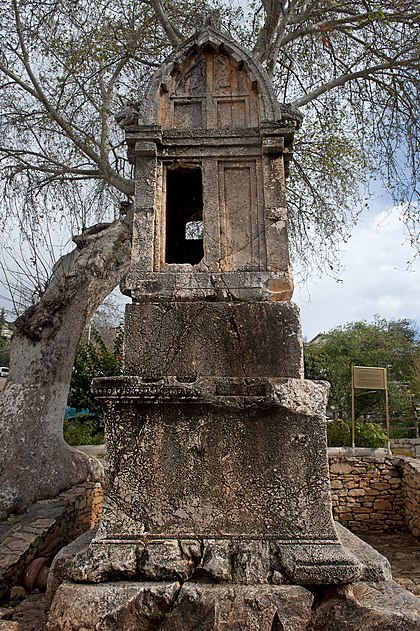
Lycian sarcophagi are instantly recognisable by their high bases and their pointed-arch lids, which resemble an upturned boat.
- The lid: This lid shape, unique to Lycia, was also inspired by timber roof structures. Some lids carry lion heads, scenes of battle and hunting, or reliefs connected with the tomb’s owner.
- The base: Many sarcophagi stand on a base (hyposorion) that served as a separate burial chamber.
- Social meaning: Large, decorated sarcophagi placed at prominent points in the city or along roads displayed the wealth and standing of their owners.
🏛️ 4. Pillar Tombs and Monumental Tombs
- Pillar tombs: In these tombs, unique to Lycia, a small burial chamber sits on top of a tall, single-piece stone pillar. They usually belonged to members of ruling dynasties. The most famous is the Harpy Monument at Xanthos. Its original reliefs are now in the British Museum, with copies in place on site.
- Monumental tombs (heroa): Large, temple-shaped tomb monuments richly decorated with reliefs. The Nereid Monument at Xanthos was the grandest of them. It was taken to England in the 19th century and is now displayed in the British Museum. The reliefs of the heroon at Trysa are in Vienna.
🏛️ 5. The Architecture of the Cities: Theatres and Council Houses
Lycian architecture is not only about tombs. Lycian cities were skilfully set into steep terrain.
- Theatres: The Greek tradition of building theatres against a hillside meets the arched entrances and stage buildings of the Roman period in Lycian theatres. Those at Patara, Myra, Xanthos and Kaş are impressive examples.
- Council houses and agoras: These were the centres of city government and trade. The council house at Patara, identified as the meeting place of the Lycian League, has been brought back to life through restoration.
Tomb Types in Lycian Architecture
| Tomb type | Most distinctive feature | Key example |
|---|---|---|
| House-type rock-cut tomb | Wooden house façade carved into rock | Myra, Pinara |
| Temple-fronted rock-cut tomb | Columned temple façade | Fethiye (Telmessos), Tomb of Amyntas |
| Sarcophagus | High, pointed-arch lid | Kaş, Lion Sarcophagus |
| Pillar tomb | Burial chamber on a tall single-piece pillar | Xanthos, Harpy Monument |
| Monumental tomb (heroon) | Large temple-shaped monument with reliefs | Xanthos, Nereid Monument (British Museum) |
Stone and Landscape
Lycia’s limestone played a major role in the development of this architecture. Easy to carve yet durable, it allowed masons to work even the finest details. Tombs carved into the bedrock were also less affected by earthquakes than free-standing buildings. For more, see our Lycian Geology and Earthquakes page.
Tips for Travellers
- The Lion Sarcophagus in Kaş: It stands at the top of Uzun Çarşı, so you can see it while walking through the town. Visit Kaş’s ancient theatre too.
- The Tomb of Amyntas in Fethiye: A short walk from the town centre, with a wonderful view over the Gulf of Fethiye at sunset.
- Myra and Pinara: The places where rock-cut tombs are seen in the greatest numbers.
- For photography: Photograph rock-cut tombs when the sun falls directly on their façades. Late morning works well for south-facing façades, and sunset for west-facing ones.
For opening hours and entry fees, see muze.gov.tr.
A Memory Written in Stone
Lycian architecture is the most tangible record of a people’s relationship with nature, death and time. Protecting this heritage means protecting not only the past, but an approach to art in which beauty and craftsmanship come together. For more of Lycia’s heritage, explore our Lycian Memory section.
❓ Frequently Asked Questions (FAQ)
Why are Lycian tombs in high places?
There is no single answer. Scholars think that tombs carved into high cliffs were placed where they could be seen from afar to display their owners’ standing, and that height also helped protect them. Some scholars also link this to beliefs about the carrying of souls of the dead.
What are rock-cut tombs like inside?
They usually contain stone benches on which the dead were laid. The interiors are plain and practical compared with the decorated façades.
How did Lycian buildings withstand earthquakes?
Lycian builders raised strong walls of large, mortarless stone blocks joined with metal clamps. Rock-cut tombs, carved directly into the bedrock, were also less affected by earthquakes than free-standing buildings.