
Belief in Lycia: A Layered Heritage from the Mother Goddess to the Saints
Belief in Lycia is a long story made of layers added one upon another over thousands of years. They stretch from gods of Anatolian origin to the cults of Leto and Apollo, and from St Nicholas to the shrines visited by the Yörüks. In this land, faith lived not only in temples, but also in sacred places on mountain tops, at springs and in the shade of ancient trees.
Each new community found places that those before them had held sacred, and gave them new meaning through its own faith. The story of belief in Lycia is the story of different peoples seeking the sacred in the same land.
📌 Contents
- Anatolian Roots: Lycia’s Own Gods
- Letoon: Sanctuary of the Lycian League
- The Oracle of Patara
- Sacred Places in the Mountains
- What the Inscriptions Tell Us
- Christianity and St Nicholas
- The Turks, Islam and Yörük Folk Belief
- The Layers of Belief in Lycia
- Tips for Travellers
- Frequently Asked Questions
- Sources
🏛️ 1. Anatolian Roots: Lycia’s Own Gods
Lycia’s religious world was rooted in Anatolia. Many Lycian gods, known in Greek sources by the names of Greek gods, were in fact Anatolia’s ancient deities:
- Trqqas: Lycia’s storm god. His name is the Lycian form of Tarhunt, the storm god of the Hittites and Luwians. The Greeks equated him with Zeus.
- The mother goddess: Referred to in Lycian inscriptions by a word meaning “mother”, this goddess was identified by the Greeks with Leto.
- Maliya: A goddess known from Luwian religion, whom the Greeks equated with Athena.
For more on these gods, see our article on The Anatolian Roots of Lycia.
🏛️ 2. Letoon: Sanctuary of the Lycian League
Letoon, near Xanthos, with its three temples dedicated to Leto and her children Apollo and Artemis, was Lycia’s most important sanctuary. As the shared sanctuary of the Lycian League, it hosted the League’s major ceremonies and festivals. According to legend, Leto took refuge in Lycia with her children, which explains the region’s devotion to her. Together with Xanthos, Letoon is on the UNESCO World Heritage list.
🏛️ 3. The Oracle of Patara
Patara was known in the ancient world for its oracle of Apollo. Herodotus writes that Apollo’s priestess at Patara gave prophecies only at certain times of the year, and Apollo was believed to spend the winter at Patara and the summer on Delos.
🏛️ 4. Sacred Places in the Mountains
- Chimaera (Yanartaş): Near Olympos, where natural gas escaping from the ground has burned for thousands of years, this place was considered sacred in antiquity. The remains of a sanctuary dedicated to Hephaestus, god of fire and metalworking, can be seen here.
- Kakasbos: In the mountainous interior of Lycia, many reliefs have been found dedicated to Kakasbos, shown as a mounted god carrying a club. This local god of the countryside shows the ancient traces of Anatolian folk belief.
🏛️ 5. What the Inscriptions Tell Us
We learn about Lycia’s religious world not only from its temples, but also from its inscriptions. The most famous is the Trilingual Inscription from Letoon, written in Lycian, Greek and Aramaic. Dating from the 4th century BC, it records the founding of a new cult at Xanthos, the appointment of its priest and how the cost of its sacrifices was to be met. Because it was written in three languages, it also played a major role in deciphering Lycian. The inscription is now on display in the Fethiye Museum.
🏛️ 6. Christianity and St Nicholas
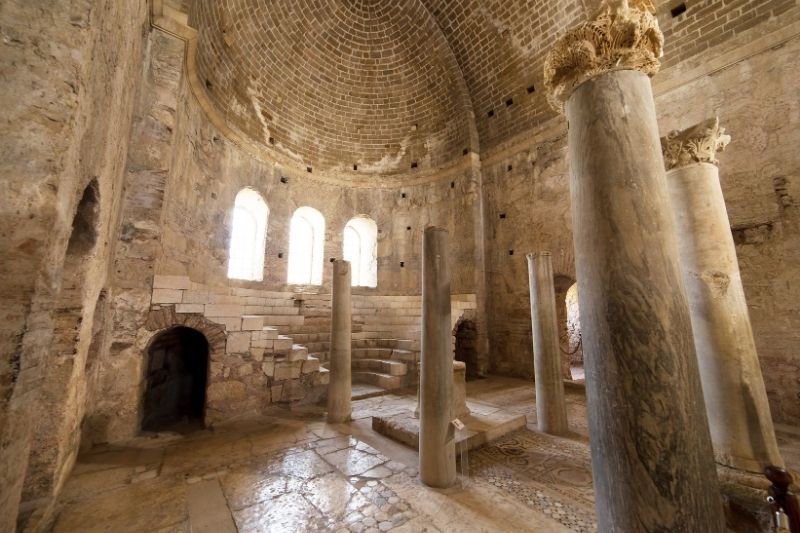
Christianity reached Lycia early. According to the Acts of the Apostles, St Paul passed through Patara and Myra on his journeys.
- St Nicholas: Bishop of Myra in the 4th century AD and, according to tradition, born in Patara, St Nicholas became one of the world’s best-known saints through the stories of his generosity. Today he is known as the origin of the Santa Claus figure.
- The church at Myra: Built over the place of St Nicholas’s tomb, the church was renewed many times over the centuries of the Eastern Roman (Byzantine) period. Commemorations are held here every year on 6 December.
- Old sacred places transformed: Many ancient buildings in the region were turned into churches, or their stones were reused in new churches.
🏛️ 7. The Turks, Islam and Yörük Folk Belief
Turkic communities have a long history of ties with Anatolia. In Lycia, the Turkish presence became established when the Seljuks took Antalya in 1207, and Turkish-Islamic culture took a lasting place in the region under the Teke Beylik, founded in the 14th century. The modern name of the Teke Peninsula comes from this beylik.
- Yörük folk belief: The Yörüks, who lived a semi-nomadic life in the mountains, practised Islam through a folk belief closely tied to nature. The tradition of visiting shrines and the tombs of holy men near old trees, springs and mountain tops is still widespread in the region.
- The Lodge of Abdal Musa: Located in the village of Tekke near Elmalı, the lodge bears the name of Abdal Musa, who lived in the 14th century. It is one of the most important centres of folk belief in the region, and welcomes visitors with commemorations every year.
- Layers meeting: Some of the mountains, springs and trees held sacred in antiquity continued to be revered by different faiths in later centuries.
The Layers of Belief in Lycia
| Period | Key beliefs and figures | Symbolic site | Main feature |
|---|---|---|---|
| Anatolian roots | Trqqas, the mother goddess, Kakasbos | Mountain and rural sanctuaries | Anatolia’s ancient gods |
| Antiquity | Leto, Apollo, Artemis | Letoon, Patara | Shared ceremonies and oracles |
| Eastern Roman (Byzantine) | St Nicholas | The church at Myra | Charity and pilgrimage |
| Turkish-Islamic period | Yörük folk belief, holy men | Lodge of Abdal Musa, shrines | Folk belief close to nature |
Tips for Travellers
- Letoon: Explore the sanctuary where the three temples stand side by side, and see the sacred pool and theatre too.
- Yanartaş (Chimaera): The flames are most impressive in the evening. The path is short but steep, so bring a torch.
- Myra and Demre: After the rock-cut tombs and theatre, visit the Church of St Nicholas.
- Elmalı: Visit the Lodge of Abdal Musa and Elmalı’s historic mosques to see the region’s folk belief up close.
- Fethiye Museum: Stop by to see the Letoon Trilingual Inscription.
For opening hours and entry fees, see muze.gov.tr.
A Sacred Heritage
Belief in Lycia is not just an ancient mythology; it is the story of the bond with the sacred that people living on this land have formed over thousands of years. Understanding this heritage in all its layers is also a way of understanding the region today. For more of Lycia’s heritage, explore our Lycian Memory section.
🏛️ Frequently Asked Questions (FAQ)
When did the Turks settle in Lycia?
Turkic communities have a long history of ties with Anatolia. In Lycia, the Turkish presence became established when the Seljuks took Antalya in 1207, and Turkish-Islamic culture became firmly rooted under the Teke Beylik in the 14th century.
Were ancient sacred places used in later periods?
Yes. Some ancient buildings were turned into churches, and their stones were reused in new buildings. Some of the mountains, springs and trees held sacred in folk belief also remained places of pilgrimage for centuries.
How did the Yörüks influence the region’s religious life?
The Yörüks practised Islam through a folk belief closely tied to nature. Traditions such as visiting shrines, making vows and highland festivals still live on in the region.
Sources
- Herodotus, Histories, Book I
- Acts of the Apostles, chapters 21 and 27
- Henri Metzger et al., Fouilles de Xanthos VI: La stèle trilingue du Létôon (1979)
- Trevor R. Bryce, The Lycians in Literary and Epigraphic Sources (1986)
- UNESCO World Heritage: Xanthos-Letoon
- Ministry of Culture and Tourism of Türkiye: Museums and Archaeological Sites