
Lycian Photography and Observation Routes: Framing the Land of Light
Lycia is a generous landscape for photography. Cliffs plunging into the sea, turquoise coves, carved rock-tomb façades, cedar forests and the skies over highlands far from city lights offer new frames in every season. For wildlife and plant watchers, the region brings together very different habitats within a short distance.
In this guide you will find the best places for landscape, wildlife, macro and night photography, the best times to shoot, the permits you need and the principles of photographing without harming nature.
📌 Contents
Lycian Photography: Landscape Routes
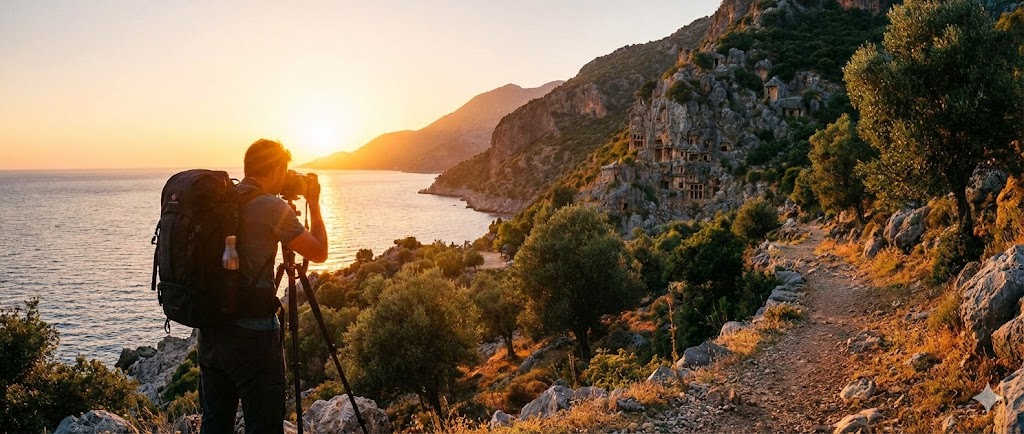
Landscape photography in Lycia is defined by the contrast between the sea and the rocky mountains.
- Gelidonya Lighthouse: A lighthouse on a high slope at the southernmost tip of Lycia, offering striking frames of the Five Islands (Beşadalar) below, especially at sunset. It is reached on foot along the Lycian Way from Adrasan or Karaöz.
- Kaputaş: Early morning is ideal for capturing the turquoise at its most vivid, before the sun is overhead and the beach gets busy.
- Ölüdeniz and Babadağ: The view of the lagoon from the paragliding launch sites on Babadağ is one of the region’s best-known shots. The launch sites can be reached by cable car or by road.
- Kekova and Simena: The view of Kekova from the castle at Kaleköy, and the sarcophagus rising from the sea, are especially beautiful in morning and late afternoon light.
- Rock-cut tombs: The tombs of Myra, Tlos, Pinara and Fethiye look best when the sun falls on their façades. Check which way the cliff faces before you go.
Wildlife Watching
Wildlife photography takes patience and knowledge.
- Wetlands: The marshes of Patara and Beymelek Lagoon near Demre are good places to watch herons and other waterbirds during the spring and autumn migrations. A lens of 400 mm or longer helps.
- Wild goats: They live on the steep slopes of Akdağ and the Bey Mountains. Climbing at first light and keeping downwind improves your chances.
- Birds of prey: Golden eagles and short-toed eagles are seen more often over the high mountains around midday, when thermals rise.
For the region’s birds, see our Lycian Birds page, and for mammals, our Lycian Mammals page.
Macro and Plant Photography
- Orchids: From late February to May, dozens of orchid species flower around the Lycian Way, some found nowhere else in the world. Do not share the locations of rare species.
- Insects and butterflies: Spring and summer are the richest seasons for butterflies and insects on the flowers of the maquis.
- Monumental trees: The bark of the centuries-old cedars of Çığlıkara in Elmalı offers rich textures for black-and-white photography.
For vegetation zones, see our Lycian Flora page, and for species unique to the region, our Endemic and Rare Species of Lycia article.
Night Photography
Highlands and mountains away from towns and the coast road offer dark skies. The fact that the TÜBİTAK National Observatory, one of Türkiye’s largest, was built in the Bey Mountains shows how dark these skies are.
- The Milky Way: The bright core of the Milky Way is visible from late spring to late summer. Choose the new moon for the best results.
- Good locations: The Elmalı highlands, the sea-view slopes of Faralya and Kabak, and the higher reaches of the Bey Mountains.
- Archaeological sites: Sites close at set hours in the evening, and shooting outside visiting hours requires a permit. At sites in the night opening programme, you can photograph in the evening.
Seasonal Shooting Calendar
| Season | Focus | Best times | Suggested area |
|---|---|---|---|
| Spring | Flowers, orchids, migratory birds | Early morning | Patara, Demre, the Lycian Way |
| Summer | Sea, underwater, the Milky Way | Midday underwater; night for the sky | Kaş, Kekova; the highlands |
| Autumn | Bird migration, harvest, clear sea | Late afternoon light | Elmalı highlands, the coast |
| Winter | Snowy peaks, wild goats | Morning and late afternoon | Akdağ, the Bey Mountains |
For more on the seasons, see our Lycian Nature Calendar page.
Permits and Rules
- Drones: Your drone must be registered under the rules of the Directorate General of Civil Aviation (SHGM). Flights over archaeological sites, national parks and military areas require additional permission.
- Commercial shoots: Commercial photography or filming at archaeological sites and museums requires a permit from the Ministry of Culture and Tourism.
- Protected areas: To set up hides or carry out long shoots in national parks, obtain permission from the General Directorate of Nature Conservation and National Parks.
Ethics in Nature Photography
The first rule of nature photography is to do no harm. No photograph is worth disturbing a living creature.
- Nests: During the nesting season, do not approach nests or use flash.
- Baiting and calls: Do not lure animals with food or recorded calls.
- Plants: When photographing a rare plant, do not trample those around it, and never pick or move plants for a “better shot”.
- Turtles: Do not photograph on nesting beaches at night. Light and flash disorient the hatchlings.
- Locations: Do not share the exact locations of rare species or sensitive sites.
For all our principles, see our Sustainable Travel and Ethics Guide.
❓ Frequently Asked Questions
Is it allowed to fly a drone in Lycia?
Your drone must be registered with SHGM, and flights over archaeological sites, national parks and military areas require additional permission. Do not fly near nests or wildlife.
Can I rent equipment in the region?
There are rental shops in larger centres such as Antalya and Fethiye. In smaller towns, it is safer to bring your own.
Can I set up a hide for wildlife photography?
Outside private land and protected areas, you can set up a temporary hide without harming nature. National parks and protected areas require a permit.
References
- eBird: Bird observation records
- Ministry of Culture and Tourism of the Republic of Türkiye: Filming permits at archaeological sites
- Directorate General of Civil Aviation (SHGM): Unmanned aircraft rules
- Ministry of Agriculture and Forestry, General Directorate of Nature Conservation and National Parks
- TÜBİTAK National Observatory