
Lycian History: The Epic Journey of Anatolia
The history of Lycia is a story of independence written across the rugged land stretching from the western shore of the Gulf of Antalya to the Dalaman River, known today as the Teke Peninsula. Bordered to the south by the turquoise coves of the Mediterranean and sheltered to the north by the Akdağ and Bey Mountains, rising above 3,000 metres, the region is also known today as the “Land of Light”.
The story of Lycia is not the product of influences arriving from across the Aegean, but the story of an Anatolian civilisation rooted in this land. Known in Hittite texts as the “Lukka”, this people created their own language, beliefs and art. As Prof. Fahri Işık, who led the excavations at Patara for many years, has argued, Lycia’s archaeological heritage is one of the strongest examples of Anatolia’s decisive role in the cultural development of the ancient world.
At Voice of Lycia, our guiding principle is to tell the story of Lycia through its own Anatolian roots, rather than in the shadow of Hellenocentric narratives. To understand the Land of Light, we set out on a journey thousands of years back, to the lands of the Lukka.
📌 Contents
Lukka and Termilae
A look at the region’s past shows that this people were not newcomers from elsewhere, but long-standing inhabitants of Anatolia. Known as the Lukka in Hittite, Egyptian and Ugaritic sources of the 2nd millennium BC, they appear as the Lycians in Homer’s Iliad. According to Herodotus, they called themselves the Termilae, a name confirmed by the form “Trm̃mili” found in Lycian inscriptions.
Herodotus also records a legend that the Lycians came from Crete. The language, however, tells a different story: Lycian belongs with Hittite and Luwian to the Anatolian language family, and is one of the branches closest to Luwian. This is the strongest evidence of the Lycians’ Anatolian origins.
Described in the Iliad as among Troy’s most important allies, the Lycians preserved their language and culture through the centuries. You can explore the heritage of the region’s cities in detail on our Lycian Ancient Cities page, and read more about the Lycians’ roots in our article on The Anatolian Roots of Lycia.
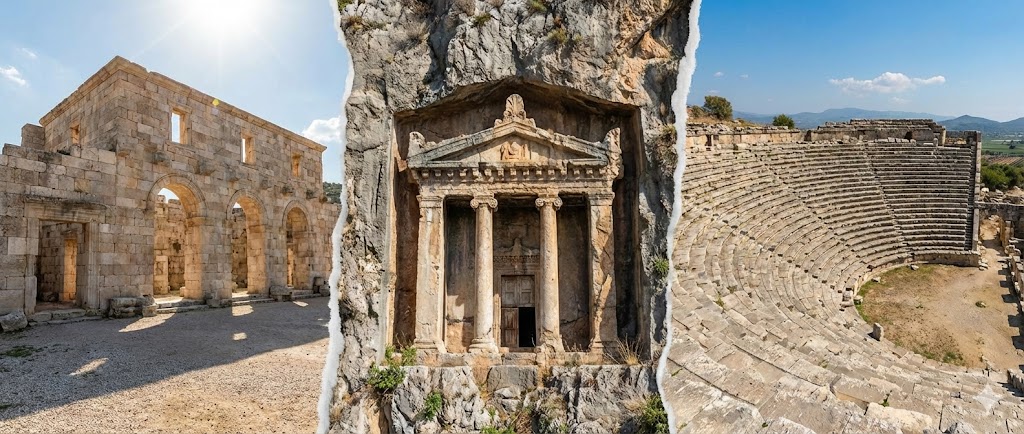
Layers of Lycian History from Prehistory to the Present
The Land of Light entered the stage of history far earlier than is often assumed. Excavations at Girmeler Cave near Tlos trace human presence in the region back to the 9th and 8th millennia BC, the Early Neolithic (Takaoğlu et al. 2014). Inland, excavations at Karataş-Semayük in the Elmalı Plain have revealed well-developed Early Bronze Age settlements.
The Bronze Age is equally important in Lycian history. Bronze Age pottery from Patara, together with the Uluburun shipwreck off Kaş (late 14th century BC) and the Gelidonya shipwreck off Cape Gelidonya (c. 1200 BC), shows that these shores lay at the heart of Eastern Mediterranean maritime trade. You can discover the modern reflections of this maritime heritage in our Lycian Coast guide.
With the Archaic period, settlements in the region became more organised, and Xanthos rose to become the most important centre of Lycia.
🏛️ A Note for the Curious: The Mystery of Names
Lycian history should be sought not only in stone but also in the origins of words. Many of the ancient city names we know today go back to much older, original Lycian forms. In Lycian, for example, Xanthos was Arñna, Tlos was Tlawa, Pinara was Pillẽn and Patara was Pttara. For more information, you can take a look at our article on Lycian City Names.
Prof. Fahri Işık and the Anatolian Thesis
Prof. Fahri Işık, who led the excavations at Patara for many years, challenges the traditional narrative that treats Lycian culture as a derivative of Hellenic culture. In his view, many of the cultural values claimed by the West have their roots in Anatolia, and Anatolia was not merely a bridge between civilisations but a centre that created culture. He sets out these views in detail in his book Uygarlık Anadolu’da Doğdu (“Civilisation Was Born in Anatolia”).
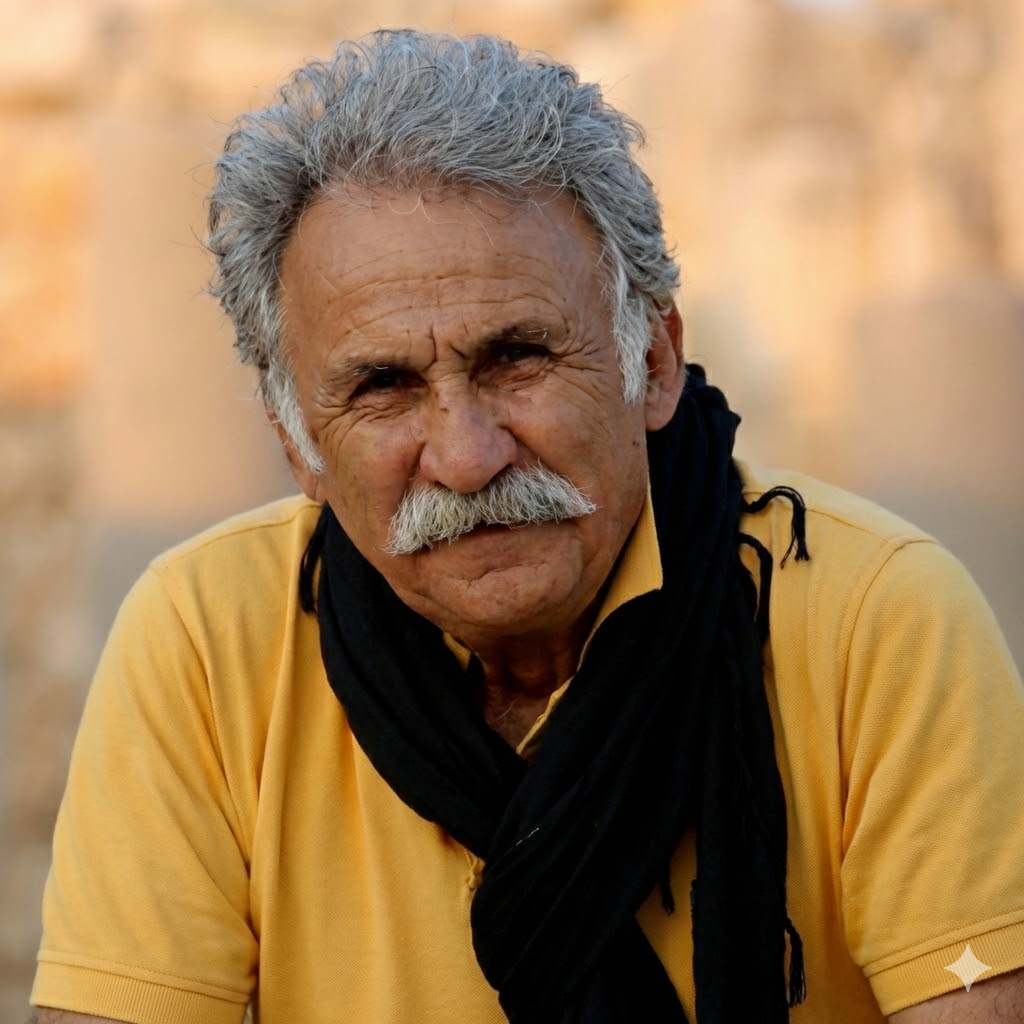
“Anatolia is not a bridge it is the primary source that gave birth to civilisation itself.”
Anatolian, Not Hellenic: Western-centred narratives have often treated Lycian art as a reflection of Greek culture. Archaeological evidence paints a different picture: the Lycians developed their own aesthetic language, beliefs and building techniques. Lycian inscriptions, local deities and Lycia’s distinctive funerary architecture are tangible proof of this originality.
What the rock-cut tombs tell us: The rock-cut tombs carved into Lycia’s steep slopes are the most faithful translations into stone of the timber houses of their time. With their beams, roof shapes and door details, they show us what Lycian homes, none of which survive, once looked like. This tradition of reproducing timber house façades in stone in such detail is unique to Lycia, and one of the finest examples of Anatolia’s local creativity.
Proportional representation: From the 2nd century BC onwards, the Lycian League (Lykion Koinon) united the cities of Lycia in a federal structure. What set it apart among the federations of the ancient world was its system of proportional representation, in which cities held one, two or three votes according to their size. This is why Montesquieu cited Lycia as the model of an excellent confederate republic. The council house (bouleuterion) at Patara, identified as the place where the League’s representatives met, stands again today. For more, see our page on The Lycian League.
Lycia in the Roman and Eastern Roman (Byzantine) Periods
In AD 43, Emperor Claudius made Lycia a Roman province, citing internal unrest. Although the Lycian League lost its independence, it continued to exist under Roman rule. Earthquakes in the 2nd century AD, above all the great earthquake of AD 141, shook the region deeply, and the ruined cities were rebuilt with the support of benefactors such as Opramoas of Rhodiapolis.
The heaviest blows came with the plague epidemics that began in the 6th century and the Arab raids that intensified from the 7th century onwards. Pirate attacks led to the gradual abandonment of coastal cities, as people withdrew to more sheltered mountain settlements.
A new era began with the arrival of the Seljuks in the 13th century and the Teke Beylik in the 14th century. The Turks founded new settlements at the foot of the ancient cities, and the Lycian heritage became part of today’s cultural fabric. You can walk these ancient paths today with our Lycian Way Guide.
❓ Frequently Asked Questions (FAQ)
Who were the Lycians?
The Lycians were an Anatolian people who lived in what is now the Teke Peninsula. They appear as the Lukka in Hittite and Egyptian sources of the 2nd millennium BC, and called themselves the Trm̃mili. Their language, Lycian, belongs with Hittite and Luwian to the Anatolian language family.
Did the Lycians come from Crete?
Herodotus records such a legend. However, the fact that Lycian is an Anatolian language, and that the names of Lycian cities appear in Bronze Age Hittite records, shows that the Lycians had a very long history on this land.
How far back does life in Lycia go?
Excavations at Girmeler Cave near Tlos trace human presence in the region back to the 9th and 8th millennia BC, the Early Neolithic.
When did Lycia become a Roman province?
In AD 43, under the Emperor Claudius. The Lycian League lost its independence, but continued to exist under Roman rule.
When did the Turkish period begin in Lycia?
The region came under Turkish rule when the Seljuks took Antalya in the early 13th century, and Turkish culture became firmly established under the Teke Beylik, founded in the 14th century. The modern name of the Teke Peninsula comes from this beylik.
📚 References
- Herodotus, Histories I.173 (the name Termilai and the Cretan legend).
- Strabo, Geography XIV.3.3 (the 23 cities of the Lycian League and its voting system).
- Montesquieu, The Spirit of the Laws, Book IX, Chapter 3.
- Işık, F. Uygarlık Anadolu’dan Doğdu (“Civilisation Was Born in Anatolia”). Mediterranean Countries Academy Foundation (ACADEMIA).
- Takaoğlu, T., Korkut, T., Erdoğu, B. and Işın, G. (2014). “Archaeological evidence for 9th and 8th millennia BC at Girmeler Cave near Tlos in SW Turkey”. Documenta Praehistorica 41.
🏛️ Further Information
You can find more information on the history and archaeology of Lycia from the following institutions: