
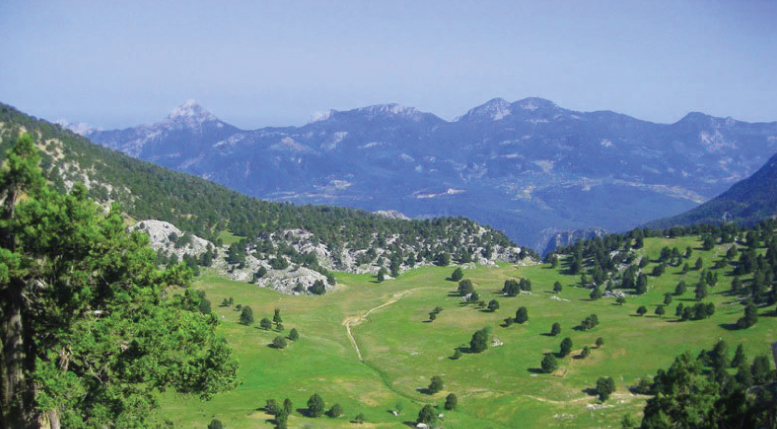

Lycian Dry Forest Plants: Green Resilience at 800 Meters
Lycian Dry Forest plants are nature’s magnificent response to one of the toughest challenges of the Mediterranean climate: the long summer drought. This zone, which begins above the maquis shrubland at sea level and climbs up to approximately 1,200 meters, maintains the region’s ecological balance while providing timber, healing herbs, and food for thousands of years. These forests are not just a collection of trees; they are living fortresses that protect the “Land of Light’s” water sources, anchor the soil, and shelter hundreds of species.
As of 2026, the Lycian Dry Forest zone forms a critical buffer against climate change and is often referred to as the “Turkish Red Pine Zone” or “Xeric Oak Forests” in botanical geography. In this guide, we will examine the species within this harsh but noble layer of Lycia and how the ecosystem functions.
📌 Contents
Architects of Resilience: Ecology of Lycian Dry Forest Plants
Lycian Dry Forest plants are concentrated just above the maquis zone (0-800m), in areas where humidity decreases but winter precipitation increases. The fundamental strategy of plants in this zone is “minimalism.” By shrinking their leaf surfaces to prevent evaporation, these species extend their root systems deep into the soil to reach every drop of water.
The upper limit of this zone gives way to our next destination, the High Mountain Zone (Cedar and Juniper forests). This biodiversity in the transition zones makes the region a unique study area for botanists worldwide.
Red Pine Forests: The True Owners of the Mediterranean
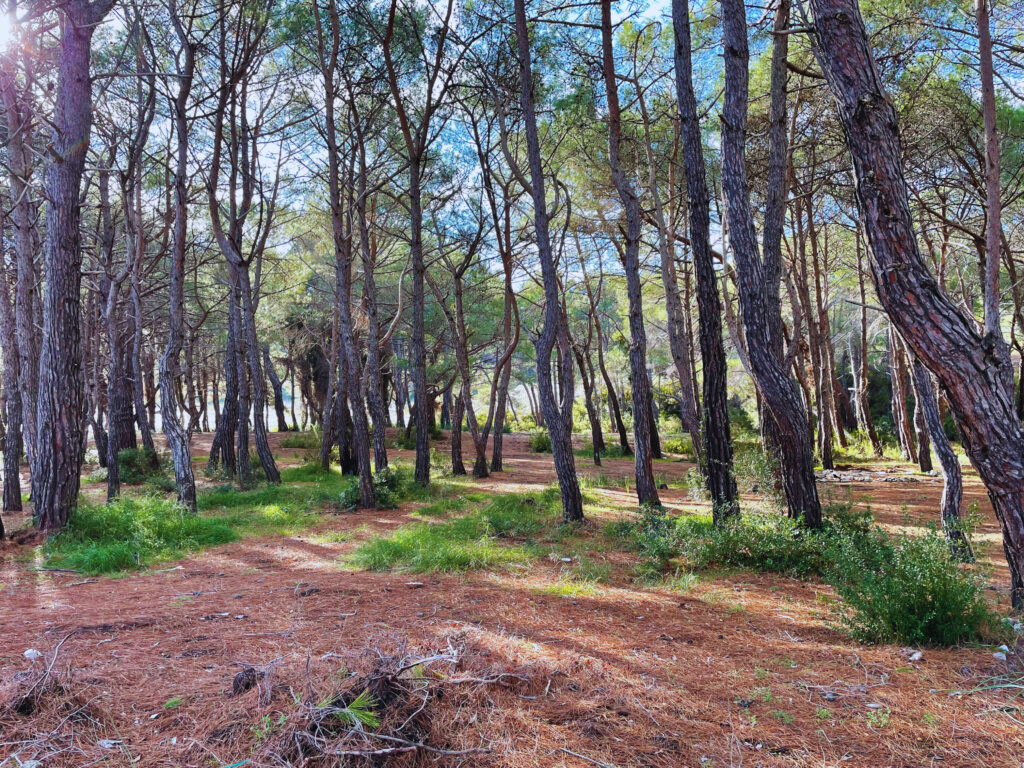
When you think of Lycian Dry Forest plants, the first and most dominant species that comes to mind is the Red Pine (Pinus brutia).
- Fire Adaptation: The Red Pine has adapted to the fire cycle of the Mediterranean. Its cones open under high heat, allowing it to drop seeds onto the ashes after a fire, enabling the forest to be reborn from its own remains.
- Economic Value: In ancient times, the ships of the Lycian navy were built from these trees. Today, their resin and non-wood products remain an important source of income for local communities. If you are curious about the impact of Red Pine forests on fauna, check out our “Lycian Birds” page.
Oak Species: Giants Among the Dry Forest
Found either mixed among the Red Pines or in pure communities, oak species are the most majestic members of the Lycian Dry Forest layer.
- Valonia Oak (Quercus ithaburensis): Known for its massive acorns and thick trunk. In ancient times, its acorns were used in leather tanning.
- Aleppo Oak (Quercus infectoria): Usually in the form of a shrub or small tree. The galls (mazı) formed on its leaves have been used in medicine and the dye industry for thousands of years.
- Kermes Oak (Quercus coccifera): The toughest member of the transition from maquis to dry forest. It is a symbol of resilience with its thorny leaves that even goats find difficult to graze.
Aromatic and Shrub Species: Understory Flora
Lycian Dry Forest plants are not just about large trees. The understory flora living in shaded areas and clearings constitutes the true richness of the ecosystem.
- Smoketree (Cotinus coggygria): Offers a visual feast with the crimson and orange hues its leaves turn in autumn.
- Wild Olive (Delice): Climbing up to the dry forest boundary, this species is the ancestor of the olive oil culture we discuss in our “Lycian Gastronomy” guide.
- Cistus (Rockrose) and Phillyrea: These plants, which adorn the forest floor and bloom in spring, are vital for beekeeping (Pine Honey).
Observation and Protection for Lycian Dry Forest Plants
The most important thing to remember when visiting this zone is the “delicate balance” of the system. Lycian Dry Forest plants are under increasing pressure every year from rising temperatures and forest fires. As a responsible nature lover:
- No Fires: These forests can ignite in seconds due to their high resin content.
- Do Not Collect Cones: Cones contain the seeds that are the forest’s future.
- Ethical Observation: Take photos without disturbing the natural form of the plants. For detailed ethical guidelines, visit our “Sustainable Travel and Ethics” page.
🏛️ Scientific Sources and Flora Tracking
To access academic data on Lycian Dry Forest plants and biological classifications of tree species across Turkey, you can examine the OGM (General Directorate of Forestry) and the TUBIVES (Turkish Plant Data Service) platforms. These external resources provide the most current official information regarding reforestation projects and the conservation status of endemic species in the region.
❓ Frequently Asked Questions
What is the best season to observe Lycian Dry Forest plants?
October and November are the most visually rich periods as it is the time when oaks shed acorns and smoketrees change color. In spring, understory flowering can be observed.
Are the forests in this region natural or reforested?
The vast majority of Red Pine and oak forests in Lycia are natural. However, there are also planned reforestation works carried out by the OGM in areas after fires.
Is honey produced in Red Pine forests?
Yes, the region is a world-famous “Pine Honey” production center. Bees produce this special honey by collecting the secretions of an insect (known locally as “basra”) that lives on Red Pine trees.