
Lycian Nature Calendar: The Land of Light Season by Season
The Lycian Nature Calendar is a guide to how nature in the Land of Light changes through the year. From snowmelt on the Taurus summits to turtle hatchlings racing to the sea, from crocuses opening with the first rains to mushrooms appearing on the pine forest floor, every season has its own events.
In this guide you will find which natural events you can witness in Lycia each month. Use it to plan your trip, your walks or your dives.
📌 Contents
- January – February: The First Awakening in the Quiet of Winter
- March – April: The Season of Flowers and Orchids
- May – August: Sea Turtles and Sea Daffodils
- September – October: Migration and Clear Water
- November – December: Rain, Mushrooms and Harvest
- Tips for Nature Watchers
- Frequently Asked Questions
- References
Lycian Nature Calendar: January – February, the First Awakening in the Quiet of Winter
In Lycia, winter is not a time when nature sleeps but a time of quiet preparation. Winters are mild and wet on the coast, with snow in the mountains.
- Mountain dwellers: As the snow deepens on the summits, wild goats move down to lower slopes, where they are easier to spot.
- Salamanders: On damp winter days, the Lycian salamanders found only in this region emerge from among the rocks. This is the only time of year to see them. Do not touch them or share their locations.
- Almond blossom: From mid-February, almond trees along the Lycian coast open their white and pink blossoms.
- Wintering birds: Wetlands such as Beymelek Lagoon host waterbirds that arrive from the north to spend the winter.
March – April: The Season of Flowers and Orchids
Spring is the richest season in Lycian nature, and the best time of year for walking.
- Orchids: From late February to May, dozens of orchid species flower around the Lycian Way. Some, such as the Kaş orchid, are endemics found only in this region. Do not pick orchids or dig up their tubers; collecting them without permission carries heavy fines. For these species, see our Endemic and Rare Species of Lycia article.
- Maquis in flower: Rockrose, thyme, sage and many bulbs colour the coastal slopes.
- Citrus blossom: In April, orange trees flower on the plains of Finike and Kumluca, filling the air with their scent.
- Spring in the mountains: Towards May, as the snow retreats, crocuses and mountain flowers bloom on the high slopes and fresh shoots appear in the cedar forests.
May – August: Sea Turtles and Sea Daffodils
Summer is the busiest season for breeding and survival in Lycia.
- Nesting (May–July): Caretta caretta turtles come ashore at night on Patara, Çıralı and other beaches to lay their eggs. During this period, stay off the beach at night and do not shine lights.
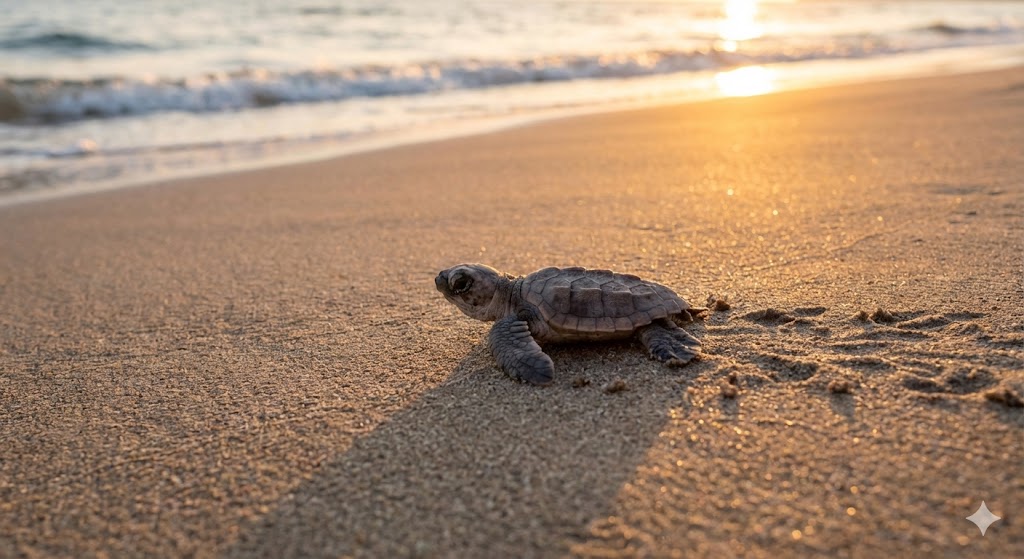
- Hatchlings (July–September): Newly hatched turtles race to the water at night, heading towards the brightness over the sea. Artificial lights can confuse them and lead them the wrong way.
- Sea daffodils: In late summer, the white, fragrant sea daffodil (Pancratium maritimum) flowers on the sand. It is protected, so do not pick it or dig up its bulbs.
- The highlands: As the coast heats up, the cool moves to the highlands. Mountain flowers are still in bloom on the high plateaus around Elmalı.
September – October: Migration and Clear Water
As the heat fades, autumn brings activity both in the sky and in the sea.
- Bird migration: Migratory birds heading south to Africa stop at Lycia’s wetlands and shores. Bring your binoculars.
- Clear water: The sea is still warm, and visibility is usually at its best of the year, making this the finest season for diving and snorkelling. For dive sites, see our Diving in Lycia page.
- Autumn flowers: With the first rains, autumn crocuses and other bulbs come into flower.
- Walking season: As the heat subsides, the walking season on the Lycian Way begins again.
November – December: Rain, Mushrooms and Harvest
At the end of the year, the rains bring the soil back to life.
- Mushrooms: Edible species such as the saffron milk cap (çıntar) appear on the pine forest floor, alongside many poisonous ones. Never pick or eat a mushroom you do not know; serious mushroom poisonings occur in the region every year.
- Olive harvest: The olive harvest begins in coastal villages, and new oil flows from the village presses.
- Citrus harvest: The orange harvest begins around Finike and continues through the winter.
- First snow in the mountains: The summits turn white and wild goats move back down to lower slopes.
Tips for Nature Watchers
- Equipment: Good binoculars and a macro lens will be useful in every season.
- Ethics: Do not approach or feed wildlife, do not pick plants and do not share the locations of rare species. For details, see our Sustainable Travel and Ethics Guide.
- Weather: Be prepared for sudden fog and rain in the Taurus, especially in winter and spring. In summer the risk of forest fire is very high; never light a fire in the forest.
For the best observation points and photography routes, see our Lycian Photography and Observation Routes page, and for the region’s plants and animals, our Lycian Flora and Lycian Fauna pages.
❓ Frequently Asked Questions
When can I see Caretta turtles in Lycia?
Nesting begins in May and continues until July. Hatchlings emerge from July to September, sometimes into early October. To avoid disturbing the turtles, stay off the beach at night. If you would like to watch them, join under the guidance of local conservation projects.
Is there a fine for picking sea daffodils?
Yes. The sea daffodil is protected, and picking it or digging up its bulbs carries a fine. For current information, see the pages of the General Directorate of Nature Conservation and National Parks.
When is the best time to see orchids?
On the coast from late February to April, and on higher slopes from April to May. Photograph orchids, but never pick them.
References
- Ministry of Agriculture and Forestry of the Republic of Türkiye, General Directorate of Nature Conservation and National Parks
- Ministry of Environment, Urbanisation and Climate Change: Specially Protected Areas
- DEKAMER: Sea Turtle Research, Rescue and Rehabilitation Centre
- TÜBİVES: Turkish Plants Data Service
- Doğa Derneği (Nature Association)