
Diving in Lycia: An Underwater Guide from Kaş to Fethiye
Diving in Lycia means exploring rocky walls, caves, wrecks and rich marine life in some of the clearest water in the Mediterranean. Kaş is the region’s diving centre, while Fethiye and the eastern coast offer dive sites of a different character. There are calm, shallow coves for beginners as well as deep walls and wrecks for experienced divers.
On this page you will find Lycia’s main diving areas, the best-known sites, the diving season, certification information and the rules to follow to protect the underwater world. For the species you may see, see our Lycian Marine Life page.
📌 Contents
Diving in Lycia: Kaş, Lycia’s Diving Centre
Kaş is one of Türkiye’s best-known diving centres. There are more than 30 dive sites around the town, many of them within the Kaş-Kekova Specially Protected Area. Clear water, rocky walls, caves and wrecks offer options for divers of every level.
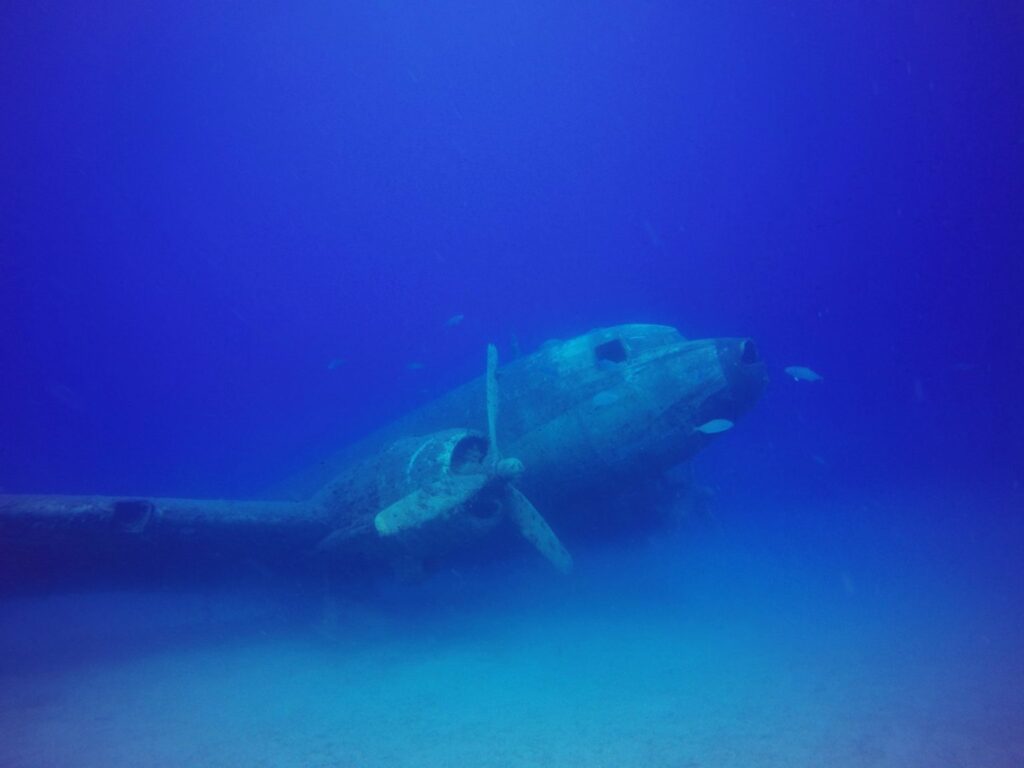
- Dakota aircraft wreck: The C-47 Dakota transport plane, sunk off Kaş as an artificial reef, lies at about 20 metres and is the region’s most popular wreck. Over time its fuselage has become home to small fish and other marine life.
- Uluburun wreck replica: A replica of the Bronze Age merchant ship found near Kaş, dated to the 14th century BC, has been sunk as a dive site. Finds from the real wreck are displayed at the Bodrum Museum of Underwater Archaeology.
- The Canyon: This dive descends through a narrow passage between rocks and ends at a Greek boat wreck known as the Dimitri or Pamuk. Because of its depth, it is for experienced divers.
- Offshore reefs: Reefs further out, such as Uçanbalık, are known for groupers and schools of amberjack. Depth and currents make them suitable for experienced divers.
Fethiye and Ölüdeniz
The Gulf of Fethiye and the area around Ölüdeniz are known for wall dives, caverns and shallow training coves.
- Afkule Wall: An underwater wall dropping to about 40 metres, covered with sponges and soft corals. Groupers, barracuda and schools of jacks are often seen.
- Kızılada: The lighthouse and canyon areas of this island off Fethiye are well-known dive sites in the gulf.
- Aladdin’s Cavern: A cavern with an air pocket where divers can surface inside, its walls home to shrimp and corals.
- Aquarium Bay and Butterfly Valley: Their shallow, calm water suits introductory dives and snorkelling. Among the rocks, nudibranchs, shrimp and crabs make rich subjects for macro photography.
Kekova and the Eastern Coast
The sunken remains at Kekova are a protected archaeological site, and diving or swimming around them is prohibited. Dive boats from Kaş visit permitted sites around Kekova.
On the eastern coast, the Three Islands (Üç Adalar) off Tekirova, near Phaselis, are a dive area known for their small islands and rocky terrain. Adrasan and the area around Cape Gelidonya also offer quiet dives away from the main routes. The Bronze Age wreck off Gelidonya is known as one of the first underwater archaeological sites excavated using scientific methods.
What Will You See Underwater?
- Fish: Groupers, amberjack, barracuda, jacks, moray eels and colourful wrasse.
- Other life: Octopus, nudibranchs, sponges, starfish and Mediterranean corals such as red coral.
- Turtles and seals: Caretta caretta are often seen, and the endangered Mediterranean monk seal is occasionally spotted along the Kaş-Kekova coast. Do not approach either; watch from a distance.
- Seagrass: Posidonia meadows are home to many species.
When to Dive
Diving in Kaş is possible all year round. The sea warms to 26–28°C in summer and falls to 16–18°C in winter. Visibility is usually best in autumn, in September and October. Spring and autumn are the most balanced seasons for water temperature and quieter dive sites.
Certification and Safety
- Licensed dive centres: In Türkiye, scuba dives are made with licensed dive centres and in permitted areas.
- Introductory dives: If you have never dived before, no certification is needed for an introductory dive with an instructor.
- Certified dives: Wrecks and deeper sites require an internationally recognised certification such as CMAS, PADI or SSI, along with suitable experience. In Türkiye, certification is regulated by the Turkish Underwater Sports Federation (TSSF).
- Before flying: Wait at least 18–24 hours after diving before you fly.
- Venomous species: Do not touch venomous or spiny species such as lionfish and sea urchins. The silver-cheeked toadfish (deniz tavşanı), which reached the Mediterranean through the Suez Canal, is highly poisonous, must never be eaten and has sharp teeth.
Responsible Diving
- Buoyancy: Keep good buoyancy. Stirring up sand with your fins or bumping into rocks causes lasting damage to seagrass and corals.
- Antiquities: Never touch, move or remove amphorae, pottery or structural fragments you see underwater. In Türkiye they are protected by law.
- Marine life: Do not feed fish or touch marine life, and keep away from turtles and seals.
- Waste: Safely bring plastic and fishing line you find in the sea back to the surface.
For more tips, see our Sustainable Travel and Ethics Guide.
❓ Frequently Asked Questions
Do I need a certification to dive in Lycia?
Not for introductory dives with an instructor. Wrecks and deeper sites require an internationally recognised certification and experience. If you are not certified, you can train at dive centres in the region.
When is the best time to dive?
Diving is possible in Kaş all year round. Visibility is usually best in September and October, when the sea is also still warm.
Can I see the underwater world without diving?
Yes. The coves around Kaş, Aquarium Bay, Limanağzı and the bays around Kekova are excellent for snorkelling. See our Lycian Beaches and Coves page for details.