
Lycian Flora: Vegetation Zones from Sea to Summit
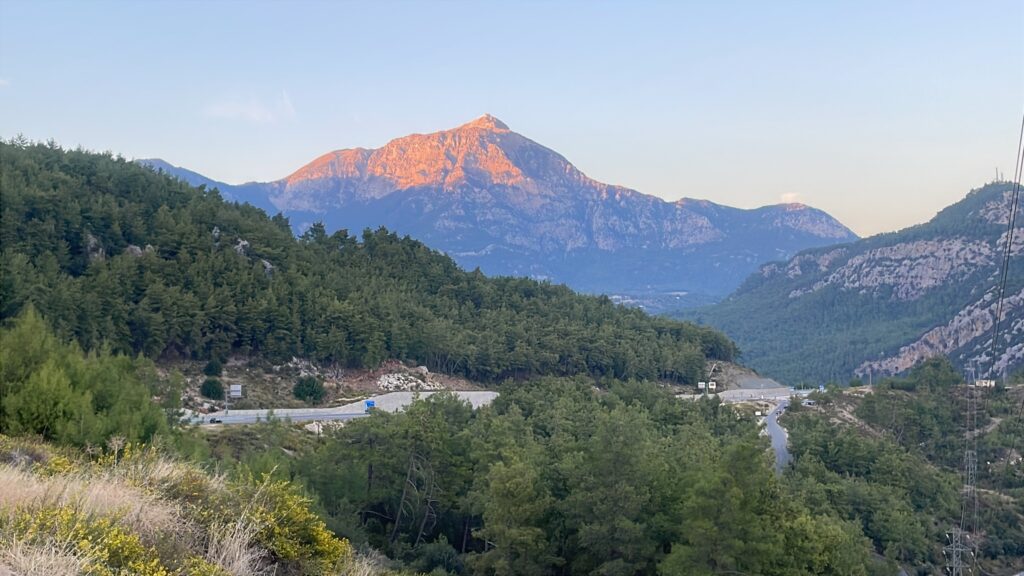
What makes Lycian Flora so rich is the great difference in altitude over a short distance. From the coast, the land rises within a few hours’ drive to Kızlarsivrisi, the roughly 3,070-metre summit of the Bey Mountains. This climb brings together very different plant communities in a single region: maquis on the coast, red pine forests on the slopes, cedar and juniper higher up, and spiny cushion plants on the summits.
Lycia lies within the Mediterranean Basin biodiversity hotspot, one of the most important in the world. The isolated summits and valleys of its limestone mountains are home to many endemic species found nowhere else. In this guide you will find the vegetation zones from coast to summit, the region’s endemic species and how to help protect this heritage.
📌 Contents
Vertical Biodiversity: Lycian Flora Layers
Vertical Biodiversity: The Layers of Lycian Flora
The easiest way to understand Lycian Flora is to picture the region as a staircase rising from the sea to the summits. As you climb, temperatures fall and rain and snow increase. Each step brings a different plant community adapted to these conditions.
The table below summarises these layers. Altitudes are approximate and vary with the direction a slope faces and its distance from the sea.
| Altitude (Metres) | Vegetation Zone | Characteristic Species |
| 0 – 500 | Maquis and Phrygana | Wild olive, carob, myrtle, bay, Greek strawberry tree, kermes oak, phillyrea |
| 0 – 1000 | Red pine forests | Turkish red pine with maquis understorey |
| 1000 – 1500 | Mountain forests | Black pine, oaks, oriental plane along streams |
| 1200 – 2000 | High Mountain Zone | Taurus cedar, Grecian juniper, stinking juniper |
| Above 2,000 m | Alpine zone | Milk vetch, prickly thrift (Acantholimon), endemic crocuses and bulbs |
Layer 1: Maquis and Coastal Plants
Maquis is the best-known face of Lycian Flora: aromatic shrubs with tough, glossy leaves adapted to long, dry summers. Phrygana, a lower and more open form of maquis, is common on dry, rocky slopes, with plants such as thyme, sage and rockrose.
This zone matters for people too. The olive oil tradition and the aromatic herbs used in local cooking begin here. To explore this connection, see our Lycian Gastronomy guide. For maquis species in detail, see our Maquis Zone Plants page.
Layer 2: Red Pine Forests
Turkish red pine forms Lycia’s most widespread forest, from the coast to the foothills, with maquis continuing to grow beneath it and a rich understorey flora. Red pine is adapted to fire: its cones open in the heat, and it can regenerate naturally on burned ground. Even so, frequent and large fires can exceed the forest’s ability to recover.
This zone is also one of the main habitats for the region’s wildlife. For detailed species lists, see our Dry Forest Plants and True Mediterranean Forest Zone pages.
Layer 3: Mountain Forests and Monumental Trees
Higher up, red pine gives way to black pine, and higher still to Taurus cedar and junipers. The Taurus cedar also grows in the mountains of Lebanon and Syria and has been prized as timber for buildings and ships since antiquity. Çığlıkara in Elmalı is one of Türkiye’s most important cedar forests, with monumental trees centuries old.
For these forests and their monumental trees, see our High Mountain Zone page, and for the wildlife at these altitudes, our Lycian Fauna page.
Layer 4: The Alpine Zone and Sky Islands
Above the tree line, wind, cold and long-lasting snow force plants to grow low and cushion-shaped. Spiny cushion plants such as milk vetch and prickly thrift are typical of this zone. In spring, as the snow retreats, crocuses and other bulbs flower among the rocks.
These high summits are like “sky islands”, separated from one another by lower valleys. Because plants have evolved separately on these isolated peaks over thousands of years, many of Lycia’s endemic species live in these mountains.
Endemism and Conservation: Lycia’s Rare Plants
What makes Lycian Flora special is its endemic species, found nowhere else in the world. Some are confined to a few mountain slopes, or even a single valley.
- The Kaş orchid (Ophrys lycia): A critically endangered ground orchid known only from the area around Kaş.
- Antalya’s other endemic orchids: Ophrys climacis and Ophrys phaseliana, named after Phaselis, are also known only from this region and are under threat.
- Endemics of Olympos-Beydağları National Park: Many plants that grow only in these mountains, such as Lycian ironwort (Sideritis lycia).
- The Cretan date palm (Phoenix theophrasti): Türkiye’s only native palm. One of its few natural stands in the country is near Kumluca.
For more on these species, see our Endemic and Rare Species of Lycia article.
To protect these plants:
- Do not pick orchids or endemic plants, or dig up their bulbs. Collecting them without permission carries heavy fines.
- Do not share the locations of rare plants on social media.
- When taking photographs, avoid trampling the surrounding plants and stay on the path.
For more tips, see our Sustainable Travel and Ethics Guide.
❓ Frequently Asked Questions
When is the best time to see Lycian Flora?
March to May is best for flowers on the coast and in the maquis, and May to July, once the snow has melted, for mountain and alpine plants. In autumn, some crocuses and other bulbs also flower with the first rains. For the seasons, see our Lycian Nature Calendar page.
What is the best-known plant unique to Lycia?
The Kaş orchid (Ophrys lycia), known only from the area around Kaş, is among the most famous endemics. The Taurus cedar, a symbol of the region, is not endemic: it also grows in Lebanon and Syria.
Is it allowed to pick plants?
No. Picking plants is prohibited in protected areas, and many species, especially orchids and endemics, are protected by law, with heavy fines for collecting them without permission.