
The Lycian Coast: The Sea of the Land of Light
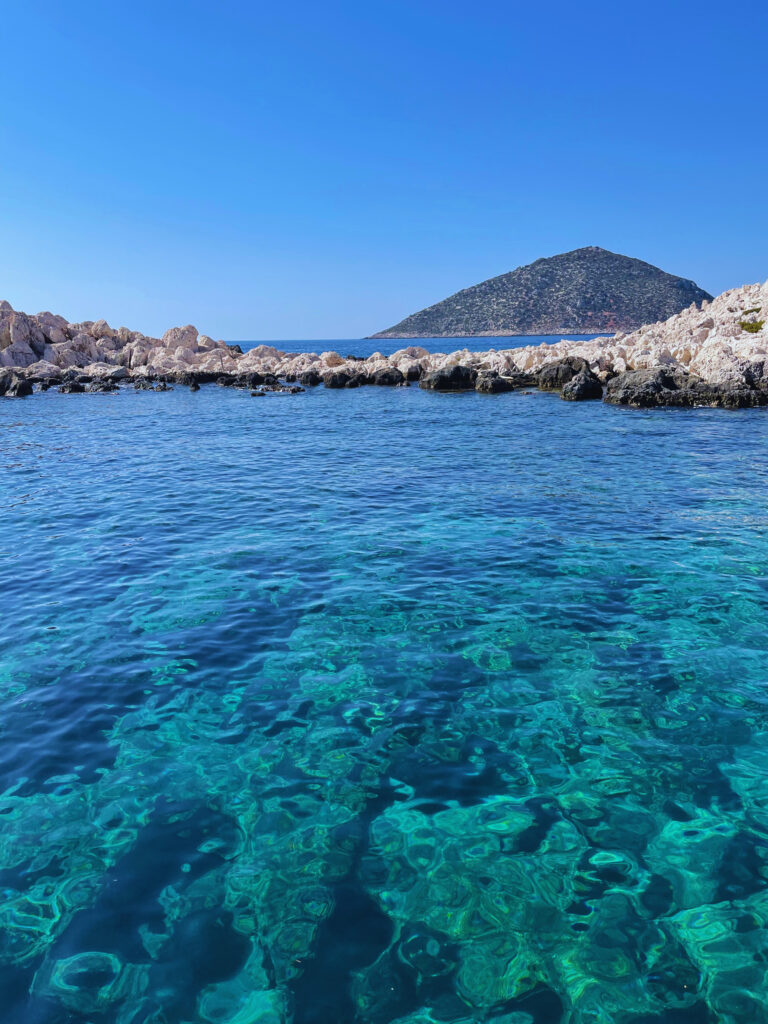
The Lycian Coast stretches from the Gulf of Fethiye to Phaselis at the western edge of the Gulf of Antalya. Here the Taurus Mountains drop steeply into the sea, leaving a coastline of rocky headlands, coves that are hard to reach by land, islands and ancient harbours. On this stretch of the Mediterranean, the sea is not only for swimming. It is a way to reach ancient cities by boat, to see traces thousands of years old beneath the water, and to witness nature’s balance on beaches where Caretta caretta nest.
On this page you will get to know the coast section by section, find links to our guides on beaches, boat trips and diving, and learn when and how best to enjoy the sea.
📌 Contents
The Lycian Coast: West to East
- The Gulf of Fethiye and Göcek: A sheltered gulf full of islands, the centre of blue voyages and island day trips.
- Ölüdeniz, Kabak and Butterfly Valley: The region’s best-known views, with the lagoon, steep slopes and a valley reached by boat.
- Patara and Kalkan: Patara’s long beach backed by dunes, and the rocky coves of Kalkan.
- Kaş and Kekova: Kaş, the region’s diving centre, and Kekova with its islands, sunken remains and the sarcophagi of Simena.
- Demre and Finike: The ancient harbour of Andriake and wide, calm shores.
- Adrasan, Olympos, Çıralı and Phaselis: Coves where the forest meets the sea, the valley at Olympos that leads through the ancient city to the shore, and the ancient harbours of Phaselis.
Much of this coast (Fethiye-Göcek, Patara, Kaş-Kekova) lies within Specially Protected Areas.
Beaches and Coves
Every beach on the Lycian coast has its own character. Kaputaş is a small cove at the mouth of a gorge, Patara’s beach is about 18 kilometres long, and at Phaselis and Olympos you walk to the water through ancient ruins. For access, facilities and rules, see our Lycian Beaches and Coves page.
Lycia by Boat
Part of Lycia can only be seen from the sea. The sunken remains of Kekova, the sarcophagi of Simena rising from the water, the islands of Göcek and Butterfly Valley are all reached by boat. For options from day trips to blue voyages of several days, and tips on choosing the right boat, see our Lycian Boat Tours page.
Lycia Under Water
Kaş is one of Türkiye’s best-known diving centres. Clear water, rocky walls and caves offer sites for beginners and experienced divers alike.
- Wrecks: The Dakota aircraft, sunk off Kaş as an artificial reef, and a replica of the Bronze Age Uluburun shipwreck, found near Kaş, are among the best-known dive sites. Finds from the real Uluburun wreck are displayed at the Bodrum Museum of Underwater Archaeology.
- Marine life: Groupers, sponges and starfish, octopuses and, if you are lucky, Caretta caretta. The endangered Mediterranean monk seal is also occasionally seen along the Kaş-Kekova coast.
For dive sites and centres, see our Diving in Lycia page; for marine species, see our Lycian Marine Life page.
Activities at Sea
- Sea kayaking: Paddling along the shore at Kekova and quietly viewing the sunken remains is one of the region’s most popular experiences.
- Snorkelling: Even with a snorkel you will see a great deal in Lycia’s clear water, so bring your own set.
- Paragliding: Flights from Babadağ that land on Ölüdeniz beach offer one of the most striking views on the coast.
- Sailing and SUP: Sailing in Fethiye and Göcek, and stand-up paddleboarding in sheltered coves.
When to Go
- June–October is the swimming season, with the warmest sea in August.
- September and October are the most balanced months: the sea is warm, crowds are smaller and the water is clear.
- May and November are cooler but calm. Some boat trips start or finish their season in these months.
- In winter the coast is quiet, and many boat trips and beach businesses close.
For places to stay, see our Lycian Accommodation Guide.
Protecting the Sea
- Seagrass: Posidonia meadows are among the Mediterranean’s most important habitats, sheltering fish and protecting the shore. Choose boats that use mooring buoys rather than anchoring on seagrass.
- Turtles: On Patara, Çıralı and other nesting beaches, stay off the sand at night, do not touch nest markers and keep your umbrella outside marked areas.
- Seals and wildlife: If you see a Mediterranean monk seal, watch from a distance, do not approach and never feed it.
- Waste: Take your plastic home. Plastic in the sea is one of the greatest threats to turtles and fish.
For more tips, see our Sustainable Travel and Ethics Guide.
Safety at Sea
- Emergencies: For emergencies at sea or on the shore, call 112.
- Weather: Check wind and wave forecasts from the Turkish State Meteorological Service. On windy days, watch out for currents on open beaches.
- Choosing a boat: Make sure the boat holds the required permits and licences and carries life jackets.
- Silver-cheeked toadfish: Known in Turkish as deniz tavşanı, this pufferfish reached the Mediterranean through the Suez Canal. It is highly poisonous and must never be eaten, and its teeth are sharp. If you catch or see one, do not touch it.
❓ Frequently Asked Questions
Why is the water so clear on the Lycian coast?
Most of the coast is rocky or pebbly, with few large river mouths, which keeps the water clear. In some coves, cold freshwater springs seep into the sea through the rocks and make the water feel cool.
Are there jellyfish?
In some years jellyfish can appear, especially in summer. Conditions change from year to year, so follow local warnings and lifeguards.
Where is best for families with children?
The Ölüdeniz Lagoon stands out for its sheltered, calm water. Patara’s beach is wide, but take care on windy days when there can be waves.