
Lycian Memory: The Heritage Beyond Stone and Water
Lycia, the Land of Light, is far more than a stretch of coast in Antalya and Muğla. It is a vast shared memory that bears the traces of earthquakes, skilful engineering and one of the most remarkable political unions of the ancient world. The water channels we walk over today and the house-shaped rock-cut tombs we see when we look up tell a story thousands of years long. Lycian Memory was created to bring Lycian cultural heritage together, based on scholarly sources, in a digital archive open to everyone.
📌 Contents
Lycian Memory: Five Pillars
Lycia was one of the most distinctive regions of the ancient world. Known in Hittite sources of the 2nd millennium BC as Lukka, this land and its people kept their deep roots in Anatolia alive for thousands of years among the rugged mountains and indented coastline of the Teke Peninsula. Lycian Memory tells the story of this heritage through five pillars.
🏛️ 1. Geological Memory: A Civilisation Shaped by Earthquakes
Lycia’s history cannot be separated from the movements beneath its surface. Lying on the Fethiye-Burdur Fault Zone and close to the Hellenic Arc, the region has been shaken by many earthquakes over the centuries.
- Earthquakes and Kekova: The famous “Sunken City” remains at Kekova lie along the northern shore of Kekova Island and are usually identified with the ancient town of Dolichiste. Submerged structures can also be seen at nearby Aperlai. Parts of these settlements sank beneath the sea as a result of tectonic subsidence and earthquakes over many centuries. One of the most destructive known earthquakes struck in AD 141 and caused severe damage in many Lycian cities.
- Building for earthquakes: Lycian builders raised mortarless walls of large, precisely cut stone blocks, linked together with metal clamps. These techniques increased the resilience of their buildings to earthquakes.
Geology and Earthquakes of Lycia →
🏛️ 2. Political Memory: The Lycian League
The Lycian League (Lykion Koinon) was one of the most remarkable federal structures of the ancient world. According to the geographer Strabo, it included 23 cities, each voting according to its size.
- Proportional representation: The six largest cities (Xanthos, Patara, Pinara, Olympos, Myra and Tlos) had three votes each, middle-sized cities two, and small cities one. They contributed to common expenses in the same proportion.
- Its echo in the modern age: In the 18th century, the French thinker Montesquieu wrote in The Spirit of the Laws: “Were I to give a model of an excellent confederate republic, I should pick upon that of Lycia.” This praise was later quoted by Alexander Hamilton in The Federalist (No. 9) during the debates over the US Constitution.
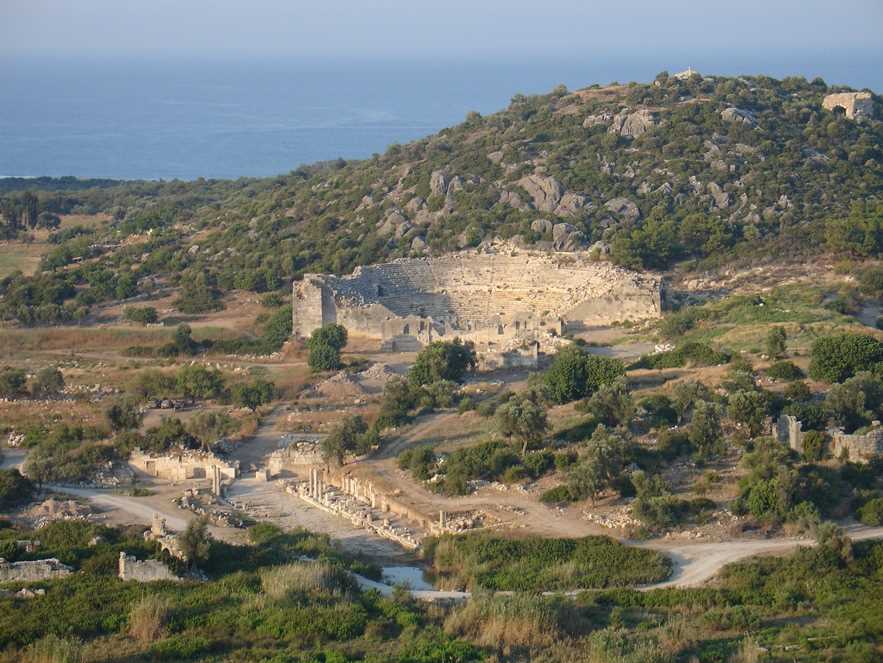
- The council house at Patara: Identified as the meeting place of the Lycian League, the council house at Patara has been brought back to life through extensive restoration. Today it is one of the most tangible witnesses of Lycian Memory.
🏛️ 3. Engineering Memory: Following Water Through the Mountains
Living in Lycia’s rugged landscape, dry in summer, required skilful management of water.
- Delikkemer and the inverted siphon: Delikkemer, which carried water to Patara, was built in the Roman period, in the 1st century AD. Its pipeline of pierced stone blocks is an inverted siphon that carried water under pressure from one side of a valley to the other, and one of the most impressive examples of its kind in the ancient world.
- Cisterns: The rock-cut and pear-shaped cisterns you come across along the Lycian Way collected and stored rainwater, keeping mountain settlements alive.
Ancient Water Structures of Lycia →
🏛️ 4. Memory of Belief: From the Mother Goddess to the Saints
Lycia is a land where beliefs have built up layer upon layer, in a long path leading from the Anatolian mother goddess to the cults of Leto, Apollo and Artemis, and on to Christianity.
- Letoon: Dedicated to Leto and her children, Apollo and Artemis, Letoon was the shared sanctuary of the Lycian League, where its major ceremonies were held.
- St Nicholas: According to tradition born in Patara and later Bishop of Myra, St Nicholas is known around the world today as the origin of the Santa Claus figure. His church at Myra has been an important place of pilgrimage since the Eastern Roman (Byzantine) period.
🏛️ 5. Memory of Art and Architecture: Houses Carved in Stone
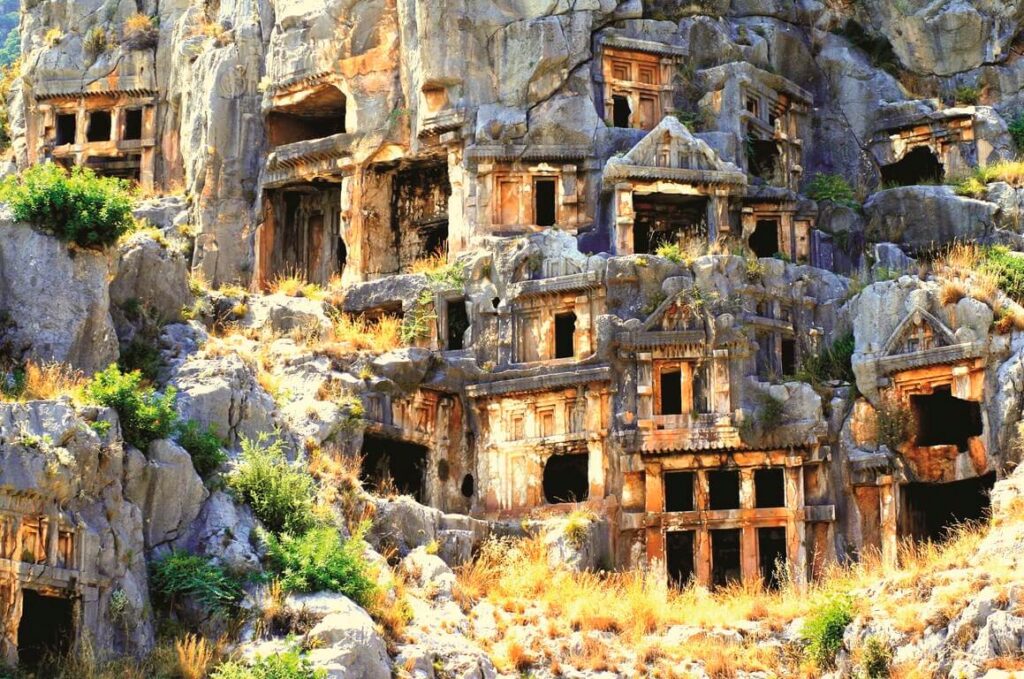
Lycian necropolises are like a unique architectural archive that carves the everyday life of the cities into stone.
- Rock-cut tombs: Mostly dating from the 5th and 4th centuries BC, these tombs reproduce the beams, doors and roofs of wooden Lycian houses in rock. They show us what Lycian timber architecture, which has not survived, once looked like.
- Sarcophagi: Known for their pointed, arch-shaped lids, Lycian sarcophagi are monuments that document the social structure and wealth of the cities.
- Lycian Architecture: Rock-Cut Tombs and Sarcophagi →
Lycian Memory at a Glance
| Pillar | Key heritage | Why it matters |
|---|---|---|
| Geological Memory | Earthquakes and the sunken remains at Kekova | Shows how nature shaped the fate of Lycian cities. |
| Political Memory | The Lycian League’s proportional representation | Praised by Montesquieu and cited in modern federal thought. |
| Engineering Memory | Delikkemer and cisterns | Skilful water management in a dry, rugged land. |
| Memory of Belief | Letoon and St Nicholas | Layers reaching from Anatolian beliefs to Christianity. |
| Art and Architecture | House-shaped rock-cut tombs | A stone record, around 2,500 years old, of wooden Lycian houses. |
Nature and Landscape: Light and Stone in Harmony
Lycian Memory is not only about stones. The plants growing between the columns of ancient cities, the maquis clinging to the rocks and the crocuses that bloom in winter are all part of the region’s living memory. For Lycia’s natural heritage, explore our Lycian Flora page and our article on Endemic and Rare Species of Lycia.
Tips for Travellers
- On-site exploration: When you visit, look not only at the theatres but also at the water channels, cisterns and city walls. This is where the skill of Lycian builders shows most clearly.
- Ongoing excavations: Excavations continue at Patara, Xanthos, Myra and other sites. For news of new finds and restoration work, follow the official announcements of Türkiye’s Ministry of Culture and Tourism and the excavation teams.
Carrying the Light of the Past into the Future
Lycian Memory was created to turn knowledge held in academic publications into a digital library open to everyone. Understanding and protecting the heritage of the Land of Light is a responsibility we owe not only to the past, but also to the future.
🏛️ Frequently Asked Questions (FAQ)
What is Lycian Memory?
It is a section of our digital archive that brings together Lycian cultural heritage, based on scholarly sources: not only its ancient ruins, but also its geology, engineering, political structure, beliefs and art.
Why is the Lycian League important?
The Lycian League was a federal structure based on proportional representation, in which cities voted according to their size. Montesquieu praised it as a model of an excellent confederate republic, and this praise was quoted in The Federalist during the debates over the US Constitution.
How was the sunken city at Kekova formed?
Parts of the settlements on and around Kekova Island sank below sea level as a result of tectonic subsidence and earthquakes over many centuries. The great earthquake of AD 141 is one of the best-known earthquakes to have left its mark on the region.
Why are Lycian rock-cut tombs shaped like houses?
The rock-cut tombs translate Lycia’s wooden houses into stone. Scholars think this form reflected the idea of a “home” for the dead in the afterlife, as well as the social standing of the family. Thanks to these tombs, we know what Lycian wooden houses, which have not survived, looked like.