
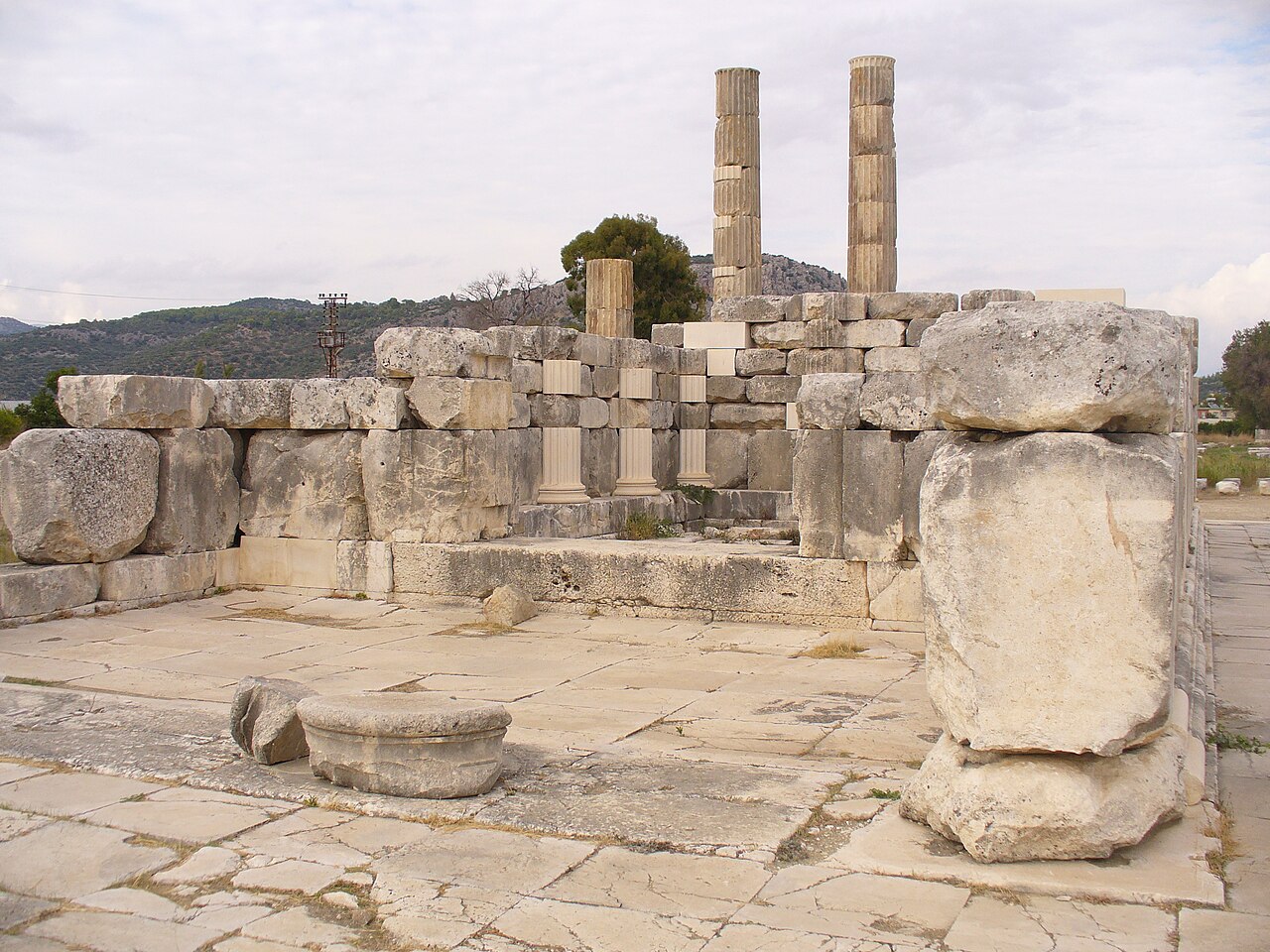

Letoon Ancient City: The House of Gods and the Spiritual Capital of Lycia
If Xanthos was the administrative capital within the federal structure of the Land of Light, Lycia, and Patara was its commercial center, Letoon Ancient City was undoubtedly the spiritual conscience and religious heart of the entire civilization. Rising within the fertile valley of the Eşen River in a mystical atmosphere accompanied by reedbeds and turtles, this sacred sanctuary hosted the joint religious ceremonies, national festivals, and diplomatic gatherings of the Lycian League since the 7th century B.C.
Letoon was designed as a “Pan-Lycian” (All-Lycia) sanctuary rather than a sovereign city-state. This was a temple where the Lycians not only offered sacrifices to the gods but also reinforced their national identity, took collective decisions, and experienced the true honor of being “Lycian.”
A Mythological Flight: The Thirst of Leto
The foundation of Letoon is based on one of the most dramatic stories of ancient mythology. According to legend, Goddess Leto, who became pregnant by Zeus, sought refuge in the lands of Lycia while fleeing the wrath of his jealous wife, Hera. After giving birth to her twins, Apollo and Artemis, on the island of Delos, she reached the water source in Letoon to quench her thirst.
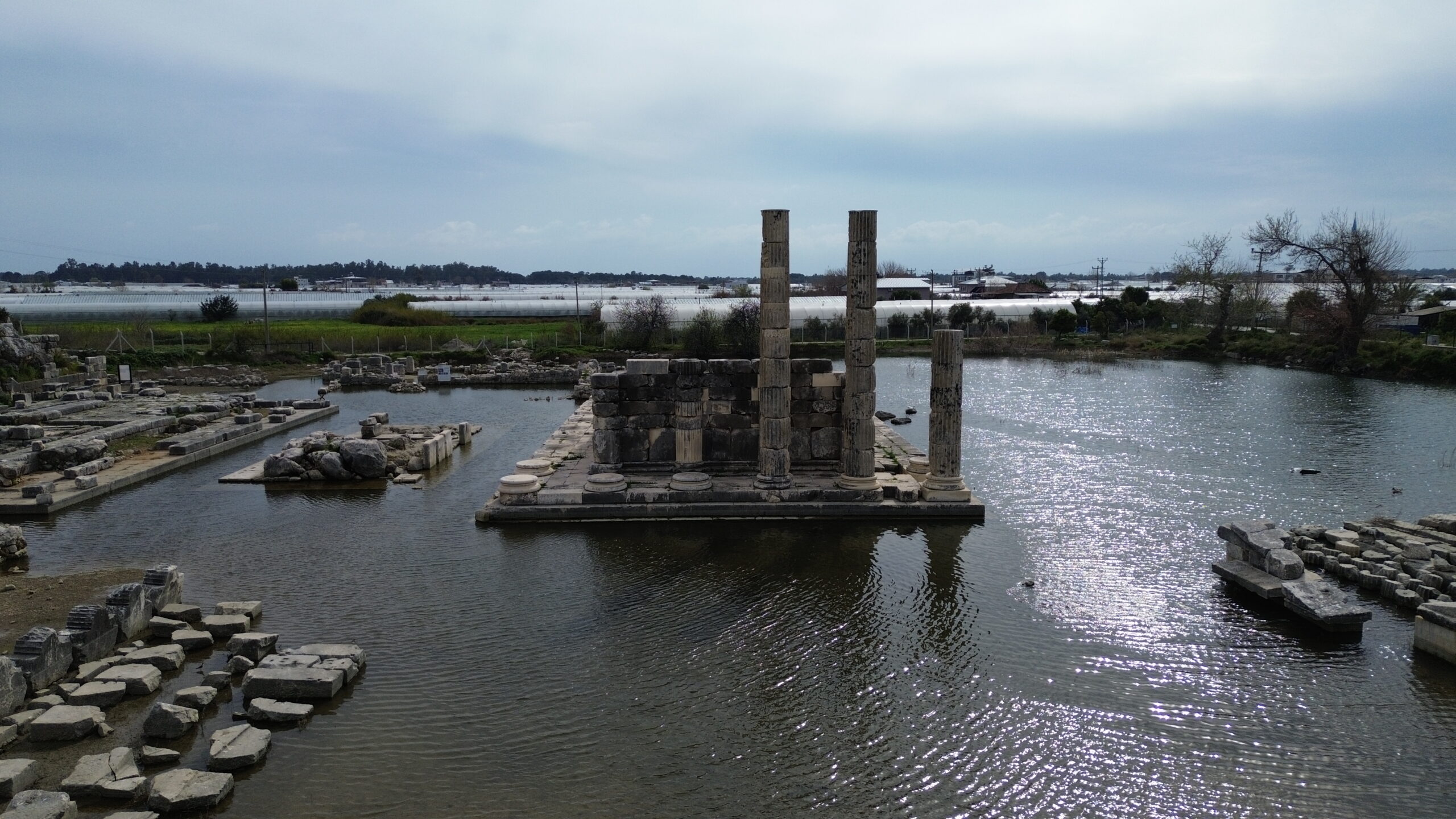
However, the local shepherds did not allow Leto to drink from the sacred water and muddied the source. In the face of this disrespect, Goddess Leto transformed the shepherds into frogs. Even today, the intense chorus of frogs coming from the water pools where the ancient theater and the monumental fountain (Nymphaeum) are located is accepted as a living proof of this ancient legend. You can examine our Lycian History page for more details regarding the impact of this fascinating story on the region’s belief system.
Three Sacred Temples: Leto, Artemis, and Apollo
The architectural hierarchy of Letoon is built upon three massive temples constructed parallel to each other. These structures represent the architectural ingenuity and religious reverence of the ancient world:
1. The Temple of Leto (The Giant of the West)
The largest and most imposing of the temples, the Temple of Leto was built in the Peripteros plan and Ionic order. Dating back to the 4th century B.C., this structure was dedicated to the chief goddess of the sanctuary. Excavations carried out around the temple have brought the oldest settlement layers of the site to light.
2. The Temple of Artemis (The Elegant Bridge in the Middle)
Located right in the middle of the Leto and Apollo temples, this structure of more modest dimensions was dedicated to the huntress goddess Artemis. This sacred triad featuring two siblings and their mother forms the very foundation of the Lycian pantheon.
3. The Temple of Apollo (The Artistic Masterpiece of the East)
Situated on the eastern wing and built in the Doric order, the Temple of Apollo reflects the artistic strength of the site. The Apollo Mosaic, which was found on the floor of the temple and is exhibited today in the museum for preservation, depicts the attributes of the god with bow, arrow, and lyre motifs.
An Archaeological Revolution: The Letoon Trilingual Inscription
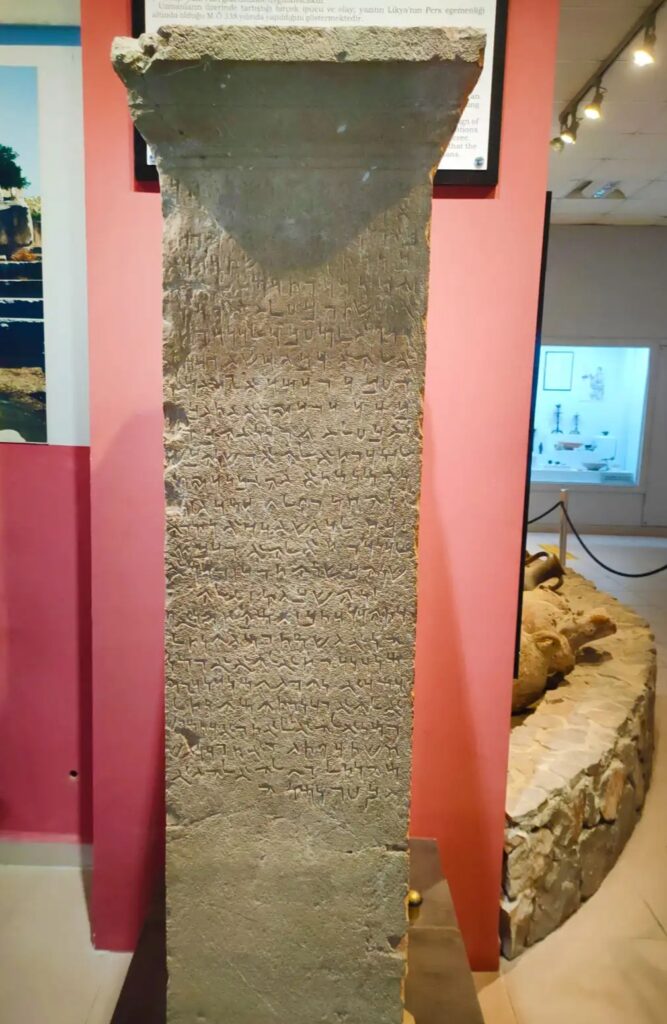
The Letoon Ancient City is unique not only for its stones but also for its documents that guided world philology (linguistics). The Trilingual Inscription, discovered near the Temple of Leto in 1973 and dated to 358 B.C., served as a “Rosetta Stone” in the decipherment of the Lycian language.
- Languages: The inscription was written in the Lycian, Greek, and Aramaic languages.
- Importance: Thanks to this decree, we are able to read Lycian texts today and comprehend the social structure of the Land of Light.
- Location: This priceless historical document is exhibited today in the Fethiye Archaeology Museum.
The Nymphaeum and the Ancient Theater: The Meeting of Water and Art
Located southwest of the sanctuary, the Nymphaeum (Monumental Fountain) is the most mystical structure of the site. Built over the sacred water source where Leto is believed to have washed her children, this structure was remodeled during the Roman period in honor of Emperor Hadrian.
The Letoon Theater, leaning against the hill at the back of the site, was a venue where religious ceremonies and sacred games were staged. The vaulted entrances and seating rows of the theater possess a remarkably large capacity for a religious center; this stands as proof of the thousands of visitors who flooded the sanctuary during religious festivals.
You can browse our Lycian Flora guide for the vegetation growing in this wetland and mystical structure of the region, and our Lycian Fauna guide for the waterfowl.
🏛️ The Sacred Stop on the Lycian Way
The Letoon Ancient City is one of the most critical stops along the Lycian Way, which is ranked among the top 10 long-distance walking routes in the world. Hikers generally set out from Xanthos, take a break in the sacred atmosphere of Letoon, and proceed from there toward the sand dunes of Patara. During your visit in 2026, do not forget to watch the sea daffodils around the site and the turtles inside the sacred water, especially during the spring months. You can follow the website of the T.R. Ministry of Culture and Tourism for current archaeological works and museum information.
🏛️ Frequently Asked Questions (FAQ)
How do I get to Letoon Ancient City?
You can reach it by entering the Kumluova turnoff on the main highway between Fethiye and Kaş. It is approximately 65 km from Fethiye and 50 km from Kaş. Since it is a neighbor to the Xanthos Ancient City, you can visit both sites on the same day.
What is the place of Letoon on the UNESCO World Heritage List?
Letoon, along with its neighbor Xanthos, was inscribed onto the UNESCO World Heritage List as a joint file in 1988. This situation demonstrates that the two sites form an inseparable whole.
Why is the sacred sanctuary partially submerged under water?
Letoon is located in a valley where the groundwater level is high. Although a portion of the temples is submerged under water especially during the winter and spring months, this situation lends a legendary “water temple” atmosphere to the site.
Is the Museum Pass (Müzekart) valid and is there an admission fee?
Yes, Letoon Ancient City is an archaeological site affiliated with the Ministry of Culture and Tourism, and the Museum Pass (Müzekart) is valid.