

Tlos Ancient City: The Legend on the Summit of the Akdağlar Mountains
Located within the boundaries of the Yaka Neighborhood in the Seydikemer district of Muğla, Tlos Ancient City stands as one of the most critical hubs in the entire Lycian geography. Established on the steep western slopes of the Akdağlar Mountains, the city commands a sweeping view of the vast valley nourished by the abundance of the Eşen (Xanthos) River. This strategic positioning made Tlos not merely a residential area, but an impregnable military garrison and an economic powerhouse in the ancient world.
In continuous interaction with its ancient neighbors —Araxa, Oinoanda, Kadyanda, Xanthos (Arñna), Pinara, and Telmessos— Tlos was situated at the absolute center of the transport and trade networks of the region.
From the Hittites to Lycia: The Story of Tlava and Dalawa
Tlos is one of the oldest settlements in the Lycian region. Rather than being of Hellenic origin, the city’s name is a heritage preserved from the indigenous languages of Anatolia:
- The Hittite Period: In Hittite cuneiform documents, the city is mentioned as “Dalawa”. Hittite texts define it as a “country” rather than a mere settlement, which stands as a clear indicator of its political power during that era.
- The Lycian Period: The Lycians named the city “Tlawa” in their native language. Archaeological discoveries, including stone axes, bronze daggers, and arrowheads dating back to the Bronze Age, push the history of the settlement back to the Neolithic period.
Mythology and Pegasus: The Legacy of Bellerophon
During the period of Greek colonization, settlers arriving in Lycia crafted grand myths for Tlos. According to these legends, the city was founded by Tloos, the son of Tremilus and Praxidike. However, the city’s true global renown stems from the myth of Bellerophon and Pegasus.
According to mythology, Bellerophon, who incurred the wrath of the gods, lived in Tlos alongside his winged horse, Pegasus. The most famous tomb in the city’s necropolis, the Bellerophon Tomb, features high-relief carvings of this hero riding Pegasus. This monumental tomb serves as the most important physical evidence etching Tlos’s mythological identity into stone.
🏛️ The Architectural Masterpieces and Ruins of Tlos Ancient City
Tlos grew extensively during the Roman period, earning the prestigious title of “Metropolis” (Mother City). Today, you can witness this grandeur in every corner of the site:
1. The Acropolis and the Ottoman Castle: Kanlı Ali Ağa
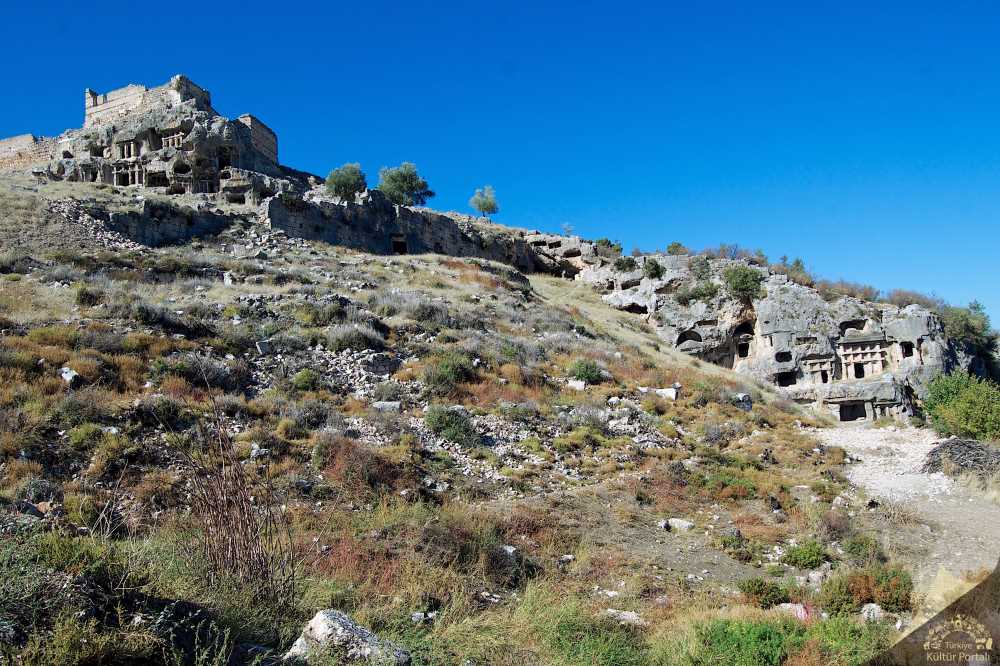
The acropolis rising at the highest point of Tlos served as the defensive heart of the city. However, it hosts a highly fascinating historical layer: in the 19th century, a powerful local feudal lord (derebeyi) named “Kanlı Ali Ağa” built his personal castle directly over the ancient acropolis foundations. This stands as a vivid example of Tlos’s continuous settlement pattern spanning from the Hittite period all the way to the Ottoman Era.
2. The Theater and the Stadium
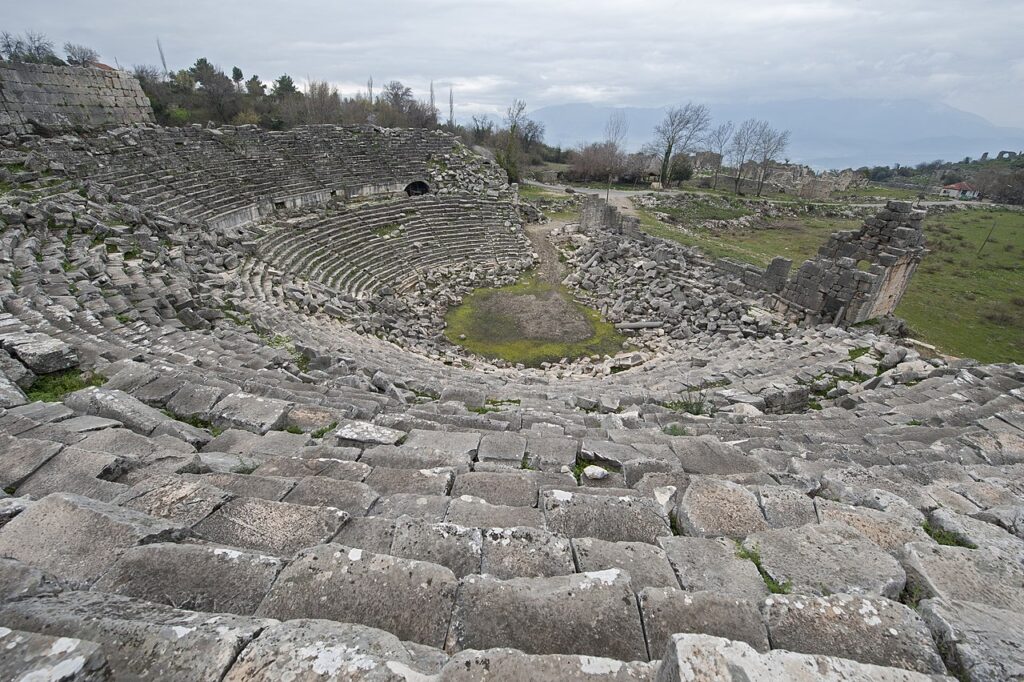
The Tlos Theater is one of the best-preserved and most aesthetically striking structures in Lycia. Located directly opposite, the stadium reflects the immense importance the city placed on athletic games. The remains of a pool structure situated in the center of the stadium are an aesthetic detail designed to cool off ancient athletes.
3. Rock-Cut Tombs and the Necropolis
Carved with lace-like precision into the rocky slopes, the rock-cut tombs mirror Lycian civic architecture onto stone. These tombs, adorned with temple-style facades, served as the eternal resting places for the wealthy families of Tlos.
🏛️ Three Fundamental Features to Know About Tlos
| Criterion | Detail |
| Political Status | Holds the title of “Metropolis” with three voting rights in the Lycian League. |
| Historical Depth | Preserves physical traces ranging from the Hittites (Dalawa) to the Ottomans (Kanlı Ali Ağa Castle). |
| Mythological Core | Serves as the primary legendary home of Pegasus and Bellerophon. |
The Christian Era and the
Bishopric Center
The importance of Tlos increased further when the Roman Emperor Claudius transformed Lycia into a Roman province, subsequently becoming one of the religious leader cities during the Christian era. The remains of a massive basilica and neighboring churches prove that Tlos successfully maintained its strategic weight as a prominent bishopric center during the Byzantine period.
Geography and Nature: The Cool Breeze of the Akdağlar Mountains
Due to its unique location, Tlos is one of the richest observation points for the Lycian Flora. Cold water springs flowing down from the heights of the Akdağlar Mountains foster a lush, vibrant vegetation around the city. Exploring the ruins in the spring months amidst wild daisies and the scent of thyme refreshes all of your senses. You can visit our Lycian Fauna page for the diverse wildlife and local bird species of the region.
2026 Travel Notes and Recommendations
- Begin the Day at the Acropolis: Climb the acropolis in the early morning to watch the sunrise over the Eşen Plain; the view of the valley emerging from the morning mist is absolutely spellbinding.
- Acoustic Test in the Theater: Climb to the top row of this massive Lycian theater and try to hear your friend whispering down on the stage.
- Examine the Rock Tombs: Bringing a pair of binoculars is highly recommended to examine the fine craftsmanship of the cliffside tombs, especially the detailed Bellerophon relief.
🏛️ The Capital of Continuity
Tlos Ancient City serves as a powerful reminder that history is not made of isolated eras; a Hittite soldier, a Lycian noble, a Roman senator, and an Ottoman lord all stepped onto this very same soil. This site, where you can easily imagine the beating wings of Pegasus, is a true summary of Anatolia. Do not forget to follow the website of the T.R. Ministry of Culture and Tourism to keep up with current excavation data and restoration efforts for 2026.
🏛️ Frequently Asked Questions (FAQ)
How do I get to Tlos Ancient City?
You can reach the site by turning toward the Saklıkent direction at the 35th kilometer of the Fethiye-Antalya highway and following the signposts for Yaka Village. It is approximately a 45-minute drive from the center of Fethiye.
Is there an admission fee and is the Museum Pass (Müzekart) valid?
Yes, Tlos is open to visitors as an organized archaeological site, and the Museum Pass (Müzekart) is valid at the entrance.
Where is the tomb with the Pegasus relief located?
The Bellerophon Tomb is located on the rocky slope right below the acropolis. It is highly recommended to follow the marked path to locate and view the tomb safely.
How far is it from Yaka Park?
The famous Yaka Park trout farms and recreational facilities are situated just 2 kilometers up from the ancient city. Following your tour of Tlos, you can relax amidst its natural cold-water springs.