

A Dynastic-Period Settlement Overlooking Kekova
Hoyran Ancient City is a small Lycian settlement on a hill about 500 m high, south of the village of Hoyran in the Kekova area and about 4 km inland from the coast. Its ancient name is unknown; the name used today comes from the nearby village.
Hoyran was not a large city, but its rock-cut tombs and Lycian inscriptions show that it was an important settlement in Lycia’s dynastic period, the 5th and 4th centuries BC, when the region was ruled by local dynasts. The hilltop offers a wide view over the Kekova coast and its islands.
History
The walls around the hill were built and repaired in several phases, from Lycia’s dynastic period to the Eastern Roman (Byzantine) period, showing that the site was used for about a thousand years. Inside the walls are the remains of buildings carved into the bedrock.
Hoyran belonged to the same world as the other small settlements of the Kekova area, such as Simena, Teimiussa, Istlada and Apollonia: places close to the sea but set on sheltered hills.
The Tombs of Hoyran Ancient City
Hoyran’s real value lies in its tombs.
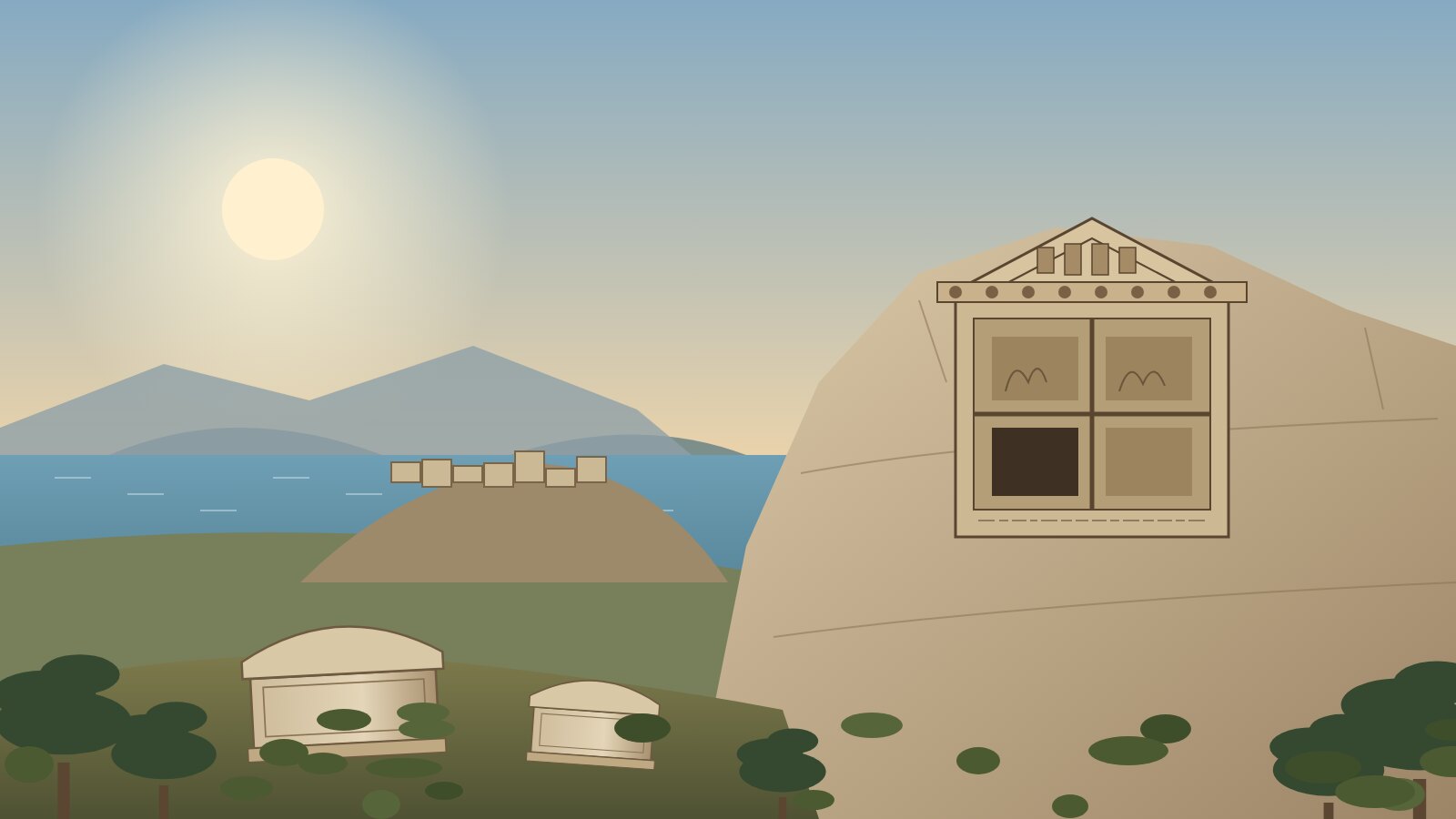
- The Hoyran Tomb (Tomb of the Son of Ta): A monumental rock-cut tomb about 1 km north of the acropolis, dated to the first half of the 4th century BC. Its façade is carved, in the Lycian manner, to look like a timber house translated into stone. It carries reliefs and Lycian inscriptions, which state that the tomb belonged to the son of a man named Ta.
- Rock-cut tombs: The slopes hold many rock-cut tombs, some with Lycian inscriptions.
- Necropolis: Many sarcophagi stand in the area between the village and the acropolis.
- The Tomb of Tlepolemos: A Hellenistic rectangular tomb built of blocks. Its form differs from typical Lycian tombs and reflects the changing taste of its time.
Lycian tomb inscriptions usually say who built the tomb and who may be buried in it. They are evidence that the Lycians kept their own language and Anatolian traditions. For more, see our Lycian City Names and Lycian Architecture articles.
Visiting Information
Hoyran has not been excavated. There is no entrance, ticket office or signage at the site. The remains are reached by paths from the village of Hoyran; the ground is rocky and steep in places. Wear sturdy shoes, carry water and avoid the midday hours in summer. The Hoyran Tomb lies apart from the acropolis, so it helps to ask for directions in the village.
Please do not touch the tombs or inscriptions, and do not move any fragment. On the same day you can also visit Simena and Teimiussa in the Kekova area.
❓Frequently Asked Questions
Where is Hoiran Ancient City?
On a hill south of the village of Hoyran in the Kekova area, about 4 km inland from the coast.
What was Hoiran’s ancient name?
Its ancient name is unknown. The name used today comes from the nearby village of Hoyran.
What can be seen at Hoiran?
The 4th-century BC Hoyran Tomb with its Lycian inscriptions, rock-cut tombs on the slopes, sarcophagi and the walls around the hill.
Image: Voice of Lycia illustration.