

The North-Eastern Edge of Lycia
Trebenna Ancient City lies east of the village of Çağlarca in the Konyaaltı district of Antalya, in the mountainous country west of Antalya’s city centre. It stood at the north-eastern edge of Lycia, on the border with Pamphylia, which is why some sources assign it to Pamphylia. Its name appears in inscriptions and on coins as Trebenna or Trabenna.
Trebenna is the Lycian city closest to central Antalya, and Geyikbayırı, the eastern end of the Lycian Way, lies nearby.
History
Trebenna’s name first appears on the Patara Road Monument (AD 45/46). Its situation in the Hellenistic period is debated: some researchers believe it was then controlled by the nearby Pisidian city of Termessos, but firm evidence for this period is limited.
In the Roman period Trebenna was a member of the Lycian League. Under the Emperor Gordian III (AD 238–244) it gained the right to mint its own coins. An inscription dated 278/279 records that the city was given the status of a Roman colony under Terentius Marcianus, governor of Lycia-Pamphylia. In the Eastern Roman (Byzantine) period it became part of the province of Pamphylia.
The city was introduced to modern scholarship by the Polish-Austrian scholar Karl Lanckoroński, who led a scientific expedition to Lycia in 1882. Surface surveys in the 2000s, led by Prof. Nevzat Çevik, documented its history and remains in detail.
What to See at Trebenna Ancient City
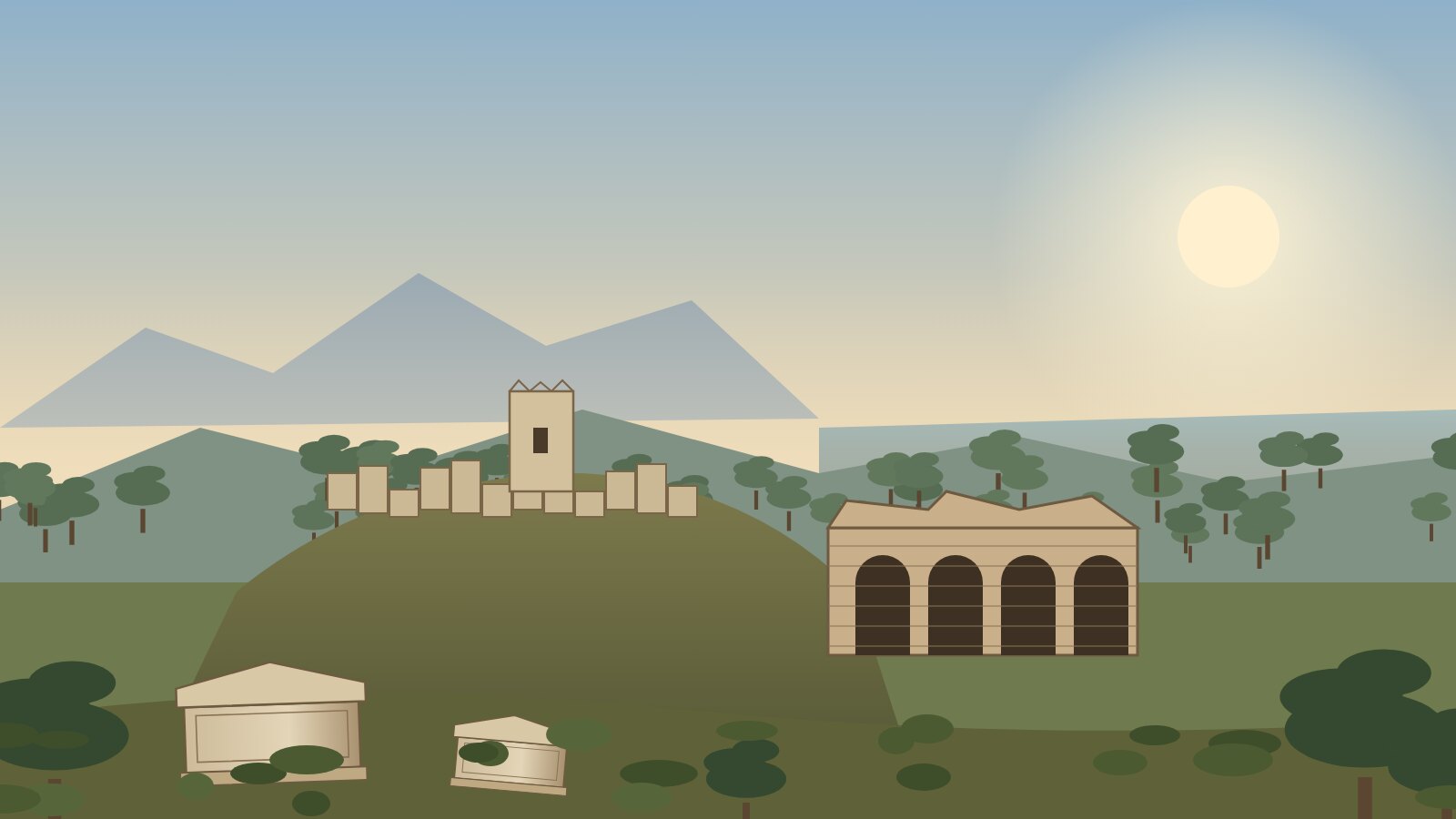
The remains are spread over a wide area between the acropolis on a small hill and the slopes of Sivridağ.
- Acropolis and walls: Early Eastern Roman (Byzantine) walls around the hill. The acropolis was remodelled in the middle Byzantine period.
- City centre: From the Roman period, an ekklesiasterion (assembly building), a sebasteion (building for the imperial cult), a stoa and an agora.
- Roman bath: A well-preserved bath building on the slope south of the acropolis.
- Basilica and church: An early Eastern Roman (Byzantine) basilica and a middle Byzantine church.
- Necropoleis: The Elmin necropolis to the south and the Irımlı necropolis to the west hold monumental tombs and many sarcophagi.
A Conservation Problem
Despite being close to the city, Trebenna is little known, which leaves it vulnerable. According to press reports in 2024, treasure hunters with metal detectors damaged the city gate and dug into three ancient tombs. If you see signs of illegal digging, please report them to the gendarmerie or the Antalya Museum Directorate. See our Sustainable Travel and Ethics Guide for details.
Visiting Information
Trebenna has not been systematically excavated. The site is reached by the road from Antalya towards Konyaaltı and Çağlarca. The remains are scattered over wooded, rocky ground, so wear sturdy shoes and carry water. Entry is free and there are no visitor facilities. Walkers on the Lycian Way can add Trebenna to their trip, as it lies near Geyikbayırı at the end of the trail.
❓Frequently Asked Questions
Where is Trebenna Ancient City?
East of the village of Çağlarca in the Konyaaltı district of Antalya.
Is Trebenna a Lycian or a Pamphylian city?
In the Roman period it was a member of the Lycian League and is regarded as Lycia’s north-easternmost city. Because it became part of the province of Pamphylia in the Eastern Roman (Byzantine) period, some sources list it as Pamphylian.
Has Trebenna been excavated?
There has been no systematic excavation; the city has been documented through surface surveys.
Image: Voice of Lycia illustration.