

Antiphellos Ancient City: A Lycian Pearl in the Azure of Kaş
Known as Habessus or Habesa in the Lycian language, the Ancient City of Antiphellos is one of the most significant port settlements in the Land of Light. The name “Antiphellos,” which the city is known by today, translates to “the place opposite the rocky place” or “opposite Phellos.” Built directly atop modern-day Kaş, this ancient settlement is one of the rare places in the world where history and modern life are seamlessly intertwined.
Initially serving as the port for Phellos, located in the mountainous inland, Antiphellos eventually surpassed its parent city as commercial activities flourished. Becoming one of the most strategic ports in the region during the Hellenistic and Roman periods, the city achieved great wealth, particularly through the trade of cedar wood sourced from the Taurus Mountains and the sponge-diving industry.
Antiphellos Ancient City and its Role in the Lycian Economy
Antiphellos was not merely a port; it was a powerful commercial center within the Lycian League, possessing a single vote in the union and the authority to mint its own coins. The city’s economy relied on cedar trees the jewel of the Lycian Flora and vital for shipbuilding in the ancient world. Bringing this precious timber down from the mountains to the harbor transformed Antiphellos into a self-sufficient metropolis that overshadowed its neighbor, Phellos.
Archaeological remains of the ancient city are concentrated today in the center of Kaş and especially on the Çukurbağ Peninsula. On the face of the Acropolis hill at the entrance of the peninsula, overlooking Meis (Kastellorizo) Island, one can still discern the Hellenistic fortification walls that once demonstrated the city’s defensive strength. At the point where the walls overlook the harbor, there is an old church now converted into a mosque, and to its southeast, a temple temenos dedicated to an unknown deity. This structure, dating back to the 1st century B.C., is an essential component of the city’s religious architecture.
The Sea-Facing Theater and Architectural Wonders
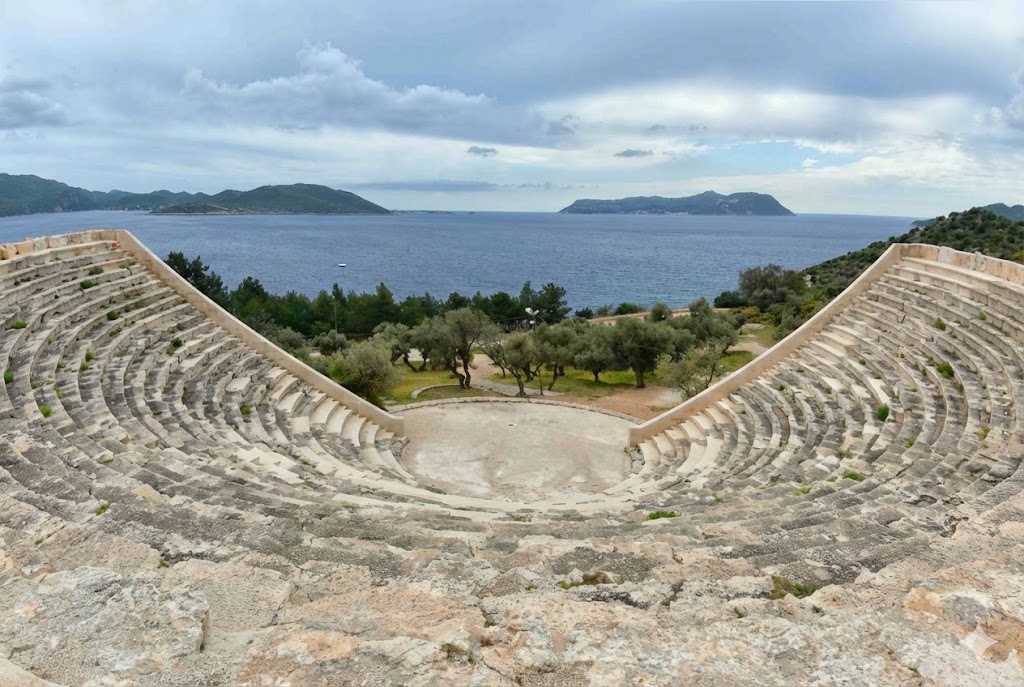
The most iconic structure associated with the Ancient City of Antiphellos is the ancient theater on the southern slope of the Acropolis hill. The most distinctive feature that sets this theater apart from other Lycian theaters is its rare construction facing the sea, a hallmark of only a few theaters in Anatolia.
- Antiphellos Theater: This Hellenistic-period masterpiece features 26 rows of seats (cavea) and has a capacity of approximately 4,000 spectators. Notably, it lacks a permanent stone stage building (skene), allowing the audience to enjoy the breathtaking view of Meis Island on the horizon while watching plays. It is considered the best-preserved structure in the city.
- The Tomb of the Women: Located northeast of the theater, this tomb chamber, carved into the bedrock and adorned with twenty-four female reliefs, dates back to the 4th century B.C. Despite some erosion over time, it remains one of the finest examples of tomb art featuring female figures in the region.
The Symbol of Kaş: The Lion Tomb and Rock-Cut Tombs
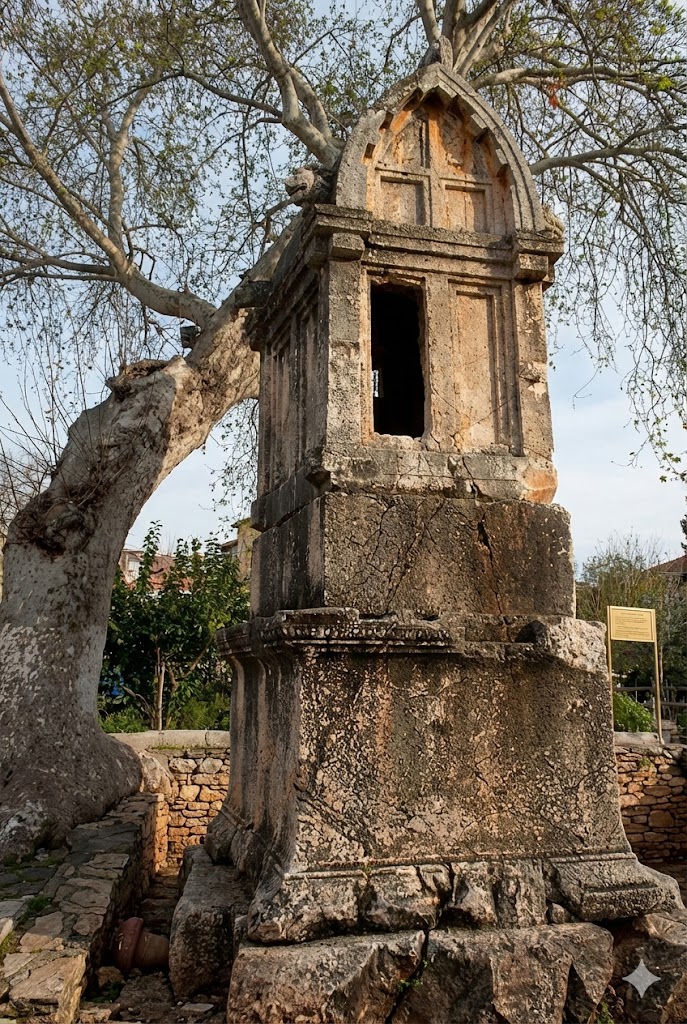
The city’s most photographed monument and enduring symbol is the Lion Tomb (Aslanlı Lahit) located in the market area. Dating to the 4th century B.C., this monument, with its hyposorion (sub-base) structure, lion-head shaped projections, and Lycian inscriptions, is a masterpiece of Lycian tomb art. This monument stands as the most magnificent representative of the aristocratic tomb tradition within Lycian History.
Furthermore, the hills bordering the northeast of the city are dotted with numerous Lycian-style rock tombs. The most intriguing among them is a tomb where the second floor is shaped like a Gothic arch, featuring a Lycian inscription. When reused centuries later by a woman named Claudia Recepta, the addition of a Latin inscription served as a concrete testament to cultural continuity. Meanwhile, the sarcophagi found in the water and near the shore around the harbor complete the city’s poignant, submerged beauty.
🏛️ Antiphellos Travel Guide
The theater of the Ancient City of Antiphellos and the sarcophagi in the marketplace are free to visit. The city is also a primary stop on the world-renowned Lycian Way route. For information regarding archaeological studies and official museum card details, you can visit the official website of the T.R. Ministry of Culture and Tourism – Museum Card for updated information in 2026. Do not forget to browse the diving routes on our Lycian Sea page to discover the submerged ancient harbor ruins.
🏛️ Frequently Asked Questions (FAQ)
What does Antiphellos mean?
A name given during the Hellenistic period, Antiphellos means “the place opposite Phellos.” The original Lycian name of the city is Habessus.
Where is the Antiphellos Theater?
It is located on the seashore at the very beginning of the road leading from the Kaş town center to the Çukurbağ Peninsula. It is a 5–10 minute walk from the city center.
To whom does the Lion Tomb belong?
Despite the Lycian inscription on it, it is not known exactly who is buried in the tomb; however, the lion figures and the craftsmanship indicate that a very important ruler or nobleman is interred there.