

Myra Ancient City: The Magnificent Metropolis of Lycia
Located in and around the center of the Demre district of Antalya province, Myra Ancient City was connected to the sea via the Andriake (Çayağzı) Port, one of the most important harbor cities of the ancient world. Thanks to navigable channels west of the Myros River, the heart of trade beat right here.
Myra proudly bears the title of “Metropolis of Lycia” due to its unique rock-cut tombs dating back to the Lycian Period, its monumental theater from the Roman Period, and for being the site where St. Nicholas (Santa Claus)—one of the most significant religious figures of the Byzantine Period—served as archbishop.
The Pompeii of Anatolia: The Hidden Layers of Myra
Excavations conducted since 2009 under the direction of Prof. Dr. Nevzat Çevik offer clues not only about the visible parts of the city but also about its hidden treasures buried meters underground. According to Çevik, the earliest name of the city was “Muri”.
One of the most intriguing features of Myra is that a large portion of the city remains buried under alluvial silt carried by the Myros River. This condition has earned the city the title “The Pompeii of Anatolia”. The theater and necropolis area we visit today are only a small fraction of the city; the actual metropolis lies 5 to 10 meters beneath modern Demre, awaiting discovery.
The Magic of Rock Tombs: The River and Ocean Necropolises
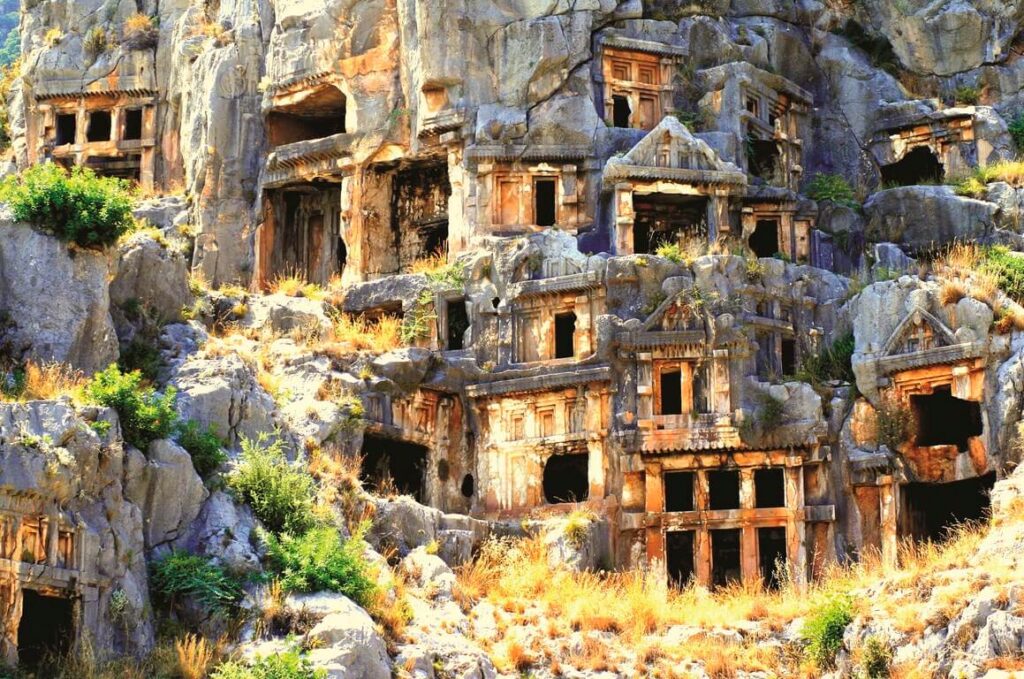
The first image that comes to mind when Myra Ancient City is mentioned is its rock-cut tombs, carved into steep cliffs like lace. The city features two main necropolis (cemetery) areas:
- Ocean (Theater) Necropolis: Rising on the cliffs right next to the ancient theater, these tombs belong to the noble families of the city.
- River Necropolis: Located east of the Myros River, this region offers the most original examples of funerary architecture.
The Painted Tomb: The Meeting of Colors and Art
The most important monument of the river necropolis is the “Painted Tomb”, discovered in 1840 by the traveler Charles Fellows. Fellows noted that when he first saw the tomb, its red, yellow, blue, and purple colors were still vivid. Although only traces of these colors remain today, the 11 life-sized human figure reliefs on the tomb represent the pinnacle of Lycian art. You can browse our Lycian Ancient Cities List page for the detailed architecture of these tombs.
Myra Ancient Theater: A Masterpiece of Roman Engineering
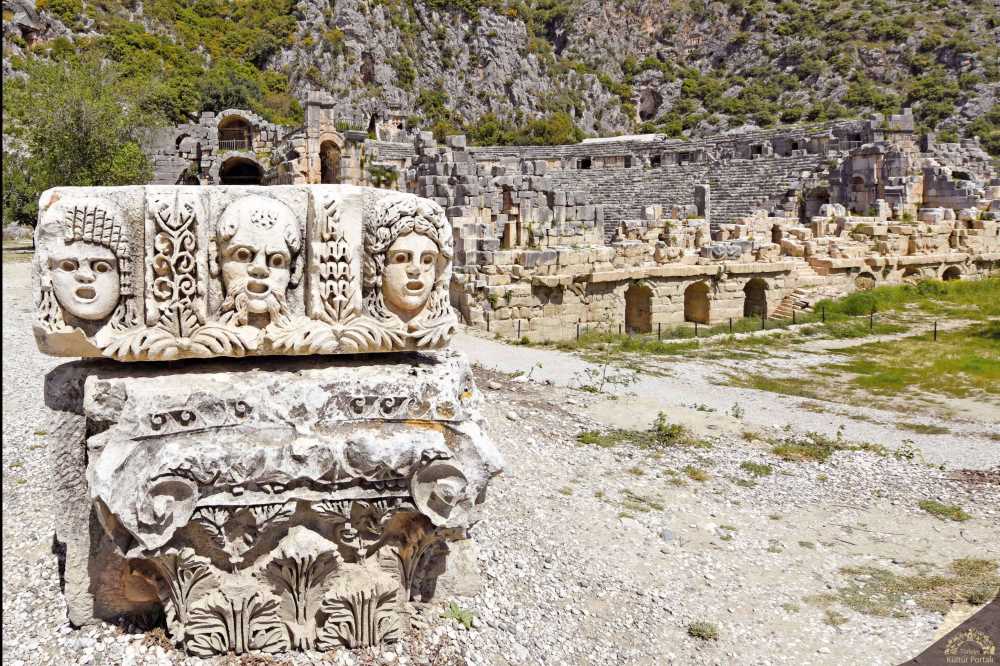
The most intact and impressive structure of Myra is undoubtedly the Ancient Theater belonging to the Roman Period. With a seating capacity of approximately 11,000 people, this structure is one of the largest theaters in Lycia, built not only for spectacles but also as a demonstration of the city’s social power.
- Architectural Details: The stage building (skene) of the theater is decorated with mythological figures and theatrical masks. In particular, the mask reliefs at the orchestra entrances reflect the artistic understanding of the city.
- Acoustics and the Acropolis: The Acropolis, situated on the mountain right above the theater, was the defense center of the city. Although largely destroyed today, the sweeping view of the Demre Plain can be admired from this vantage point.
St. Nicholas (Santa Claus) and the Religious Importance of Myra
Myra is a priceless religious center for the Christian world. Serving as the archbishop of the city in the 4th century A.S. (A.D.) during the reign of Emperor Theodosius II, St. Nicholas forms the historical basis of the globally recognized “Santa Claus” figure.
- Center of the Episcopacy: Between 408 and 450 A.S., Myra became the capital of the Lycian province, and St. Nicholas carried out his duties here.
- The Visit of St. Paul: It is known that St. Paul changed ships at Andriake, the port of Myra, while traveling to Rome in the 60s A.S. This confirms the logistical importance of the city during the early Christian era.
- St. Nicholas Church: Located in the district center and utilized as a museum today, the St. Nicholas Church welcomes thousands of pilgrims and tourists every year.
Myra Ancient City Essential
Information Table
| Feature | Detail |
| Location | Antalya / Demre |
| Lycian League Status | Capital and Metropolis (3 Voting Rights) |
| Most Important Structures | Roman Theater, Rock Tombs, St. Nicholas Church |
| Harbor | Andriake (Çayağzı) |
| Historical Periods | Lycian, Hellenistic, Roman, Byzantine |
| UNESCO Status | World Heritage Tentative List |
🏛️ A Stop in the Heart of the Lycian Way
The Myra Ancient City is located along the Lycian Way, ranked among the best long-distance walking routes in the world. Hikers generally pass through Demre and experience the ancient atmosphere of the city via Andriake. You can take a look at our Lycian Flora guide to get to know the vegetation of the region during your trip and follow the website of the T.R. Ministry of Culture and Tourism for current excavation news for 2026.
🏛️ Frequently Asked Questions (FAQ)
How do I get to Myra Ancient City?
You can easily reach it by following the signs from the Demre district center on the Antalya-Kaş highway. It is approximately 140 km from Antalya center and 45 km from Kaş.
Can visitors enter inside the rock-cut tombs?
Due to safety and preservation regulations, entry inside most rock tombs is not permitted; however, the necropolis area next to the theater can be examined from up close.
Is the Museum Pass (Müzekart) valid and is there an admission fee?
Yes, Myra holds the status of an official archaeological site, and the Museum Pass (Müzekart) is valid at the entrance. Separate tickets or passes may be required for the St. Nicholas Church and the Andriake Museum.
What is the best time to visit Myra Ancient City?
Demre is quite hot during the summer months. The most ideal visiting times are the spring months or sunny winter days. Early morning hours offer the best light for photography.