
Xanthos Ancient City: The Heart of Lycia and Legacy of Arnna
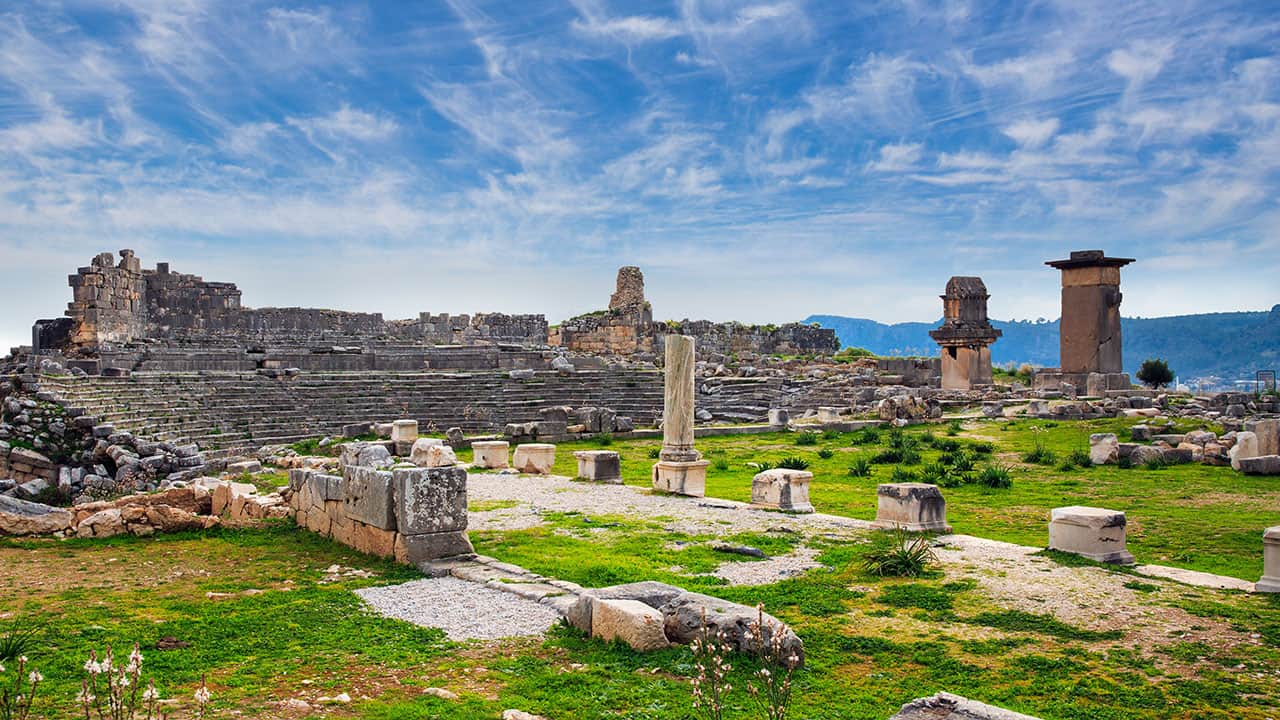
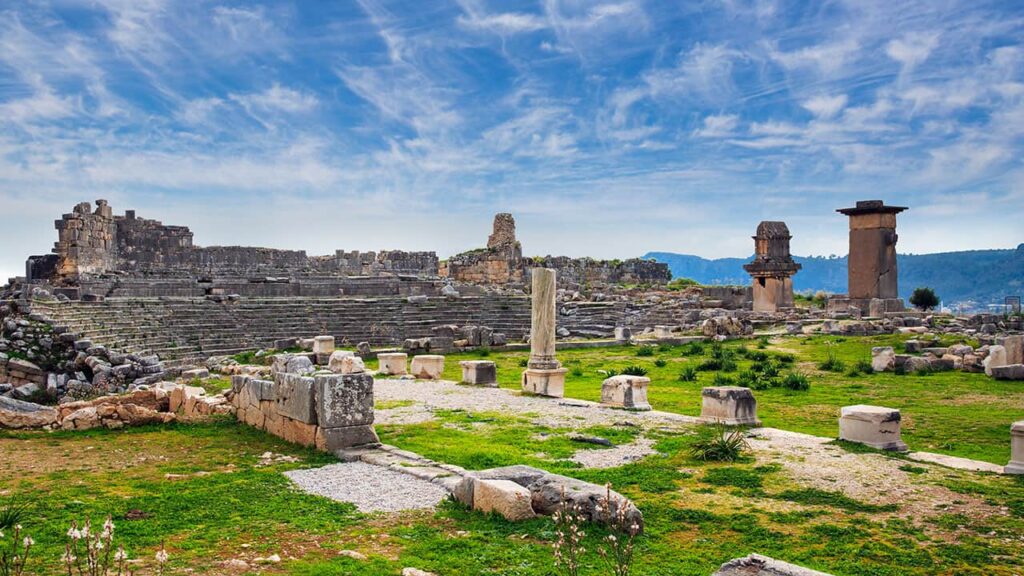
Located on the border of Antalya and Muğla, in the Kınık village of the Kaş district, Xanthos Ancient City is the most magnificent and tragic capital of the Land of Light, Lycia. Known in the Lycian language as Arnna, this ancient city served as the administrative and religious center of the Lycian League in antiquity. The name Arnna, just like its Greek counterpart Xanthos, means “Yellow,” deriving its name from the fertile, yellowish color of the Eşen Stream (Xanthos River) flowing right beside it.
Built upon two hills commanding the valley, the city stands out with its multi-layered structure. The Lycian Acropolis by the Eşen Stream bears the traces of the early period, while the higher and wider Roman Acropolis to the north reflects imperial grandeur. Its inclusion in the UNESCO World Cultural Heritage List in 1988 alongside the sacred center of Letoon registers the universal importance of Xanthos Ancient City.
Xanthos Ancient City History: The Epic of Mass Suicide for Freedom
Throughout its history, Xanthos Ancient City faced numerous invasions, yet it was always remembered for its fierce dedication to freedom. When Harpagos, the commander of the Persian armies, besieged the city in 546 B.C., the people of Xanthos refused to surrender. According to the historian Herodotus, rather than being enslaved, the Xanthian men gathered their wives, children, and all their treasures in the acropolis, set it on fire, and then charged at the Persians, fighting to their last breath.
This mass suicide stands as the most painful yet honorable symbol of the unyielding character of the Lycians. Centuries later, in 42 B.C., the city shared a similar fate when besieged by the Roman general Brutus, attempting to rise from its ashes once again out of a passion for liberty. You can explore more about this resistant spirit of the region on our Lycian History page.
Xanthos Ancient City Architectural Scandal: The Harpy and Nereid Monuments
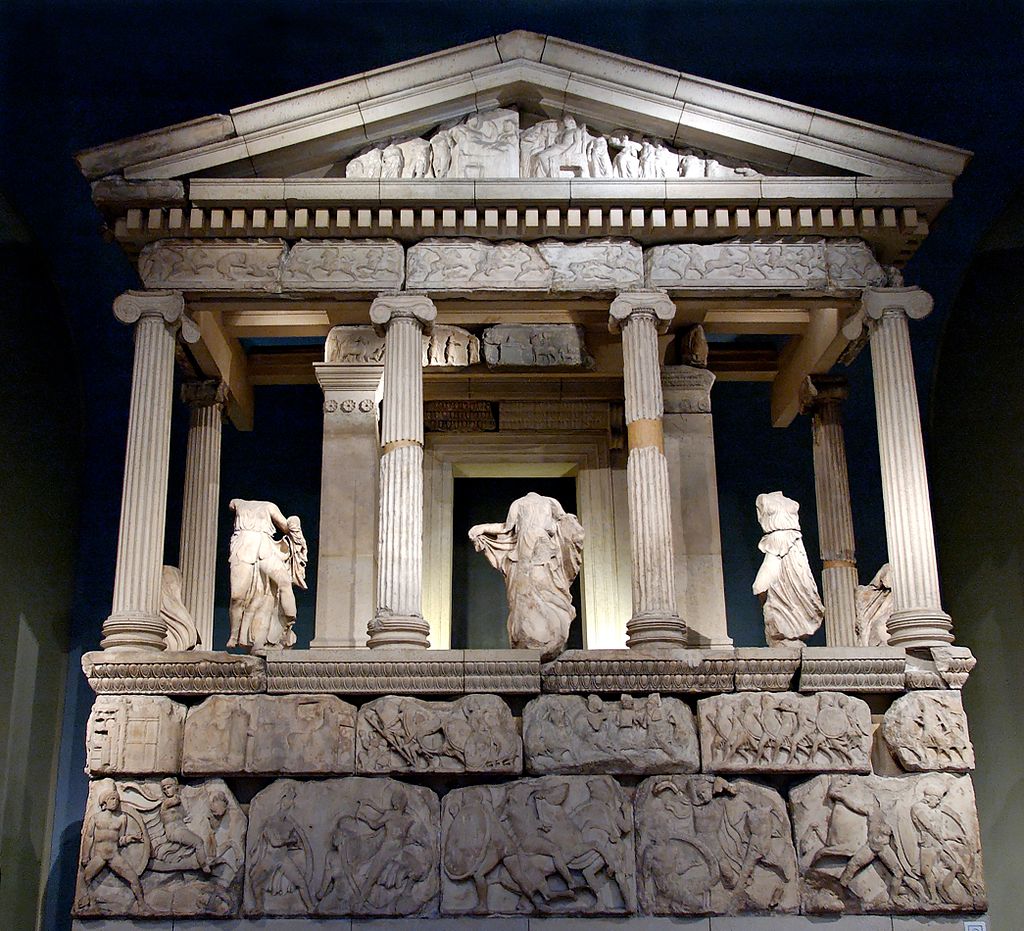
The most magnificent structures that greet you upon entering Xanthos Ancient City are its monumental tombs. However, this is where the city’s melancholic story of “loss” begins. In 1838, British archaeologist Charles Fellows visited the city; unfamiliar with Lycian traditions, he likened the reliefs on the monument to creatures from Greek mythology and named it the Harpy Monument.
Fellows smuggled 70 crates of archaeological artifacts out of the country to England, including the famous Nereid Monument. Today, the originals of these masterpieces are exhibited in the British Museum collection in London. The Harpy reliefs seen in Xanthos Ancient City today are exact replicas sent by England in the 1950s. Modern scholars believe the monument actually belonged to Kybernis, a Lycian ruler who fell during the Battle of Salamis.
Xanthos Ancient City Where to Visit
The multi-layered layout of the city is clearly visible in its agora. While the Roman Imperial Agora rises right next to the theater of Hellenistic origin, the ruins of an Early Byzantine church stand inside the agora itself.
- Xanthos Ancient Theater: The social hub of the city, which has survived to the present day after being renovated during the Roman period.
- The Inscribed Pillar (Xanthos Stele): A monument featuring a 250-line Lycian inscription that played a key role in deciphering the Lycian language.
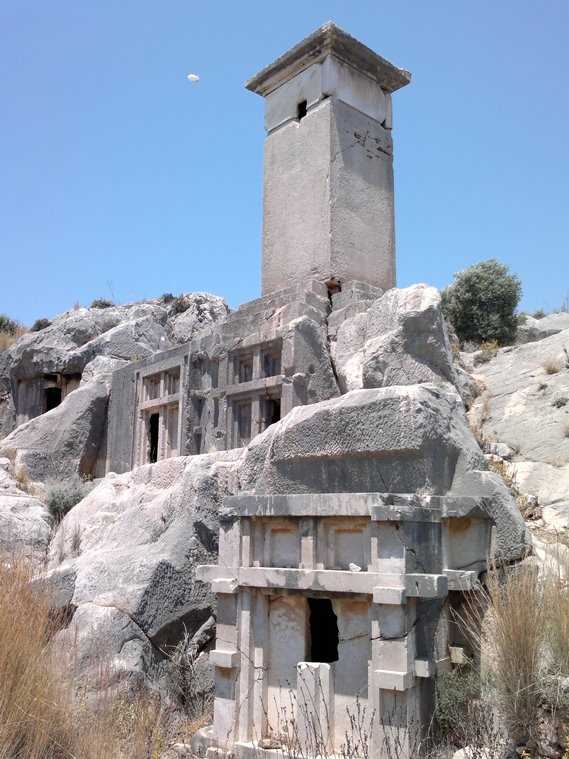
- Pillar Sarcophagi: You can see the most authentic examples of sarcophagus tombs set upon high pedestals, a form unique only to Lycia worldwide, in Xanthos Ancient City.
- Roman Bath and Villas: Structures that shed light on the civic architecture of the city during the Roman and Byzantine eras.
If you wish to explore the natural environment of the region, you can browse our Lycian Flora and Lycian Fauna guides.
Xanthos and Sarpedon in Homer’s Iliad
According to the verses of Homer, Sarpedon and Glaucus, legendary leaders of the Trojan War, came from the lands of “eddying Xanthos.” Sarpedon’s following words from the battlefield whisper the culture of solidarity and courage of the Lycian people from 3,000 years ago:
“I have come from afar to aid you, from eddying Xanthos, from distant Lycia… I left behind my beloved wife and my infant child there… Yet still, I urge the Lycians to battle, and I myself am right here in the front ranks!”
🏛️ Frequently Asked Questions (FAQ)
Is there an entrance fee for Xanthos Ancient City?
Yes, entrance to the Xanthos archaeological site is paid, and the Museum Pass (Müzekart) is valid. Being a UNESCO heritage site, it is very well preserved.
Are Arnna and Xanthos the same place?
Yes. Arnna is the original Lycian name of the city, while Xanthos is the Greek name used after the Hellenistic period. Both names mean “Yellow.”
Why are the original artifacts located in England?
The most valuable monuments found during excavations conducted by Charles Fellows between 1838 and 1842 were transported to London by ships, with Ottoman permission at the time (or unlawfully according to some sources).
What is the best time to visit?
Since the ancient city spreads across a wide area, early morning or late afternoon hours when the sun’s impact decreases are ideal. The spring months are also magnificent for hikers following the Lycian Way route that passes through the city.
🏛️ The Connection Between Xanthos and Letoon
Those visiting Xanthos Ancient City should definitely see the Letoon Ancient City, which is the sacred area of the city located just 4 km away. While Xanthos was the administrative hub, Letoon was the religious heart of the region. Both cities can be explored as a single combined itinerary in our updated travel routes. For current guidance, you can check the website of the T.R. Ministry of Culture and Tourism.