

A Flower That Blooms Only in Kaş
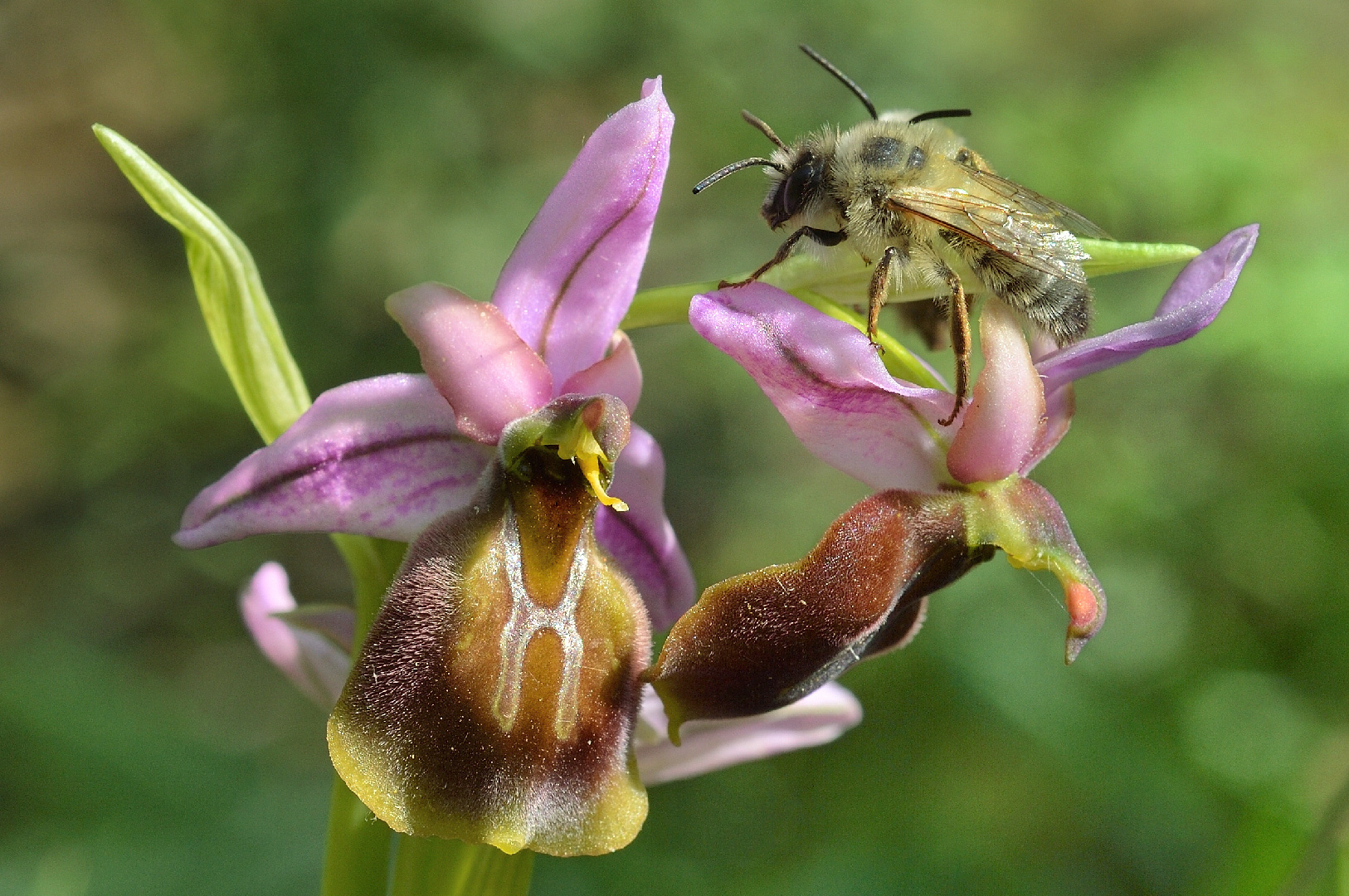
The Kaş Orchid, known to science as Ophrys lycia, is a ground orchid found only around Kaş. Its flowers, which bloom for a few weeks each spring, imitate a bee so skilfully that they fool it. Fewer than 200 plants are thought to remain in the wild, making it one of the rarest plants in Türkiye and in the world.
In this article you will find the story of the Kaş Orchid’s discovery, its remarkable relationship with a bee, the threats that have brought it to the brink and the work under way to save it.
📌 Contents
What Is the Kaş Orchid?
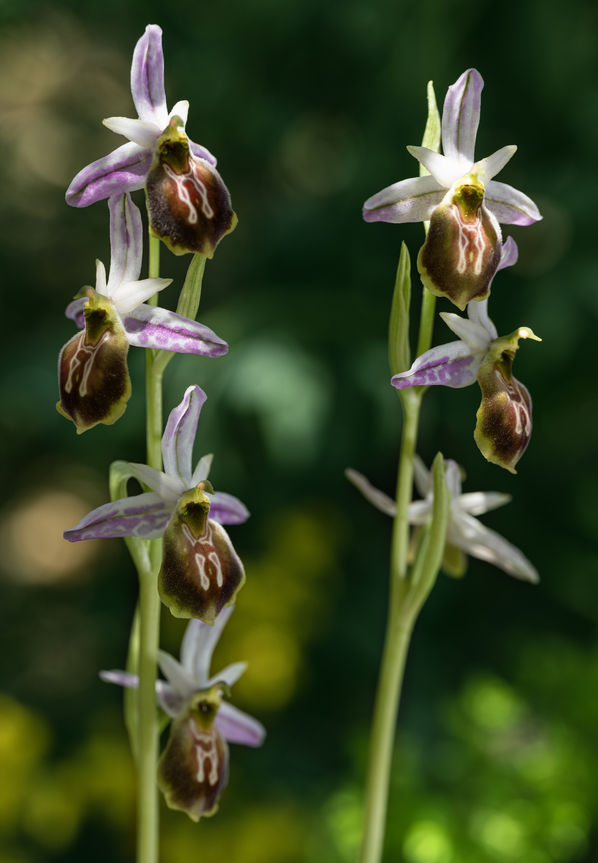
The Kaş Orchid is a ground orchid that can grow up to 40–50 centimetres tall. The outer parts of its flower are pinkish-purple, while the central “lip” is reddish-brown. It blooms from late March to April and grows in typical Mediterranean habitats such as almond terraces, rocky slopes and scrubland.
It is found naturally nowhere else in the world, and its range is limited to the area around Kaş.
Discovery and Name
The Kaş Orchid was discovered in 1980 by the Swiss botanist Jany Renz and described to science by Renz and Taubenheim. The name lycia comes from Lycia, the ancient region where it grows.
Some botanists classify the orchid not as a separate species but as a subspecies of Ophrys sphegodes, which is widespread in Europe and the Mediterranean. Whichever classification is used, the plants around Kaş form a distinct population found nowhere else on Earth, and one that must be protected.
A Flower That Imitates a Bee
Orchids of the genus Ophrys use one of the most remarkable pollination strategies in nature. The lip of the flower resembles the female of a particular bee species in shape, colour and hairy texture, and the flower also releases a scent that mimics that female bee.
Deceived by the scent and appearance, the male bee lands on the flower as if it were a female. As it does, the pollen sacs stick to its body, and when the bee visits the next flower, the pollen goes with it. The Kaş Orchid’s pollinator is a solitary bee called Andrena curiosa.
This relationship is both fascinating and fragile. Because the orchid depends on a single bee species, any decline in that bee threatens the orchid’s future too.
Why Is It Critically Endangered?
The Kaş Orchid is listed as Critically Endangered on the IUCN Red List, the category with the highest risk of extinction in the wild.
- A tiny population: Fewer than 200 plants are thought to remain in the wild.
- Habitat loss: Development around Kaş is shrinking the slopes and almond terraces where it grows.
- Collecting: Wild orchids are picked, and their tubers are dug up for salep.
- Pesticides: Agricultural chemicals harm both the plant and its pollinating bee.
- A single pollinator: Its pollination depends on one bee species.
- Genetic diversity: As the population shrinks, genetic diversity falls and the species struggles to adapt to changing conditions.
What Is Being Done to Save It?
For around five years, the Mediterranean Conservation Society (Akdeniz Koruma Derneği) and Ege University have been working together to save the Kaş Orchid, under the scientific leadership of Dr Nejdet Bozkurt. So far:
- Wild populations have been surveyed and documented.
- Seeds have been obtained through controlled pollination and a small seed bank established.
- Seeds stored for three years have been germinated in the laboratory and grown into tuber-forming plants.
- These plants have been moved from the greenhouse into outdoor garden conditions.
- The species’ genetic material has been deposited in the National Seed Gene Bank.
The project’s next major step is to return the cultivated plants to their natural habitat.
What Can We Do?
There are simple things every visitor can do to help protect the Kaş Orchid:
- Do not pick: Never pick any orchid you see around Kaş or dig up its tuber. Fines for collecting orchids and endemic plants without permission are very high.
- Do not share locations: You can photograph the orchid, but never share where it is. In this article, too, we give no exact location.
- Do not buy salep: Avoid salep of unknown origin.
- Report it: If you see someone collecting orchids, report it to the gendarmerie.
- Support conservation: Support conservation work in the region.
For other species unique to the region, see our Endemic and Rare Species of Lycia article, and for plants, our Lycian Flora page.
❓Frequently Asked Questions
When does the Kaş Orchid bloom?
For a few weeks from late March to April.
Where can I see the Kaş Orchid?
It grows only around Kaş, but to protect it we do not share where. Walking the Lycian Way in spring, you can see many other orchid species.
Is there a fine for picking orchids?
Yes. Fines for collecting orchids and endemic plants without permission are very high, exceeding half a million lira for some species.