

Lycian Ancient Water Structures: The Shared Story of Stone and Water
Lycian ancient water structures are the skilful solutions that made life possible in the dry, limestone landscape of the Land of Light. Channels that carried water from mountain springs to harbour cities kilometres away, inverted siphons that crossed valleys and cisterns cut into the rock all show how well the region’s ancient builders understood water. Delikkemer near Patara and the cisterns in the highlands are surviving witnesses of this engineering knowledge.
Lycia’s limestone ground does not hold water at the surface, and rainwater quickly seeps deep underground. Summers are also long and dry. In antiquity, a settlement’s ability to grow depended above all on carrying and storing water.
📌 Contents
🏛️ 1. Patara Delikkemer: An Inverted Siphon of Stone Pipes
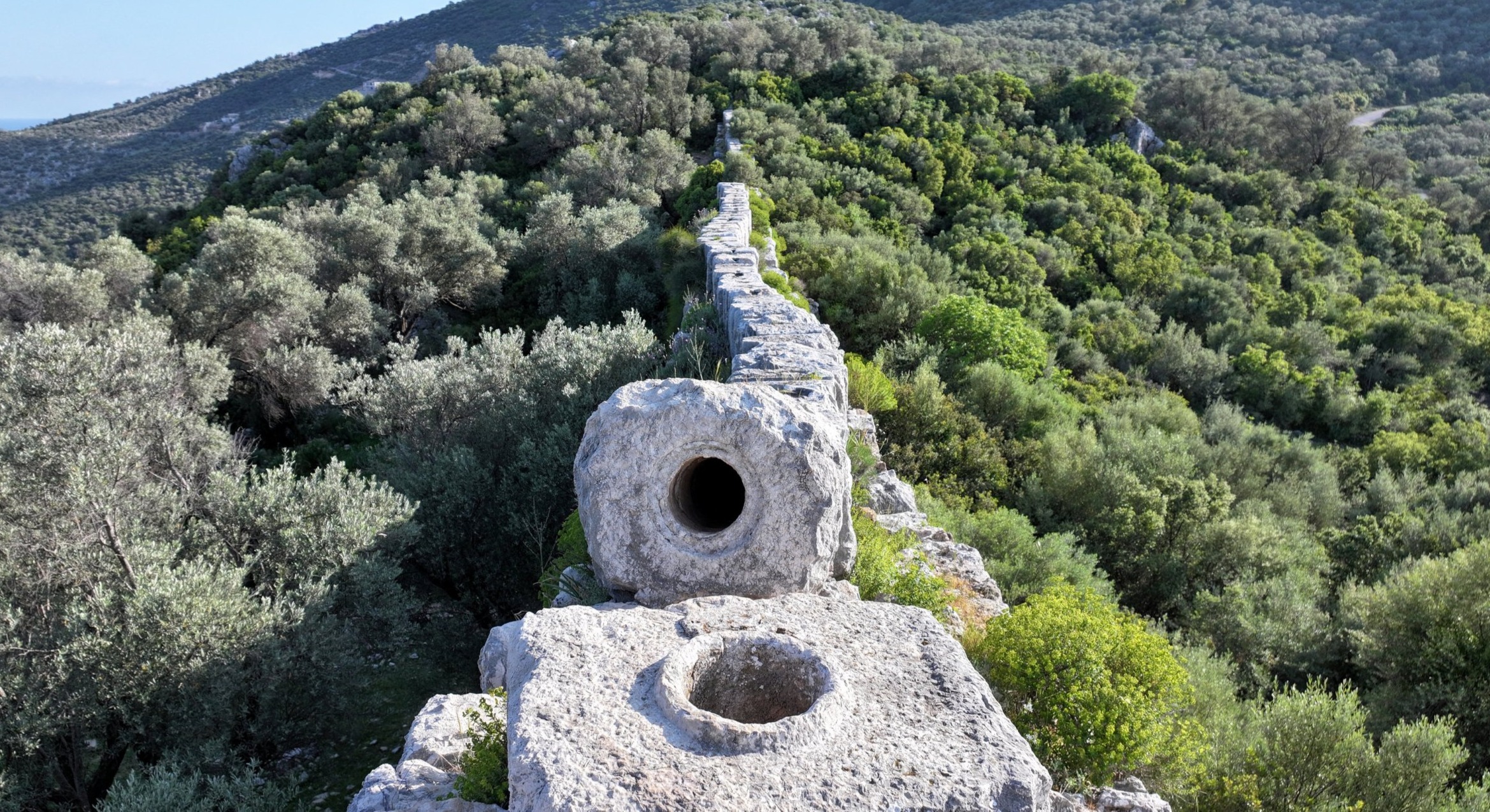
The most impressive example of Lycian water engineering is Delikkemer, on the line that carried water to Patara. Built in the Roman period, in the 1st century AD, the line brought water to the city from kilometres away.
- How does an inverted siphon work? Where a valley had to be crossed, water ran down into it inside a closed pipe and then rose up the opposite slope under its own pressure. Delikkemer’s most remarkable feature is that its pipeline is made of stone blocks pierced through the middle, which gives the structure its name (“pierced arch”).
- A record of repair: An inscription at Delikkemer records that the line was repaired under the Emperor Vespasian after an earthquake, showing how the region’s earthquakes affected its water structures.
- Its place in the ancient world: The inverted siphon was known earlier; a Hellenistic example at Pergamon dates to the 2nd century BC. But a siphon built of stone pipes, and so well preserved, is rare, which is why Delikkemer is counted among the important examples of ancient water engineering.
🏛️ 2. Pear-Shaped Cisterns: Water Stores in the Mountains
In the highlands and mountain towns without running water (such as Kyaneai and Phellos), the most common water structures are cisterns cut into the rock. Some are known as pear-shaped cisterns because of their form.
- Form: A narrow mouth at the surface that widens below. The narrow opening reduced evaporation and helped keep the water cool.
- Waterproofing: The inner walls were coated with a waterproof plaster to hold the water. In some cisterns this plaster can still be seen today.
- Today: Walking the Lycian Way, you will pass many of these cisterns, and some are still used by local people.
🏛️ 3. The Underground Cistern at Andriake
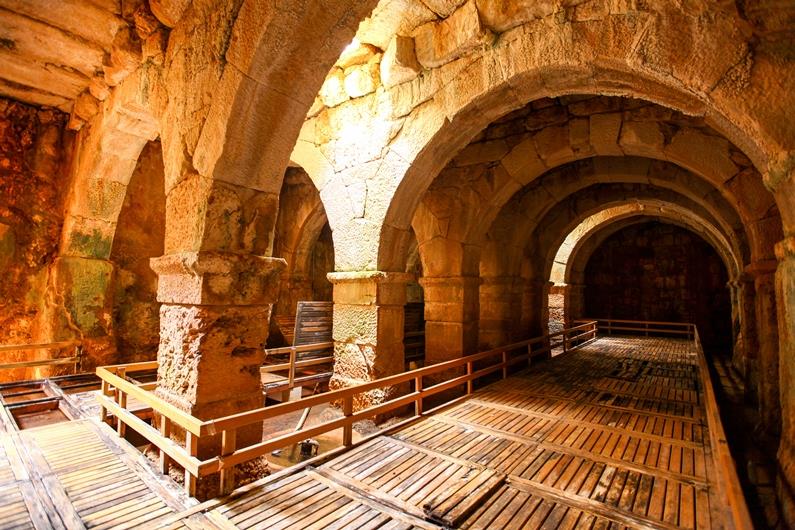
At Andriake, the harbour of Myra, a large underground cistern supported by columns lies beneath the agora (Plakoma). It helped supply water to the harbour town and to the ships that called there. Opened to visitors after restoration, with its columns and lighting it is today one of the region’s most impressive structures.
Another important building at Andriake is the granary (Granarium) from the reign of the Emperor Hadrian, which today houses the Museum of Lycian Civilisations.
4. Aqueducts and Channels
Most of the lines that carried water to cities were channels in which water flowed by gravity. Where the ground dropped, these channels were carried on arches. The aqueduct that brought water to Phaselis is one of the finest examples still visible today.
Lycian Ancient Water Structures Compared
| Type | Key example | Purpose | Technical feature |
|---|---|---|---|
| Inverted siphon | Patara, Delikkemer | Carrying water across a valley | Closed, pressurised pipeline of stone blocks |
| Aqueduct and channel | Phaselis | Bringing water to the city | Open channel flowing by gravity |
| Cistern | Kyaneai, Xanthos, Andriake | Storing rainwater | Rock-cut or underground plastered tank |
Water and Nature
Water structures are closely tied to the nature around them. Fig trees growing from the mouths of cisterns and oleanders following old channel beds show that water still feeds life around these structures centuries later. For the region’s plant life, see our Lycian Flora page.
Tips for Travellers
- Walking to Delikkemer: Delikkemer is reached on foot, over rocky and in places steep ground. Wear ankle-supporting walking shoes and carry enough water. In summer, plan your walk for early morning.
- Photography at Andriake: A wide-angle lens and low-light mode work well for photographing the underground cistern. Do not use flash.
- Take care at cisterns: Cisterns along the Lycian Way are often open at the top. Approach carefully and do not climb in.
- Entry fees: Delikkemer is in open country. For current opening hours and fees at Andriake and the Museum of Lycian Civilisations, see muze.gov.tr.
The Silent Partnership of Stone and Water
Lycian ancient water structures tell us not only how water was carried, but how people managed to live in a dry land. Protecting this engineering heritage is also an important lesson in understanding the value of water today. For more of Lycia’s heritage, explore our Lycian Memory section.
🏛️ Frequently Asked Questions (FAQ)
Is there a fee to visit Delikkemer?
Delikkemer stands in open country with no entrance point, and is reached on foot by a path.
What is an inverted siphon?
A water system in which water runs down into a valley inside a closed pipe and then rises up the opposite slope under its own pressure. At Delikkemer, the pipeline is made of pierced stone blocks.
How were cisterns cleaned?
Many cisterns have features that allowed sediment to settle at the bottom, and they were emptied and cleaned at intervals.
How were water structures affected by earthquakes?
Earthquakes damaged these structures too. The inscription at Delikkemer records that the line was repaired after an earthquake. For more on the region’s earthquakes, see our Lycian Geology and Earthquakes page.