
Andriake Ancient City: The Harbour of Myra
Located at Çayağzı, west of Demre, Andriake was the harbour of Myra, one of Lycia’s leading cities. It lies about 5 km south-west of Myra, where the Andrakos stream meets the sea. The harbour served the city both as a trading port and as a gateway for travellers arriving by sea.
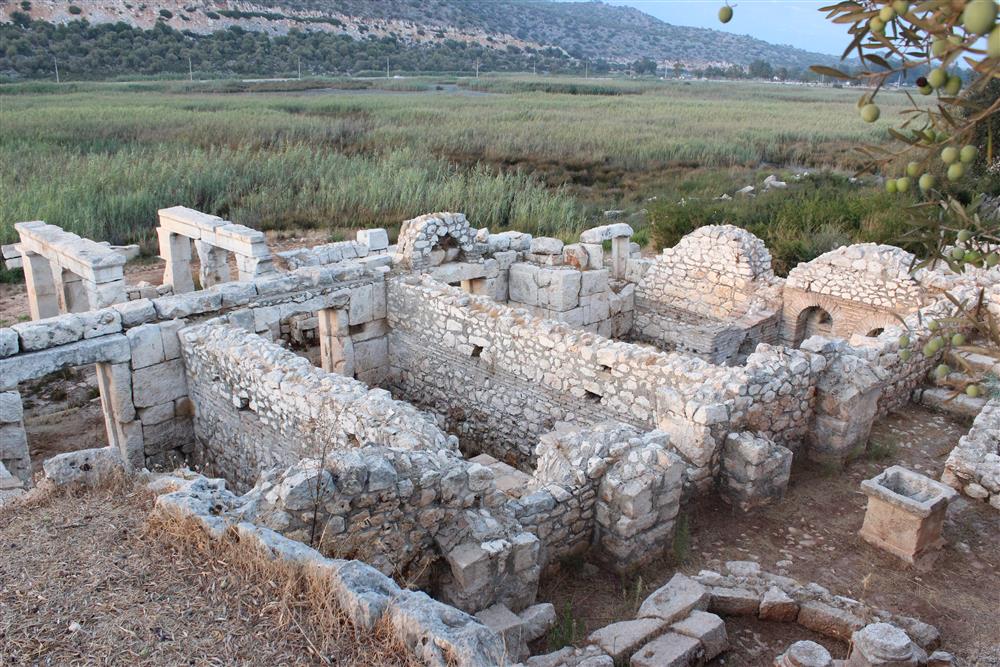
Today visitors can see the Roman granary (granarium), a commercial square with a cistern beneath it, purple-dye workshops, baths, a synagogue and churches. Excavations begun in 2009 under Prof. Nevzat Çevik of Akdeniz University have brought these structures to light.
The History of Andriake
Andriake first appears in ancient sources in the Hellenistic period. The Roman historian Livy lists it among the places on the Lycian coast taken by the Seleucid king Antiochus III in 197 BC.
The city’s most prosperous period was the Roman era. The granary built under the Emperor Hadrian (AD 117–138) shows Andriake’s place in Rome’s grain trade; a similar Hadrianic granary stands at Patara. Grain ships sailing from Egypt to Italy called at harbours along the Lycian coast. According to the Acts of the Apostles, the Apostle Paul, on his way to Rome, came to “Myra in Lycia” and was put aboard an Alexandrian ship bound for Italy. As Andriake was Myra’s harbour, this transfer is thought to have taken place there.
In the Eastern Roman (Byzantine) period Myra became the capital of the province of Lycia, and Andriake continued to be inhabited. Its churches and synagogue show that the city was home to different faith communities. The gradual silting of the harbour and the Arab raids after the 7th century led to its eventual abandonment. For more on the region’s history, see our Lycian History page.
Andriake and the Tradition of St Nicholas
Later texts describing the life of St Nicholas, the 4th-century bishop of Myra, also mention the harbour of Andriake. According to one story, during a famine at Myra, Nicholas persuaded the captains of ships carrying grain from Alexandria to Constantinople to leave part of their cargo for the city. When the ships reached their destination, their cargo was found to be undiminished.
This story is a saint’s legend, not a historical record. Even so, it reflects Andriake’s real role: ships carrying Egyptian grain called at the Lycian coast, and the harbour was a vital link for the people of Myra. St Nicholas’s place as the patron saint of sailors also draws on this coastal culture. The Church of St Nicholas at Myra is only a few kilometres from Andriake.
The Granarium and the Museum of Lycian Civilisations
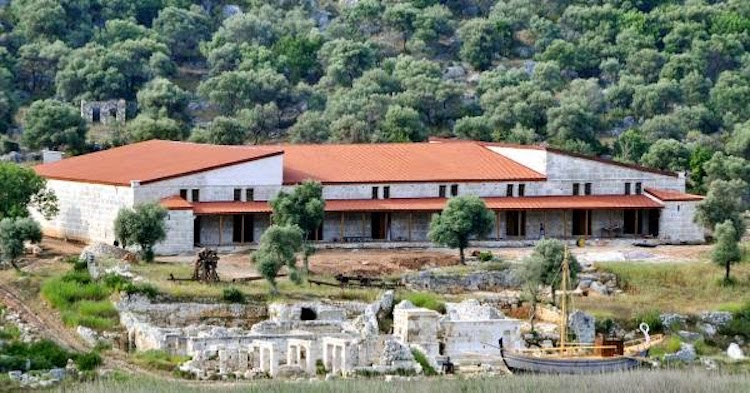
Andriake’s most striking building is the granary built under Hadrian. It consists of eight rooms side by side, and its walls are largely still standing. An inscription on its façade names the Emperor Hadrian and his wife Sabina.
Restored, the building has housed the Museum of Lycian Civilisations since 2016. The museum displays finds from the Andriake and Myra excavations alongside objects from other Lycian cities.
What to See at Andriake
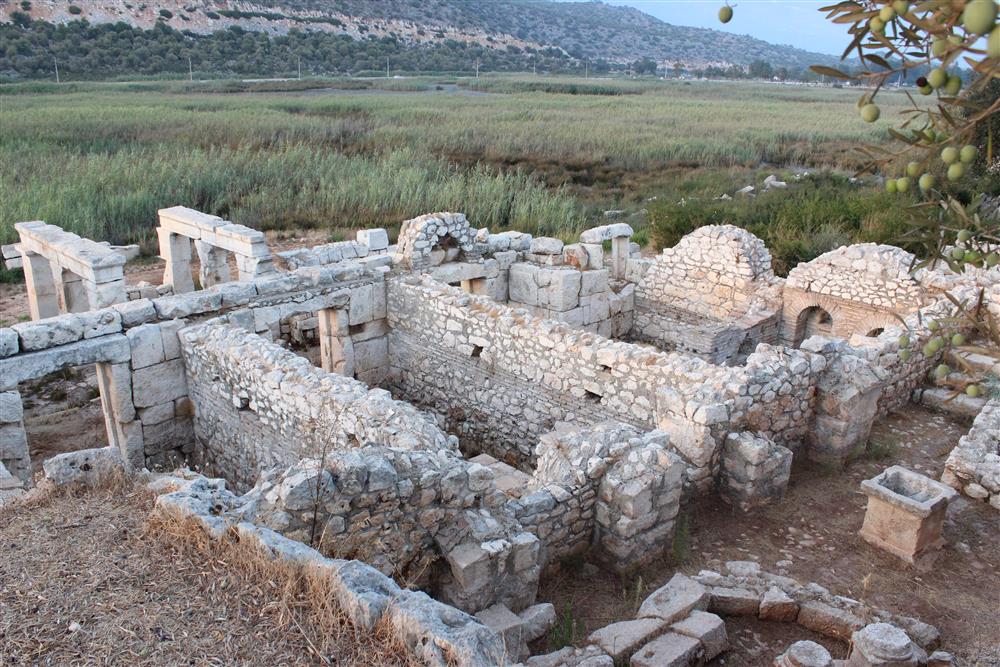
- Granarium (Museum of Lycian Civilisations): The Roman granary.
- Plakoma: A commercial square lined with shops, with a large cistern beneath it.
- Purple-dye workshops: Workshops where purple dye was obtained from murex sea snails. Large heaps of shells found at the site show the scale of production.
- Synagogue: One of the few known ancient synagogues in Anatolia, evidence of a Jewish community in Lycia.
- Churches: Remains of churches from the Eastern Roman (Byzantine) period.
- Baths: Roman bath buildings.
- Harbour structures: The shoreline structures of the ancient harbour, now partly silted up.
The wetlands around the site are home to many bird species. See our Lycian Fauna page for details.
🏛️ Visiting Information
Andriake is about 5 km from the centre of Demre and easy to reach by car. The Museum Pass Türkiye and Museum Pass Mediterranean are valid for the site and the museum. Opening hours vary between summer and winter, so check current hours and entrance fees on the website of the Ministry of Culture and Tourism of the Republic of Türkiye before your visit. The Lycian Way also passes through Andriake. We recommend visiting Myra on the same day.
❓Frequently Asked Questions
What is the difference between Andriake and Myra?
Myra was the main city; Andriake was its harbour. Both sites are in today’s Demre district, about 5 km apart.
Where is the Museum of Lycian Civilisations?
The museum is inside Andriake’s Roman granary (granarium).
What was Andriake known for besides trade?
The city was known for producing purple dye from murex sea snails. The dye was very expensive and was a status symbol in the ancient world; in some periods its use was restricted to the imperial family.