
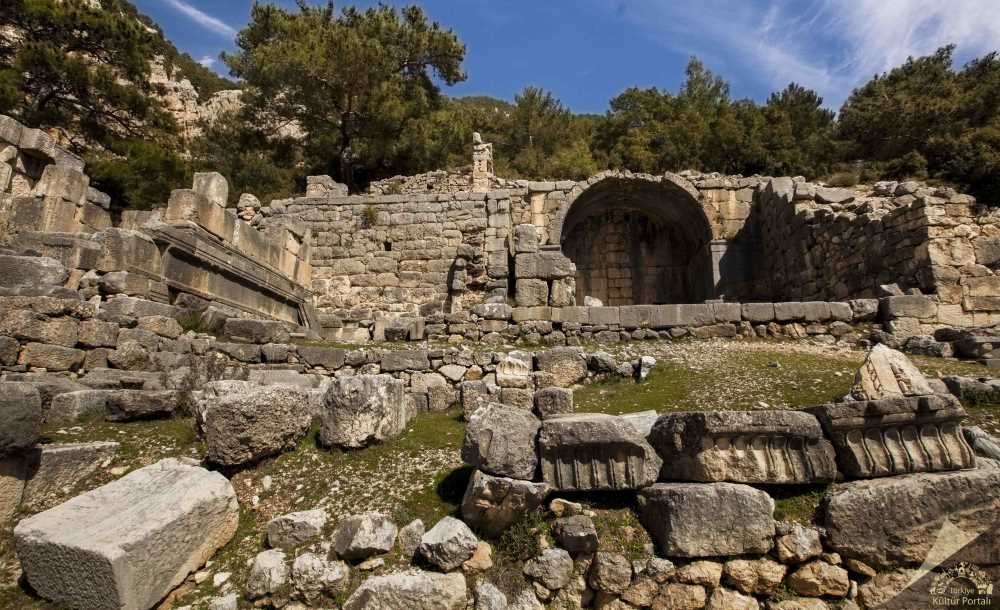

Arykanda Ancient City: The Eagle’s Nest of the Land of Light in the Mountains
Rising just above the Aykırıçay neighborhood within the borders of Arif Village in the Finike district of Antalya, Arykanda Ancient City is one of the cities with the most unique architectural structure in Lycia. Philologically, the name of the city bears the traces of indigenous Anatolian languages. Meaning “the place next to the high cliff” (Ary-ka-wanda) in Lycian, this name is in perfect harmony with the fact that the city is built under a massive and steep rock face known today as Şahinkaya.
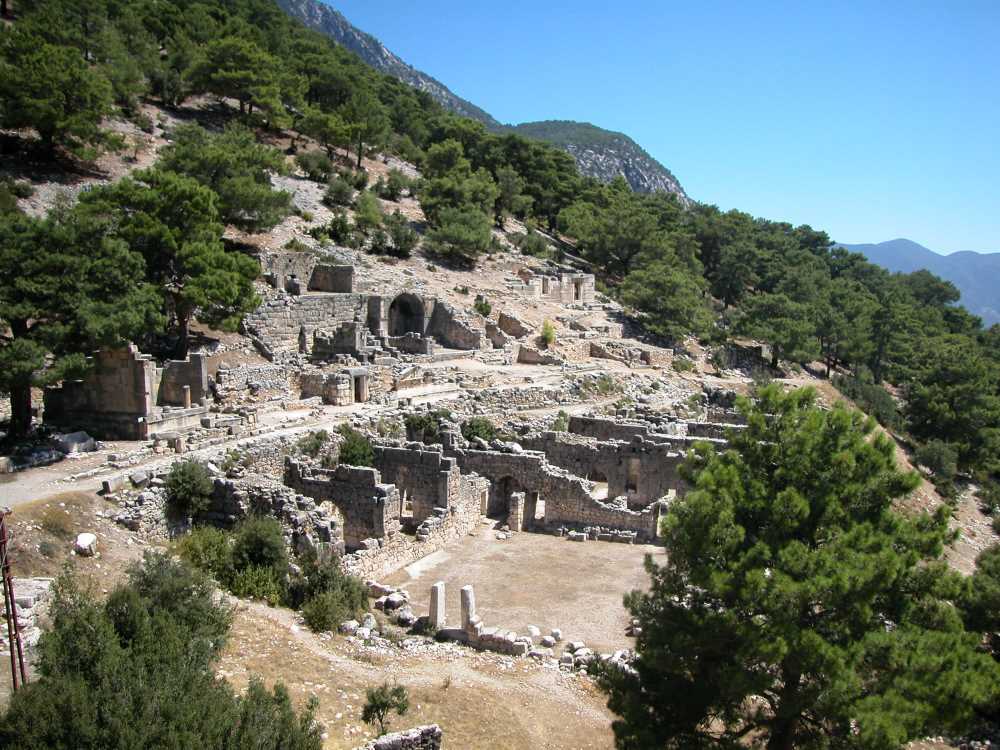
Arykanda is not just a settlement; it is the most concrete evidence from antiquity of how steep slopes can be transformed into a work of art. Built upon terraces, the structure of the city distinguishes it from many other ancient cities in Anatolia, offering its visitors a breathtaking panoramic view.
1200 Years of Uninterrupted History and the Story of Migration
Archaeological data indicates that settlement in Arykanda Ancient City began in the 6th century B.C. and continued uninterrupted for approximately 1200 years until the 6th century A.S. (A.D.). Scholars believe that the true origin of the city is even older, suggesting that the population abandoned the fertile Elmalı Plain during the great chaos and invasion period following the Trojan Wars around 1200 B.C. to take refuge in these sheltered mountains.
This long-standing past of the city is the most beautiful summary of change and resilience within Lycian History. Reaching the peak of its development during the Roman Imperial period, the city attained great prosperity thanks to its proximity to the trade routes in the region and its natural resources.
The Cedar Trade: Arykanda’s
Source of Wealth
At the foundation of the economic power of Arykanda Ancient City lay cedar timber, which was highly precious in antiquity just as it is today. The majestic cedar forests surrounding the city provided an invaluable material for shipbuilding and monumental structures. Thanks to this “green gold,” Arykanda ceased to be just a mountain town and became an influential center in Mediterranean trade.
You can examine the details of this rich vegetation in the region on our Lycian Flora page, and find information regarding the wildlife of the city in our Lycian Fauna guide.
Architecture on Terraces: Structures to Visit in Arykanda
The layout of the city follows a systematic hierarchy from the watchtower at the very top to the baths at the bottom. Despite being established on a steep slope, buildings responding to every social need were masterfully placed:
- Temple of the Sun God Helios: Located just north of the Bouleuterion (Assembly Hall) and built in the 4th century B.C., this temple is the religious heart of the city.
- Stadion (Stadium): Built on one of the top terraces in the 1st century A.S. (A.D.), this structure reflects the sports culture of the city.
- Arykanda Theater: It is one of the smallest yet best-preserved theaters in the region. Leaning against the hillside, it offers spectators a magnificent valley view alongside the performances.
- Odeon and Agora: Serving as the administrative and commercial hub of the city, these areas were where the heart of social life beat.
- Bath-Gymnasium Complex: Located in the southeast of the city, these structures symbolize the health and education understanding of the Roman period.
- Aykırıçay Aqueducts: The water needs of the city were met through channels carved into the rock faces across four distinct levels. This engineering marvel demonstrates the ingenuity of the city regarding water management.
🏛️ The Connection Between Arykanda and the
Lycian LeagueThe Arykanda Ancient City joined the Lycian League in the 2nd century B.C. and obtained the authority to mint coins in its own name. Referred to as Akalanda during the Byzantine period, the city maintained its importance as an episcopal center. You can discover this political transformation by comparing it with other cities on our Lycian Ancient Cities List. Additionally, this region is one of the alternative transit points in the inner parts of the Lycian Way route. You can examine the universal value of the city and its world heritage candidacy process with official data via the UNESCO World Heritage Tentative List.
🏛️ Frequently Asked Questions (FAQ)
How do I get to Arykanda Ancient City?
You can reach it by following the Arif Village sign on the Antalya-Finike highway. The city is approximately 30 km away from the Finike district center.
Is there an entrance fee and is the Museum Pass (Müzekart) valid?
Yes, entrance to the Arykanda archaeological site is paid, and the Museum Pass (Müzekart) is valid. This area, included in the UNESCO World Heritage Tentative List, is very well maintained.
How long does it take to tour Arykanda Ancient City?
Since the city is built upon terraces, touring it requires a serious climb and effort. It is recommended to allocate at least 2-3 hours to see all the structures in detail.
What is the best season to visit?
Since the summer months can be quite hot, the spring months (April-May or September-October) are the most ideal periods for a visit. In winter, the snowy landscape of the region is mesmerizing.