

Karmylassos Ancient City: The Silent Cry of Kayaköy
Located approximately 8 km south of the Fethiye district center and known today as the “Ghost Village”, Karmylassos Ancient City is one of the most impressive settlements in Anatolia. According to philological data, the history of this ancient settlement dates back to the 3000s B.C., proving through the pre-Hellenic suffixes in its name that it possesses one of the oldest roots in Lycia.
Although the monumental ruins visible on the surface today do not date back further than the 4th century B.C., the true fascination of Kayaköy stems from its multi-layered cultural fabric extending from antiquity to the late Ottoman period.
A Village with Two Identities: Livissi and Kayı Köyü
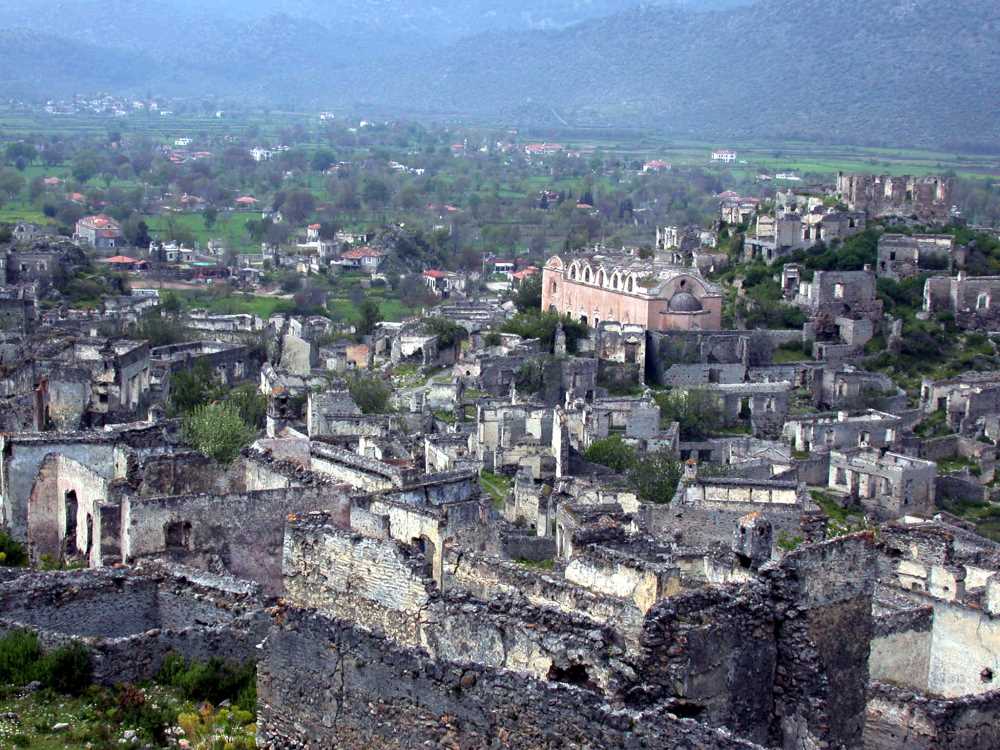
Throughout the historical process, Kayaköy consisted of two distinct yet interwoven primary residential areas. This structure stands as the most concrete indicator of how rich a demographic past the region possesses:
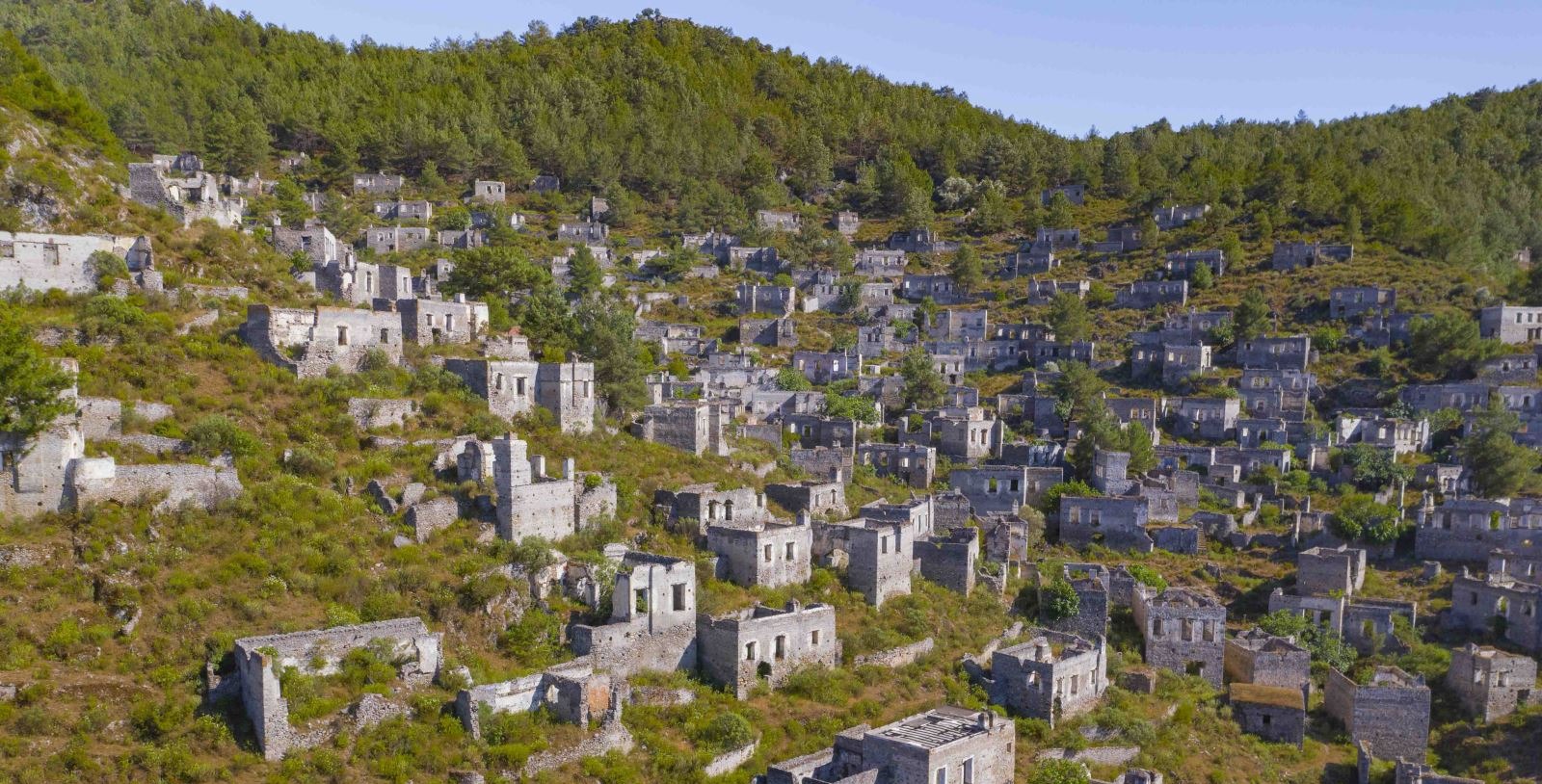
- Livissi (Greek Settlement): The world-famous area terms of tourism, featuring stone houses leaning against the hillside. It is a Greek settlement established upon the ancient ruins of Karmylassos during the late period of the Ottoman Empire.
- Kayı Köyü (Turkish Settlement): Mentioned in Ottoman tax registers (tahrir defterleri) since 1512, this area covers the flatlands where Turkmens belonging to the Kayı tribe of the Oghuz Turks settled. Until the 1923 population exchange, these two communities lived as neighbors in great tolerance.
You can examine our Lycian History page for more information regarding the historical chronology and social transformation of the city.
An Architectural Masterpiece: Houses That Do Not Block the Light
The Kayaköy houses rising above the Karmylassos Ancient City are an architectural reflection of respect for human beings and nature. The approximately 500 households in the village were constructed with such an order that no house blocks the view or sunlight of another.
- Structural Features: The houses are generally two-storied and have a base area of around 50 m². The upper floors were utilized as living spaces, while the lower floors served as cellars or storehouses.
- Ecological Engineering: Sub-floor cisterns that collect rainwater from the roofs are located at the entrances of the houses. This system reflects the ancient ingenuity of the region regarding water management.
- Museum Village Status: Evacuated with the 1923 Population Exchange and heavily damaged by the 1957 Fethiye Earthquake, the village welcomes its visitors today as a protected “Museum Village.”
Churches and Chapels: Faith Engraved in Stones
The most magnificent structures in the recent history of Karmylassos are the two large churches of the village. These structures carry the artistic and religious grandeur of the era to the present day:
1. The Upper Church (Taksiyarhis)
Rising upon a commanding hill near the middle of the settlement, the Taksiyarhis Church is the most prominent structure in the silhouette of the city. Its mosaic floor consisting of black-and-white pebbles (strawberry tree motifs) reflects the aesthetic understanding of the region.
2. The Lower Church (Panayia Pirgiotissa)
Located on the western boundary of the village, this church is the structure that has reached the present day in the best-preserved state. The most important factor in its preservation is that the building was used as a mosque until the 1920s. The traces of frescoes and architectural details inside are still mesmerizing.
You can browse our Lycian Flora guide for the plant diversity growing around these sacred structures in the region.
🏛️ Travel Recommendations
While planning your visit to the Karmylassos Ancient City, we recommend walking the 5 km ancient pathway (a Lycian Way connection) passing through the village and extending to Ölüdeniz. This path offers you both history and immense nature together. You can visit our Lycian Fauna page to familiarize yourself with the wildlife of the region during your trip. Do not forget to check the website of the T.R. Ministry of Culture and Tourism for current restoration works and visiting hours.
🏛️ Frequently Asked Questions (FAQ)
Is there an entrance fee for Kayaköy (Karmylassos)?
Yes, Kayaköy holds the status of an archaeological site, and an entrance fee is charged at the gate. The Museum Pass (Müzekart) is valid.
Why is Kayaköy referred to as the “Ghost Village”?
With the 1923 Population Exchange (Exchange of Populations), the Greek population living in the village migrated to Greece, while the incoming Turkish population preferred to settle on the plain rather than the hillside. For this reason, the houses on the slope were abandoned and took this name over time.
How much time should I spend in Kayaköy?
You should allocate at least 2–3 hours to walk through the streets of the village, visit the churches, and climb to the top of the flag hill to watch the view of Soğuksu Bay.
What remains from ancient Karmylassos to the present day?
Ancient stone blocks at the foundations of the houses and churches, a few rock tombs, and inscription fragments documenting the name of the city are present.