
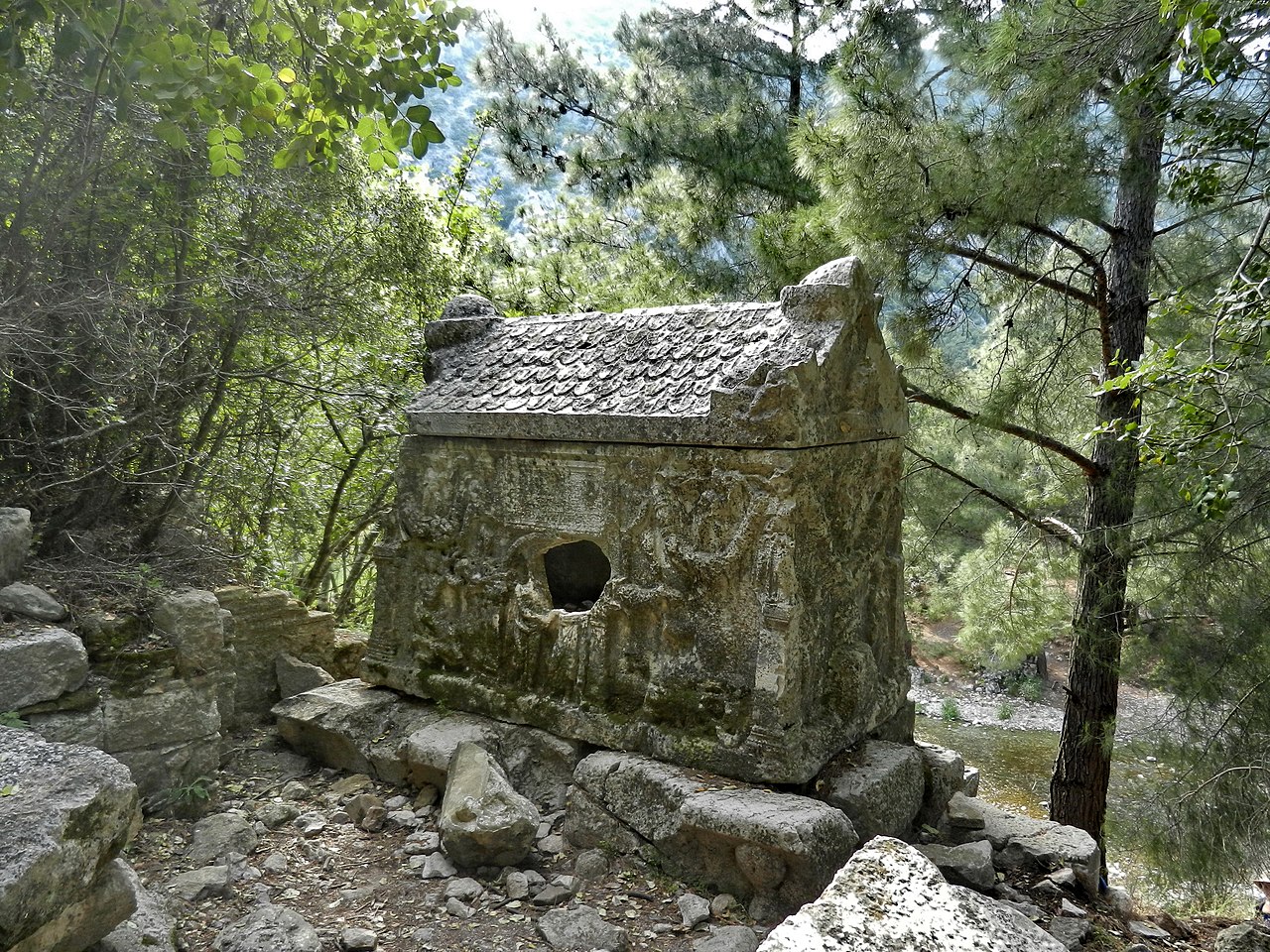

Olympos Ancient City: A Lycian Epic in the Heart of Nature and History
Located within the boundaries of the Kumluca district of Antalya, under the protection of the Beydağları-Olympos National Park, Olympos Ancient City stands as one of the six grand cities holding three voting rights within the Lycian League. Deriving its name from the majestic 2,365-meter-high Mount Tahtalı (Mount Olympos) that towers above it, this ancient center served throughout history both as a strategic harbor and a sacred cult site.
Although the exact foundation date of the city remains unknown, the appearance of its name on Lycian League coinage in 167–168 B.C. proves the powerful identity the city possessed during that era. Today, Olympos offers a treasure trove of Hellenistic, Roman, and Byzantine ruins hidden deep within the lush forest, eagerly awaiting discovery by travelers.
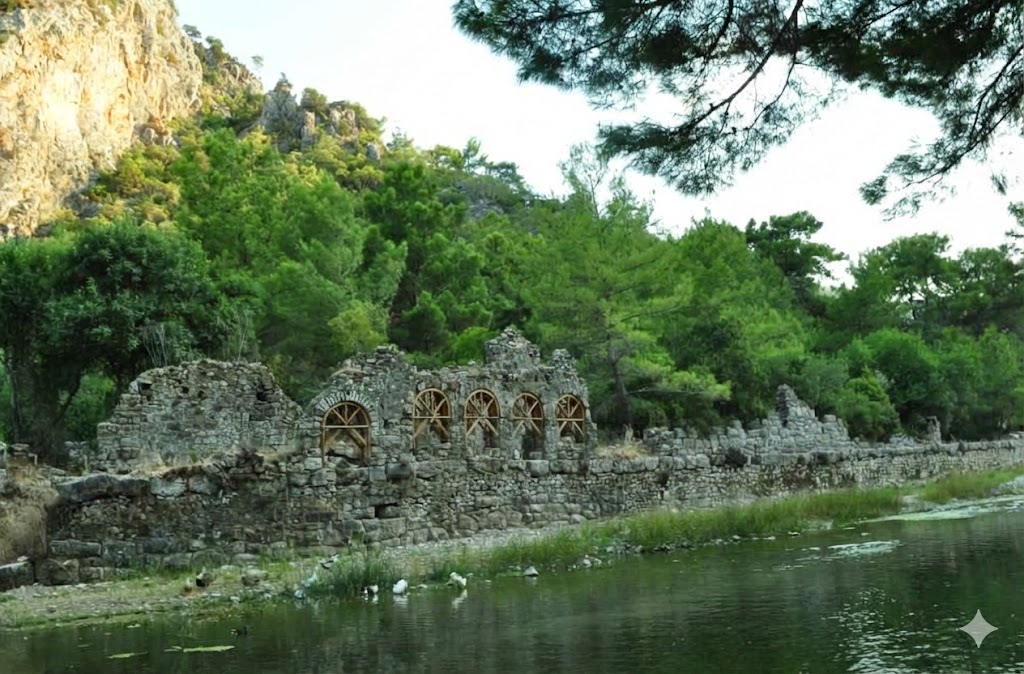
The Olympos River: The Ancient Canal Dividing the City
The most defining feature setting Olympos apart from other Lycian cities is the Olympos Stream (Akçay), which flows directly through the center of the settlement into the sea. In antiquity, this riverbed was enclosed within a stone canal, and both of its banks were utilized as piers. Although a massive bridge was constructed to connect the two sides of the city, only a single pier of this structure has resisted the destructive effects of time to stand today.
The stone pavements extending along both sides of the river are the most vivid witnesses to the bustling harbor traffic of the ancient era. Today, visitors embark on a literal journey through time, walking through the cool waters of the river while observing fortification walls, temple gates, and bathhouse ruins rising on their right and left.
The City of Pirates and the Legend of Zeniketes
Throughout its history, Olympos was not merely a commercial center but also a notorious stronghold for pirates who struck fear across the Mediterranean. The famous pirate leader Zeniketes seized the city in the 1st century B.C., transforming Olympos into the headquarters of regional piracy.
This pirate hegemony, which persisted until the Roman commander Servilius Isauricus besieged and conquered the city in 78 B.C., endured for a long period thanks to the rugged topography and well-sheltered harbor of Olympos. The defensive shelters seen today on the steep northern slopes of the city bear the architectural traces of this “pirate city” identity.
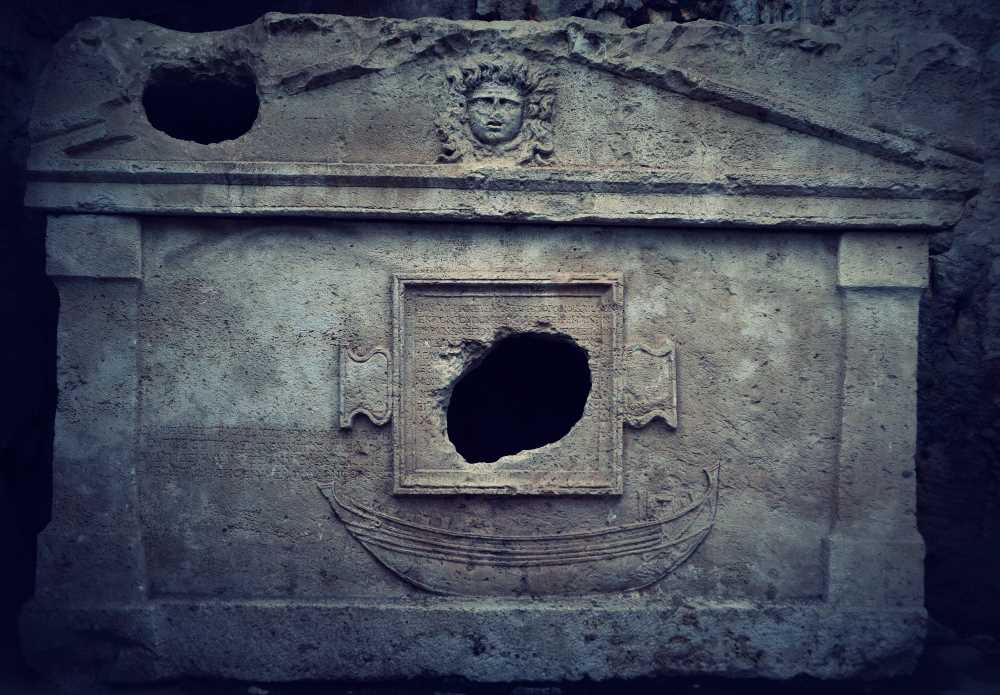
Archaeological Masterpieces: The Tomb of Captain Eudemos
One of the most remarkable and evocative discoveries in the city consists of two burial chambers located just north of the point where the Olympos Stream meets the sea. Dating back to the late 2nd century A.S. (A.D.), one of these tombs belongs to the city’s famous mariner, Captain Eudemos.
The verses inscribed upon the tomb elegantly summarize the ancient world’s passion for the sea:
The ship dashed into the final harbor, never to depart again. For there is no longer any hope from the wind or the daylight…
The ship relief carved onto the tomb provides invaluable archaeological data for understanding the specific type of vessel Eudemos commanded and the maritime technology of that era. You can visit our Lycian History page for more details regarding Captain Eudemos and other mariners of Lycia.
Byzantine Heritage and Ship Graffiti
The Byzantine-period church complex located on the southern slopes of the city reflects the significance of Olympos during the Middle Ages. However, the discovery that excites archaeologists most in this sector is the collection of ship graffiti rendered with madder (kökboyası) on the interior walls of an ancient cistern. These drawings depict daily life in the Byzantine port, vessel types, and maritime rituals in a caricatured yet realistic manner.
The ruins of the Roman bathhouse in the southern sector draw attention due to their proximity to the harbor. This area, where sailors and merchants cleansed themselves before entering the city proper, illustrates the prominent place of cleanliness and hygiene in the social hierarchy of Olympos.
The Eternal Flame: The Legend of Chimera (Yanartaş)
The greatest mystical phenomenon associated with Olympos is Yanartaş (Chimera), located a few kilometers southwest of the city. These natural gas flames, emerging spontaneously from the cracks of the rocks and burning continuously for thousands of years, inspired the birth of mythology in the ancient world.
The Legend of Bellerophon and Pegasus: According to mythology, Bellerophon, the rider of the winged horse Pegasus, slew and buried the three-headed, fire-breathing monster Chimera seven layers deep into the earth right here. The flames seen today were believed to be the fiery wrath of the Chimera erupting from underground.
Over time, this area transformed into the cult center of Hephaestus, the god of metallurgy and blacksmiths, and was utilized as a sacred pilgrimage site during the Roman and Byzantine eras. The ruins of a Byzantine church and frescoes surrounding the flames document the place of this natural miracle in religious history. You can explore this fascinating atmosphere, interwoven with local vegetation, in our Lycian Flora guide.
An Ecological Treasure: Çıralı and the Caretta Carettas
Proceeding 300 meters east from the beach of Olympos, you are welcomed by Çıralı, one of the most beautiful coastal stretches in the world. This area is not merely a tourism destination but also one of the primary nesting grounds for endangered Caretta Caretta (loggerhead) sea turtles.
Remaining pristine thanks to the strict preservation regulations of the Beydağları National Park, this region is renowned for prohibiting any construction on the beach. The strict ban on entering the beach at night is of vital importance for the survival and continuation of the turtle species. You can find more information about the wildlife of the region in our Lycian Fauna guide.
🏛️ The Greenest Stage of the Lycian Way
The Olympos Ancient City forms a part of one of the most enjoyable stages of the world-famous Lycian Way route. Trekkers coming from Adrasan cross over Mount Musa to arrive at the cool waters and rich history of Olympos. Do not forget to follow the official website of the T.R. Ministry of Culture and Tourism for current travel notes and restoration works for 2026.
🏛️ Frequently Asked Questions (FAQ)
How do I get to Olympos Ancient City?
You must enter the Olympos turnoff on the Antalya-Kaş highway and drive approximately 10 km down the winding road. It is 85 km from Antalya center. Vehicles cannot enter all the way to the beach; after leaving your vehicle at the parking lot, you walk through the archaeological site.
Is there an admission fee and is the Museum Pass (Müzekart) valid?
Yes, Olympos holds official status as an archaeological site, and the Museum Pass (Müzekart) is valid at the entrance. If you are staying nearby and visiting the beach frequently, using a Museum Pass or a special multi-entry card is highly recommended.
How long does the climb to Yanartaş (Chimera) take?
It requires a steep and rocky path climb of approximately 30–40 minutes from the Çıralı village side. If you intend to climb during the evening hours, you must carry a flashlight with you.
What are the accommodation options?
Olympos is globally famous for its iconic “Treehouses” and bungalow concepts. It is ideal for those seeking a bohemian, free-spirited atmosphere completely intertwined with nature.