
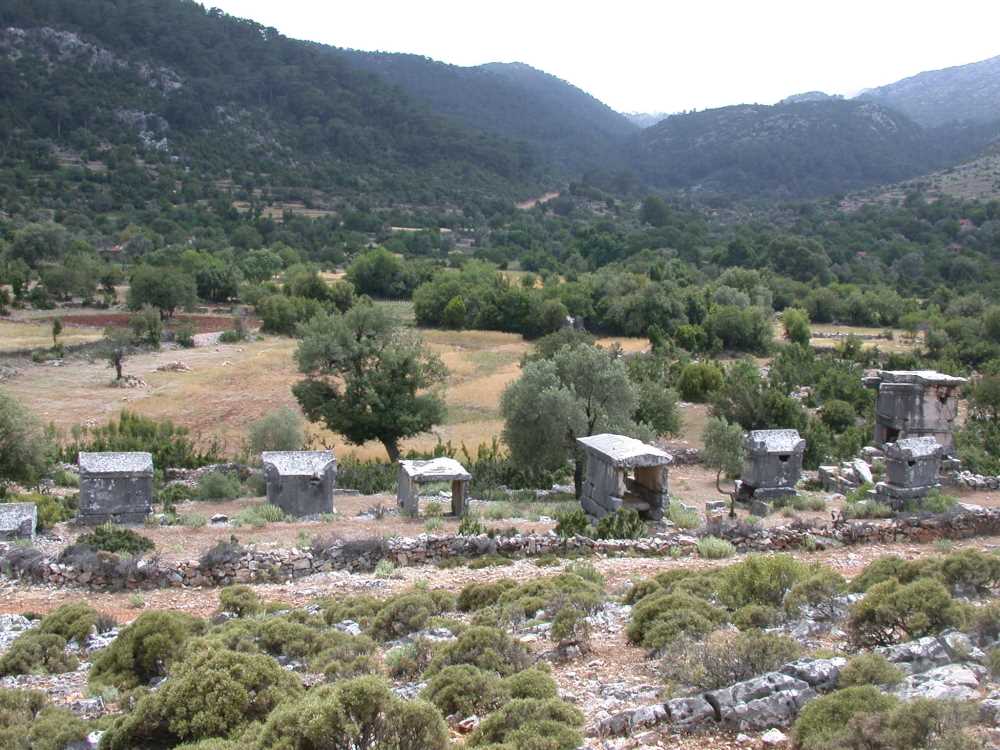

Sidyma Ancient City: The Ancient Legacy in the Shadow of the Eagle
Rising at the intersection of Antalya and Muğla, within the boundaries of the Dodurga Neighborhood in the Seydikemer district, Sidyma Ancient City stands as one of the most important Lycian settlements carrying the grandeur of the Roman era to the present day. Although the ruins visible today date predominantly from the Roman and Byzantine periods, inscriptions and coinage recovered in the region prove that the roots of the city trace back to the 1st century B.C., and indeed much earlier.
Sidyma is not merely a pile of ruins; it is a silent and dignified monument of history, beautifully blended with the daily lives of the villagers and nestled within the streets of an active neighborhood.
🦅 The Imperial Prophecy: Marcian and the Shadow of the Eagle
What makes Sidyma uniquely prominent in history books is the famous legend associated with the Byzantine Emperor Marcian (reigned 450–457 A.S. / A.D.). According to the myth:
During a military campaign organized against the Persians, Marcian, then a general, fell ill near Sidyma. Two brothers living in the city took him in as a guest and made a great effort to nurse him back to health. One day, while Marcian lay asleep, an eagle was observed soaring in the sky, casting its shadow directly over him. In antiquity, this was regarded as the ultimate divine sign indicating that the individual would rule in the future.
After recovering and departing, Marcian did not forget the two brothers who had cared for him when he eventually became emperor years later; he honored Sidyma by making them prominent citizens and administrative rulers of the city. This tale of prophecy crowns Sidyma as one of the “fortunate and blessed” cities of Lycia.
The Architectural Treasures of Sidyma
Although the ruins of the city are spread across a wide area, the structures at its center clearly demonstrate the social prosperity of the settlement:
1. The Stoa and the Temple of Artemis
Located right in the middle of Dodurga Village and exceptionally well-preserved, the Stoa was constructed during the reign of Emperor Claudius (41–54 A.S. / A.D.). Fulfilling its role as a social gathering venue, this structure sits right adjacent to the 9-meter-tall Temple of Artemis. These two monuments stand as symbols of Sidyma’s economic power during the Roman period.
2. The Acropolis and Theater
The two-part hill located to the north of the village is the acropolis, which served as the military heart of the city. Enclosed by 365-meter-long fortification walls, this area draws attention with its polygonal stonemasonry and watchtowers. The ruins of the theater located at the top of the acropolis, which are thought to have been constructed during a late period, prove the city’s strong connection to the arts.
3. The Bathhouse and Church
Welcoming you at the entrance of the neighborhood, the ruins of the bathhouse and the church carry the physical traces of the transition from Roman hygienic culture to Byzantine religious architecture. These structures stand as the greatest proof that Sidyma was continuously inhabited for centuries.
🏛️ The City of Tombs: The Sidyma Necropolis
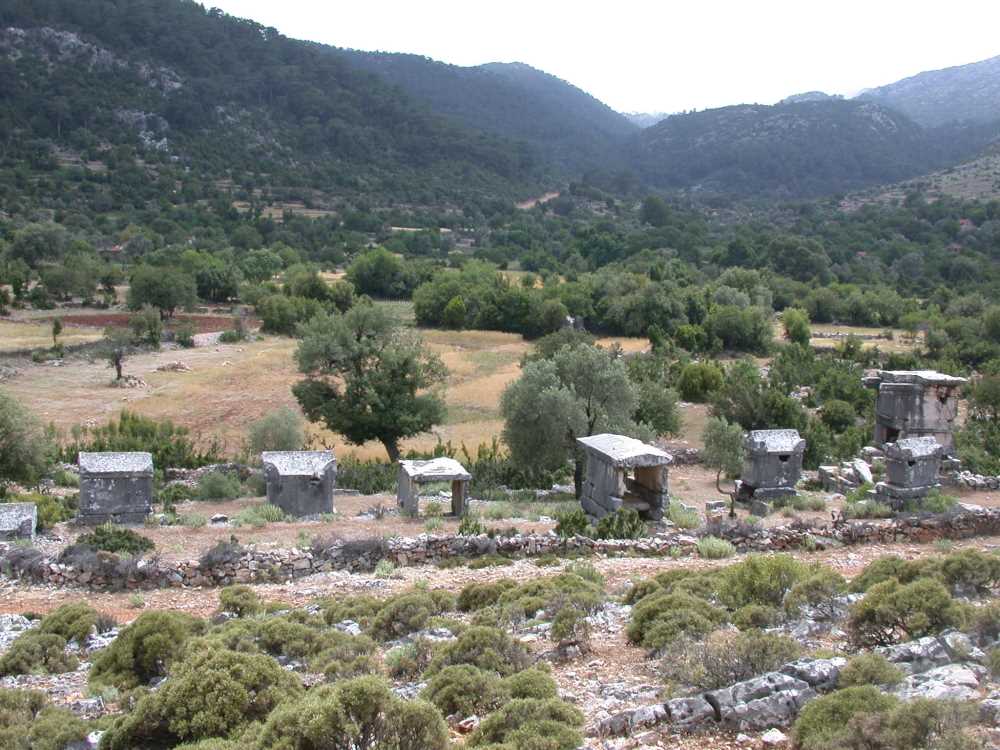
The most iconic imagery associated with Sidyma is the massive sarcophagi scattered across the entirety of the city. The “pigeon-hole” type rock-cut tombs, which we highlighted in our Pinara Ancient City guide, also confront us here. However, the true distinction of Sidyma lies in the incredible craftsmanship and abundance of its house-type sarcophagi:
- House-Type Sarcophagi: Reflecting the distinct wooden architecture of Lycia onto stone, these tombs served as the eternal resting places for the city’s elite.
- Rock-Cut Tombs: Carved into steep cliffs and executed with lace-like precision, these monuments demonstrate just how deep the necropolis (cemetery) culture of the city ran.
🏛️ Three Defining Features to Know About Sidyma
| Feature | Detail |
| Site of Prophecy | The city where the future reign of Emperor Marcian was heralded. |
| Tomb Architecture | Hosts some of the best-preserved “house-type” sarcophagi in Lycia. |
| Living History | The ancient ruins are completely integrated with the houses and gardens of Dodurga Village. |
Geography and Flora: The Greenest Stage of the Lycian Way
Sidyma is one of the most beloved stops for those trekking the Lycian Way. The ruins, shaded by olive trees and centuries-old plane trees, offer hikers a truly unique atmosphere. The high-altitude structure of the region makes the characteristic plants of the Lycian Flora appear much more vibrant here. Exploring the ancient city amidst wild sage and the scent of thyme growing naturally in the fields is an experience that appeals to all of your senses. You can visit our Lycian Fauna page for the diverse wildlife in the region.
2026 Travel Notes and Recommendations
- Stop by the Village Teahouse: Sitting in the Dodurga village teahouse and listening to the stories of the city from the local elders is just as valuable as touring the ruins themselves.
- Examine the Sarcophagi: Be sure to photograph the detailed reliefs decorating the massive sarcophagi that sit right in the middle of agricultural fields throughout the village.
- Go for a Hike: Hike at least a short section of the Lycian Way stage that starts from Sidyma and stretches toward the Gey Ancient Settlement.
🏛️ A Journey in Time
The Sidyma Ancient City serves as a powerful reminder that history does not reside solely within museums, but right in the middle of people’s daily lives. A sarcophagus standing in a villager’s garden is the silent witness to a continuity spanning thousands of years. Do not forget to follow the website of the T.R. Ministry of Culture and Tourism to keep up with current research news and restoration efforts in the region for 2026.
🏛️ Frequently Asked Questions (FAQ)
How do I get to Sidyma Ancient City?
You can reach the Dodurga Neighborhood by taking the road that splits off near Eşen (Kınık) on the Fethiye-Kaş highway. The Lycian Way markers you will see along the route will guide you directly.
Is there an admission fee and is the Museum Pass (Müzekart) valid?
Although Sidyma currently holds the status of an official archaeological site, admission is free since the ruins are completely intertwined with the active village. However, regular patrols and inspections may be conducted for specific sections within the site.
What is the meaning of the name Sidyma?
The name is of Lycian origin. Although its exact meaning is not definitively known, like many Lycian place names in the region, it is a heritage preserved from the ancient languages of Anatolia.
Are there lodging or dining options in
the village?
Yes, there are local guesthouses (pansiyons) and small establishments offering traditional village meals in the Dodurga Neighborhood, catering specifically to Lycian Way hikers.