
Kandyba Ancient City: The Mysterious Cult Center of Lycia
Located at the intersection of ancient roads between Kaş and Elmalı, perched atop a steep acropolis, Kandyba Ancient City is one of the “hidden” treasures of Lycia. Although its name is not frequently mentioned in the texts of ancient historians, the ruins of the city—particularly its funerary architecture—prove what a significant settlement it was for the region.
Through recent surface surveys, Kandyba has drawn attention not only as a military watchpoint but also as a religious focal point. Its commanding position overlooking the Kasaba Plain turned it into a strategic “lordship center” in antiquity, supervising the surrounding agricultural lands.
Etimological Origins: Legacy of the Mother Goddess and the Supreme God
The name of Kandyba arouses great curiosity in the archaeological world. The origin of the name traces back to the Luwian or Lycian languages. Linguistic analysis suggests two primary views regarding its meaning:
- The Consort of the Mother Goddess: The root “Kanda” is believed to be linked to Anatolia’s ancient Mother Goddess cult, meaning “the spouse/consort of the Goddess.”
- Belonging to the Supreme God: According to another view, the name translates to “a place belonging to the Supreme God” or a “divine sanctuary.”
These religious references reinforce the hypothesis that Kandyba was a cult center rather than a conventional settlement. For more information regarding belief systems and regional deity cults, you can visit our Lycian History page.
The Lycian League and Kandyba’s Political Status
In antiquity, the Lycian League was a democratic federation that granted 1, 2, or 3 voting rights to member cities based on their size. Kandyba Ancient City was among the member settlements represented in the assembly with a single vote.
On the famous road guide monument, Miliarium Lyciae, erected in Patara during the reign of Roman Emperor Claudius (43 AD), Kandyba is recorded as one of the important stops in the regional transportation network. This confirms that the city maintained its administrative and logistical importance during the Roman period.
Archaeological Ruins: House-Type Tombs and Byzantine Fortifications
Although comprehensive excavations have not yet been conducted at the site, the visible ruins on the surface showcase some of the finest examples of Lycian funerary art:
- House-Type Rock Cut Tombs: The most striking structures of Kandyba are the house-shaped tombs carved into the slopes of the acropolis. These tombs represent the stone-carved lineage of 4th-century BC wooden Lycian houses. The detailed craftsmanship on their pediments reflects the prosperity of the city during that era.
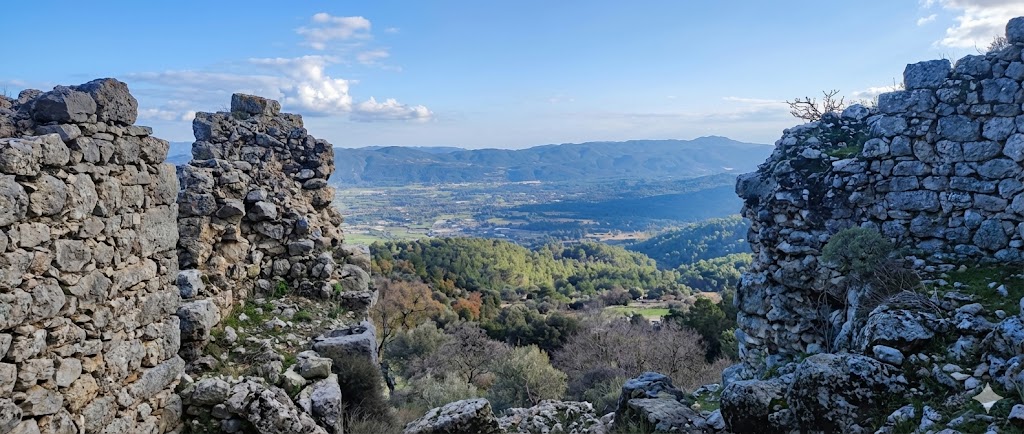
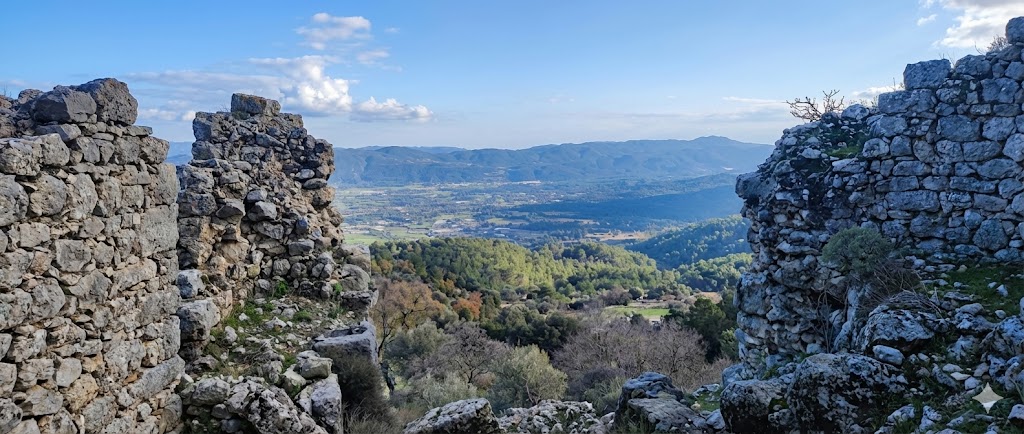
- Byzantine Walls (Kastron): The surviving wall sections at the summit of the acropolis prove that the city was utilized as a strategic fortress (kastron) during the Byzantine era. These walls were built largely by reusing stone blocks from earlier ancient structures (spolia).
- Sarcophagi: The necropolis area features both Lycian-type sarcophagi with pointed gothic lid forms and simpler tomb structures belonging to the Roman period.
To explore the harmony between these ancient ruins and the vegetation growing among the steep rocks, check out our Lycian Flora guide.
🏛️ Hidden History in Nature
Kandyba Ancient City is more like an “open-air museum” where you can remain alone with nature, rather than a commercialized tourist site. The panoramic view from the acropolis allows you to imagine the routes traveled by ancient sailors and caravans. As you complete your tour, you can visit our Lycian Fauna guide to learn about the surrounding wildlife. Don’t forget to follow the website of the Republic of Türkiye Ministry of Culture and Tourism for up-to-date travel notes for 2026.
🏛️ Frequently Asked Questions (FAQ)
Where is Kandyba Ancient City and how to get there?
It is located near the village of Çataloluk (Gendeve), 13 km north of Kaş district in Antalya. You can reach it by following the Kaş-Elmalı road and turning off at the Çataloluk junction. The climb to the hilltop acropolis follows a short but steep trail.
Is there an entrance fee for Kandyba?
Currently, there is no official ticket booth, so admission is free. However, please keep in mind that the city is a first-degree archaeological site and care should be taken not to damage any ruins.
What does the name Kandyba mean?
The name is estimated to mean “the consort of the Mother Goddess” or “belonging to the Supreme God,” pointing to its likelihood of being a sacred center.
When is the best time to visit?
Due to its higher altitude, it is cooler than central Kaş during the summer months. The ideal visiting times are April–May or September–October.