
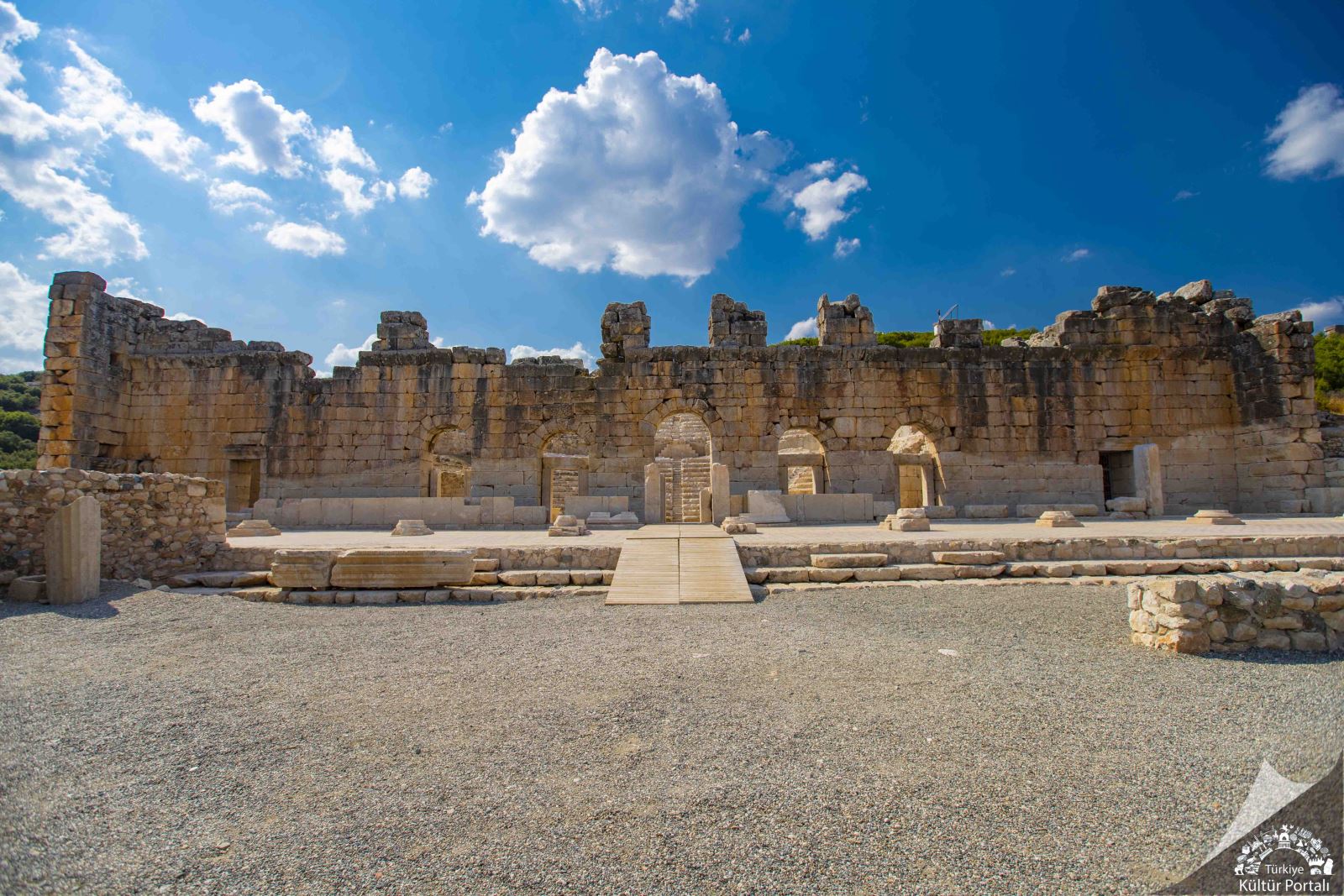

Kibyra Ancient City: The Warrior Spirit of the Lycian Mountains
Located at the intersection of Antalya, Muğla, and Denizli, within the Gölhisar district of Burdur, Kibyra Ancient City rises upon three commanding hills separated by deep ravines. Rooted in the native Luwian language of Anatolia rather than Hellenic, the city has stood as a center of attraction since prehistoric times. The famous geographer Strabo records that the people of Kibyra were originally of Lydian descent, later settling here to transform into the most warrior-like nation in the region.
Kibyra was renowned in the ancient world not only for its military might but also for its advanced industry. Metallurgy, leatherworking, pottery, and especially horse breeding for military purposes were the primary sources of income. This economic power reflected itself on a monumental scale in the architecture of the city.
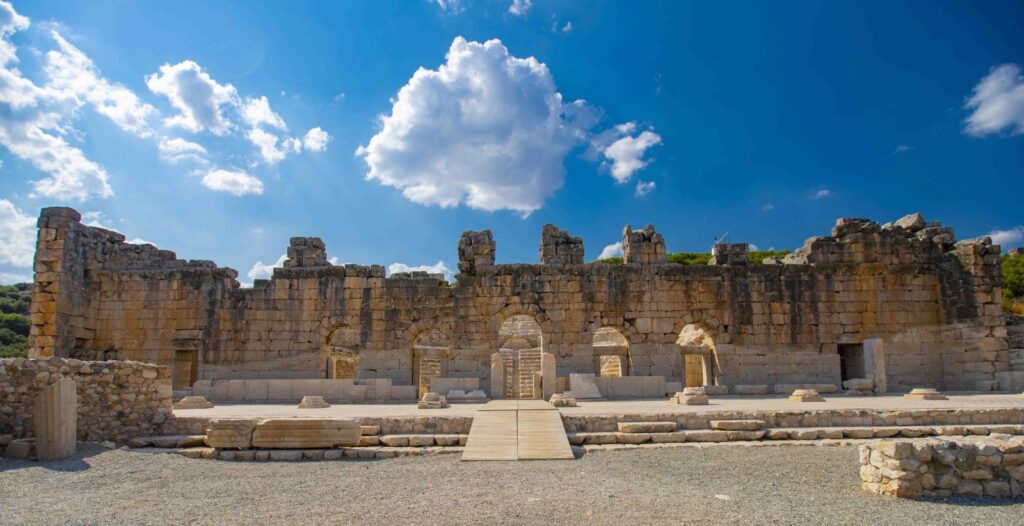
The Pinnacle of Architecture: The Medusa Mosaic and the Odeon
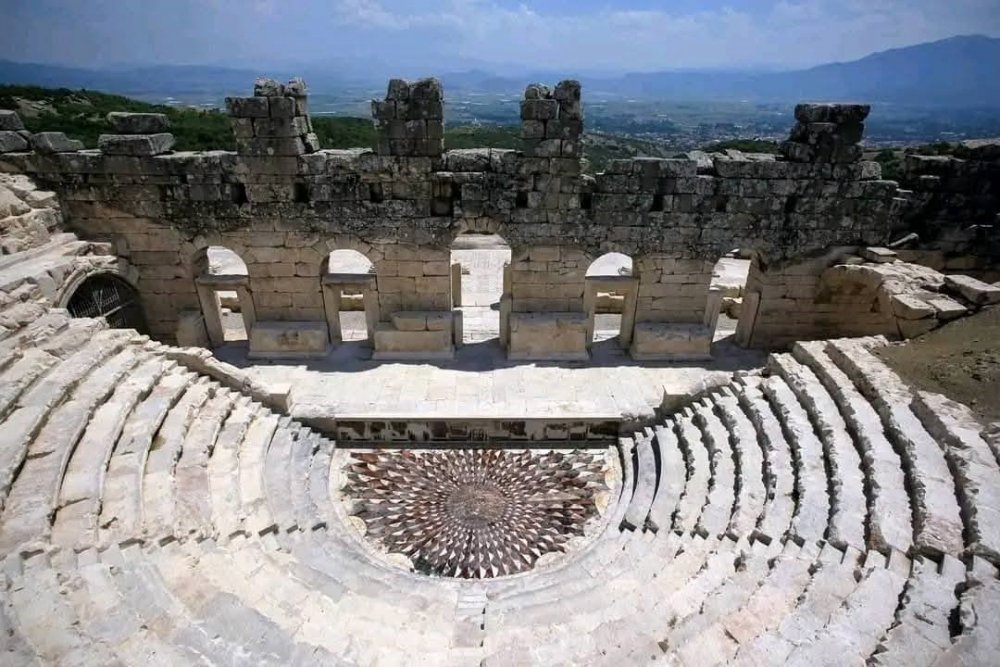
The structure that has brought worldwide fame to Kibyra is undoubtedly the Odeon (Music House) building. With a seating capacity of 3,600 people, this structure holds the distinction of being one of the largest roof-covered buildings in the ancient world.
- Unique in the World: The Medusa Mosaic: Located in the orchestra section of the Odeon and crafted using the “Opus Sectile” technique (assembling cut pieces of colored marble), the Medusa mosaic is the only one of its kind in the world. Still preserving its vividness in 2026, this mosaic symbolizes the artistic genius of the city.
- Massive Mosaic Field: Discovered in 2011 in front of the parliament building, the 540-square-meter mosaic field is one of the largest and most intact mosaic pavements in Anatolia.
You can compare these artistic riches and the mosaic culture of the city with the aesthetic details on our Lycian History page.
The City of Gladiators and Monumental Structures
Kibyra hosts one of the largest performance arenas in Anatolia with its Ancient Theater, which boasts a capacity of 12,000 people. However, the true structure that earns the city its title as the “City of Gladiators” is its massive stadium.
| Structure Name | Features |
| Ancient Theater | 12,000 capacity, bears Roman and Byzantine traces. |
| Odeon | 3,600 capacity, the largest roofed ancient hall. |
| Stadium | The center of gladiator fights, features a massive running track. |
| Roman Bathhouse | Advanced heating system and spacious marble halls. |
For more information about the warrior identity of Kibyra and gladiator fights, you can take a look at the ancient animal fights mentioned in our Lycian Fauna guide.
Political Power: The Tetrapolis and the Lycian League
In the 2nd and 1st centuries B.C., Kibyra Ancient City joined forces with three surrounding cities (Boubon, Balboura, and Oinoanda) to establish a powerful federation called the Tetrapolis (League of Four Cities). Kibyra was the undisputed leader of this league and the only city entitled to two votes in the assembly.
In 82 B.C., the Roman General Murena dissolved this union, incorporating the cities into the Province of Asia and the Lycian League. This political transformation defined the unshakeable position of Kibyra during the Roman Imperial period. Having entered the UNESCO World Heritage Tentative List in 2016, the city receives the global attention it deserves today.
🏛️ The Most Intact Parliament Building of Anatolia
The Kibyra Ancient City sheds light on architectural history not only with its mosaics but also with its Odeon structure, which was also utilized as a parliament building (Bouleuterion) and still stands today. During your visit, make sure to pay attention to the advanced sewage system on the main street of the city and the remains of the shops. You can use our Lycian Flora guide for the plant diversity of the region and visit the website of the T.R. Ministry of Culture and Tourism for current travel notes for 2026.
🏛️ Frequently Asked Questions (FAQ)
Where is Kibyra Ancient City and how is the transportation?
The city is on Horzum Neighborhood within the Gölhisar district of Burdur province. You can easily reach it by following the Gölhisar signs via Burdur or Denizli. The distance between the district center and the ancient city is approximately 3 km.
Is the Medusa mosaic always open to visitors?
The Medusa mosaic may be covered for protection purposes during certain periods to prevent it from being affected by seasonal weather conditions. It is recommended to check the current status before your visit.
Were gladiator fights held in Kibyra?
Yes, numerous inscriptions and reliefs have been found proving that gladiator fights were held in the stadium and theater located in the city. For this reason, it is known as the “City of Gladiators.”
Is there an entrance fee and is the Museum Pass (Müzekart) valid?
Yes, entrance to the Kibyra archaeological site is paid, and the Museum Pass (Müzekart) is valid. Since it is a UNESCO heritage site, it features a highly organized tour route.