

Daedala Ancient City: The Lycian Border Among the Pine Forests
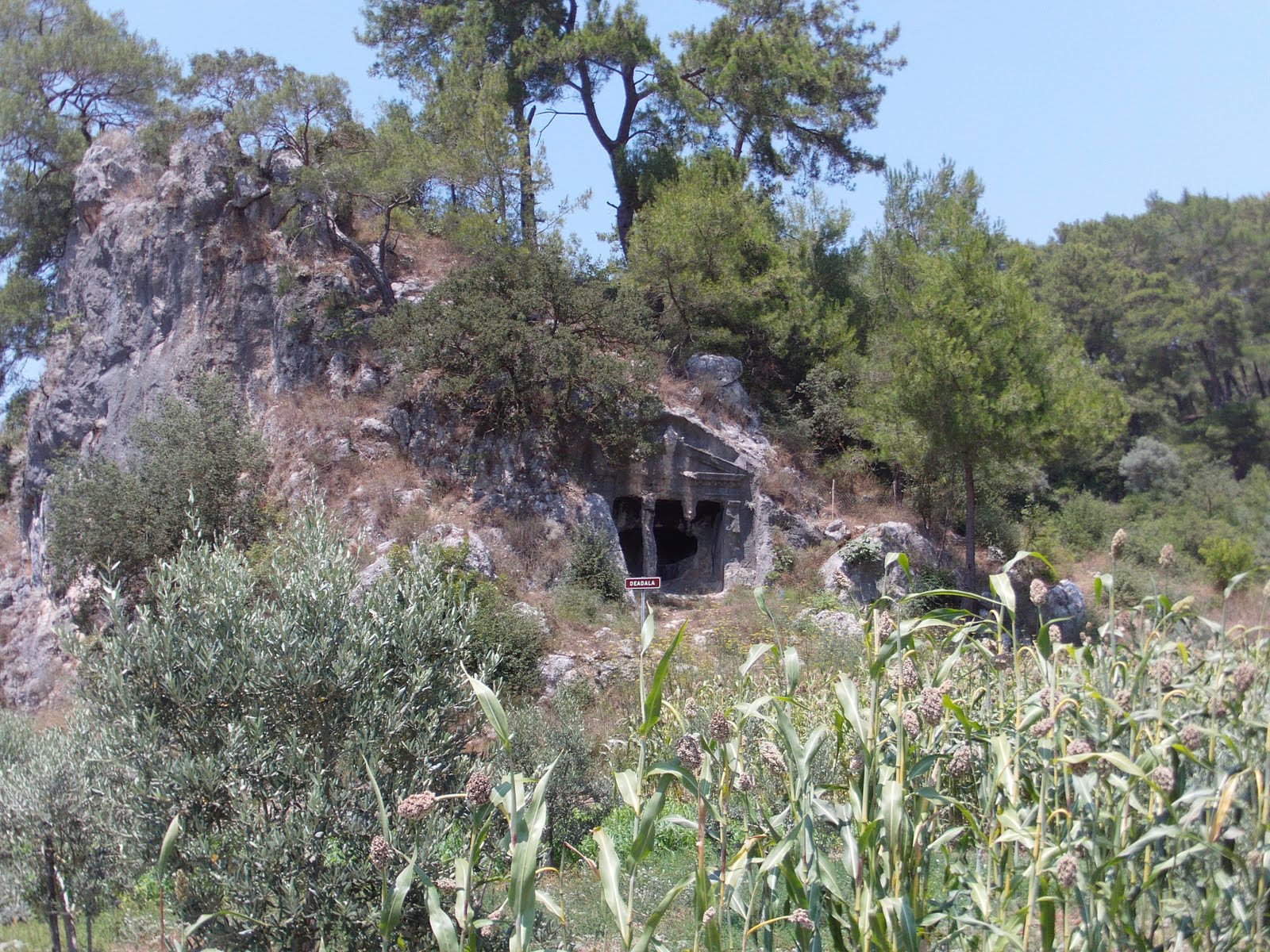
Located very close to Fethiye’s popular İnlice Beach, yet isolated from the noise of the modern world, Daedala Ancient City is a special spot where history and nature exist in perfect harmony. Built upon a commanding hill known locally as İnlice Asarı, the settlement served as a strategic observation point in antiquity, controlling the entrance to the Gulf of Fethiye (Glaucus Sinus).
Situated on the transition line between the Lycian and Carian regions, Daedala bears the traces of both cultures. Preserving its silence today under the shade of pine forests, the city offers its visitors not only ancient ruins but also a unique view of the Gulf of Glaucus.
The Mystery of the Name Daedala: The Luwian Language and Wooden Statues
Etimologically, the name of the city has a very rich background. Two different views offer fascinating perspectives regarding the origin of the name:
- Luwian-Pelasgian Origin: According to one view, the name of the city is based on the Luwian language, one of the ancient Anatolian languages. This theory suggests that it was formed by the combination of the syllables “Da” (pine), “İda” (forest/tree), and “La” (diminutive suffix). In this case, Daedala literally means “Little Pine Forest” or “Little Pine Tree.” The fact that the city is covered with dense pine forests even today strengthens this thesis. You can find more information about the floral diversity of the region on our Lycian Flora page.
- Connection with Greek Art: In the Greek world, the name Daedala carries a different meaning. In antiquity, wooden statues of gods that were covered in gold, painted in vivid colors, and dressed in real clothes were called “daidala”. This artistic aspect of the name provides clues about the origins of woodworking and belief systems in the region.
Daedala in the Notes of Strabo of Amasya
The Daedala Ancient City appears as a critical geographical marker in the notes of Strabo of Amasya, the famous geographer of antiquity. Strabo defines the city as the starting point of the Rhodes Peraia (the territories of the Rhodians on the mainland).
The following statements regarding Daedala are included in Strabo’s work:
“…The Peraia of the Rhodians begins at Daidala, which belongs to the territory of the Rhodians.”
“…Sailing from the Peraia of the Rhodians, where Daidala is the boundary, one arrives in Lycia…”
These records document that the city formed the sharp boundary between the lands under Rhodian rule and the territories of the Lycian League in the ancient period. You can examine this diplomatic and political past of the city deeply on our Lycian History page.
Archaeological Traces and İnlice Asarı
Although the exact location of the city has not yet been 100% proven through official excavations or coins featuring the city’s name, its geographical location and Strabo’s descriptions have led the scientific community to agree that the city is indeed İnlice Asarı.
The main structures you can see in Daedala Ancient City are:
- Acropolis Fortifications: Three sides of the İnlice Asarı hill are surrounded by sturdy fortification walls made of carefully crafted stone blocks.
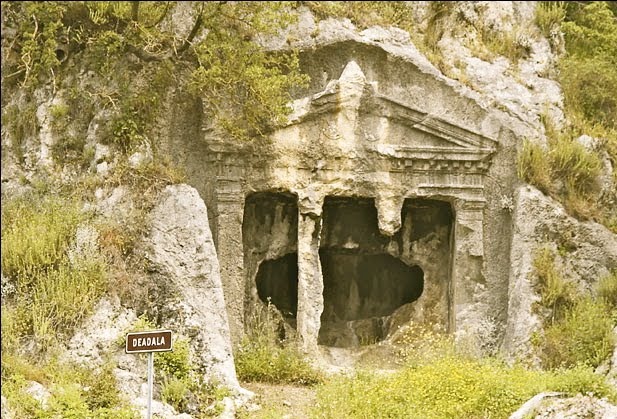
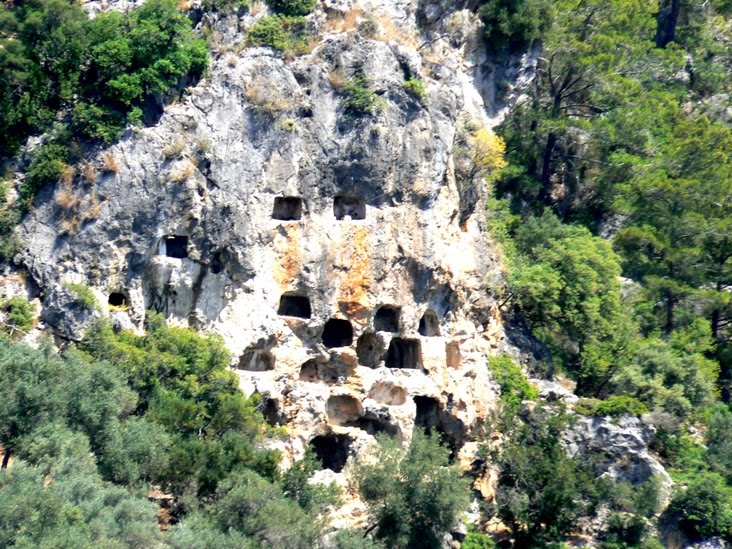
- Rock Tombs: On the slopes of the acropolis, a group of rock tombs that look like black square holes from a distance can be seen. These tombs are the most distinct signs of the city’s necropolis area.
- Tower Ruins: The ruins of towers, which were part of the defense line, reveal the military strategy of the city.
The rugged terrain and slopes of the city host many creatures included in the Lycian Fauna; therefore, caution should be exercised during the visit.
🏛️ The Pearl of the Gulf of Glaucus
The Daedala Ancient City is one of the most critical stops on the western leg of the Lycian Way. The view you see when looking down from the city is the exact route followed by ancient mariners for centuries. After completing your visit, you can cool off at İnlice Beach and explore other settlements listed in our Lycian Ancient Cities List. For official tourism and museum information of the region, we recommend visiting the page of the Muğla Provincial Directorate of Culture and Tourism.
🏛️ Frequently Asked Questions (FAQ)
Where is Daedala Ancient City and how is the transportation?
It is within the borders of İnlice Village in the Fethiye district of Muğla. It can be reached via the İnlice turnoff on the Fethiye-Göcek highway. Since the ascent to the hill is via pathways, it requires physical conditioning.
Is there an entrance fee for Daedala Ancient City?
Currently, entrance to the archaeological site is free, and there is no ticket booth. However, the region has the status of a protected archaeological site.
Where does the name İnlice Asarı come from?
The word “Asar” is a local term generally used in Anatolia for “fortress” or “castle” ruins. This hill in İnlice Village was given this name due to the fortress ruins on it.
What does the name Daedala mean?
According to its Luwian origin, it means “Little pine forest,” while according to Greek art literature, it means “Adorned wooden statues.”
What should be considered when visiting here?
The ground is rocky and the vegetation (maquis and kermes oak) is dense. Sturdy hiking shoes and long trousers should definitely be preferred.