

Idebessos Ancient City: The Crossroads of Eastern Lycia Above the Clouds
Located in the Kozağacı locality of the Karacaören Neighborhood in the Kumluca district of Antalya, Idebessos Ancient City is one of the highest and most impressive settlements in the Lycian geography. The city is positioned on the eastern slopes of the mountain range that forms part of the Akdağlar (Masikytos) and harbors Kızlar Sivrisi (3,070 m), the highest point in the region.
Idebessos whispers through the suffix “-ss” in its name that its roots extend far before the Lycian civilization, reaching into the ancient languages of Anatolia. According to the famous historian Ramsay, this name is derived from a root meaning “Chief Mountain” or “The Highest Mountain,” confirming its deep connection with the massive peaks rising behind the city.
Political Life and Sympoliteia: Three Cities, One Voice
The Idebessos Ancient City maintained an active role within the Lycian League. However, what makes the city politically fascinating is the Sympoliteia (political union) system it established with its neighbors, Akalissos and Kormos. These three cities shared a single voting right in the assembly of the Lycian League, and Akalissos held the leadership of this union.
Although this situation indicates that Idebessos had limited autonomy, it enabled the city to sustain its existence as a local center of power for centuries. The appearance of its name on the Miliarium Lyciae —the famous road guide monument in Patara —proves the city’s official status during the Roman period and its place within the regional transportation network.
Strategic Location: The Pass Connecting the Mountains to the Coast
Idebessos was not just a settlement, but also a strategic waypoint. Situated at the intersection of ancient roads, the city was at the center of the following routes:
- Via Rhodiapolis: Access to the Gulf of Finike and the sea.
- Via Arykanda: Connection to the Elmalı Plateau and the interior regions.
- Via Trebenna: Passage to the plain of Attaleia (Antalya).
Some historians suggest that a portion of Alexander the Great’s armies utilized these high mountain roads to reach Phaselis. This demonstrates that the city was not merely an agricultural settlement, but a vital military and commercial pass.
Archaeological Structures: Unique Tombs and Byzantine Churches
The ruins of the city bring together Roman grandeur and the religious fabric of the Byzantine period. The most remarkable structures in Idebessos Ancient City include:
1. Necropolis and Unique Tomb Types
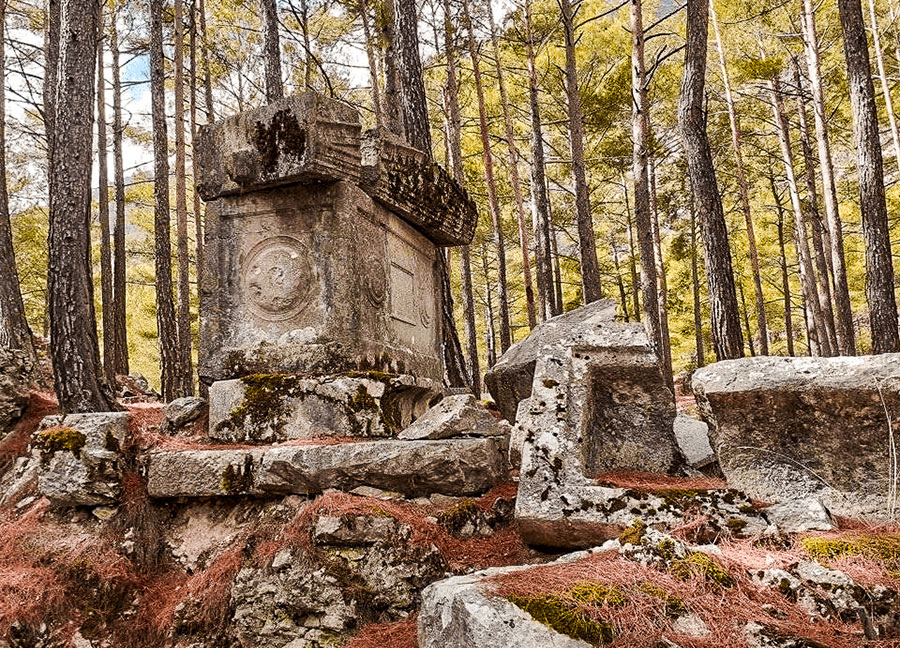
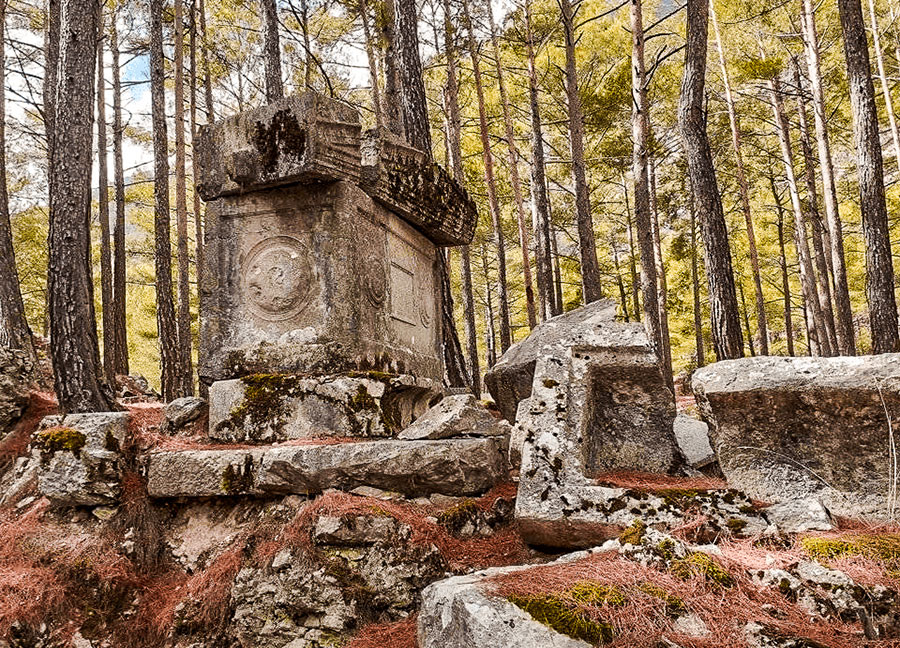
Idebessos possesses a necropolis (cemetery) culture that is rarely encountered elsewhere in Lycia. In contrast to the classical Lycian rock tombs, “U”-shaped exedra tombs and garlanded sarcophagi stand out here. The lid structures and decorations of some of these sarcophagi are considered entirely unique (unique) in archaeological literature.
2. Theater and Bathhouse
Despite the modest size of the settlement, the presence of a theater and a bathhouse reflects the wealth of the city during the Roman period. The theater is a humble yet elegant structure leaning against the hillside.
3. The Byzantine Period and Churches
Serving as an episcopal center affiliated with the Metropolis of Myra during the Christian era, Idebessos (known as Lebissos at the time) gained three distinct churches. One of these churches stands out with its triconch-plan structure, which is unparalleled in Lycia.
Kakasbos and the Cult of the Rider Gods
The most mysterious discovery that illuminates Idebessos Ancient City is a group of 8 bronze statuettes unearthed during an illicit excavation, which are now exhibited in the Antalya Museum. These statuettes include:
- A statue of Men, the famous Lycian rider deity.
- Figures of Kakasbos-Herakles, the club-wielding rider god who was highly popular in Lycia and Pisidia.
These finds strongly suggest the existence of a “Sacred Area of the Rider God” on the high mountain slopes. The statuettes document the city’s belief system and its robust artistic ties with the Pisidian tradition.
🏛️ The Hidden City Inside Nature
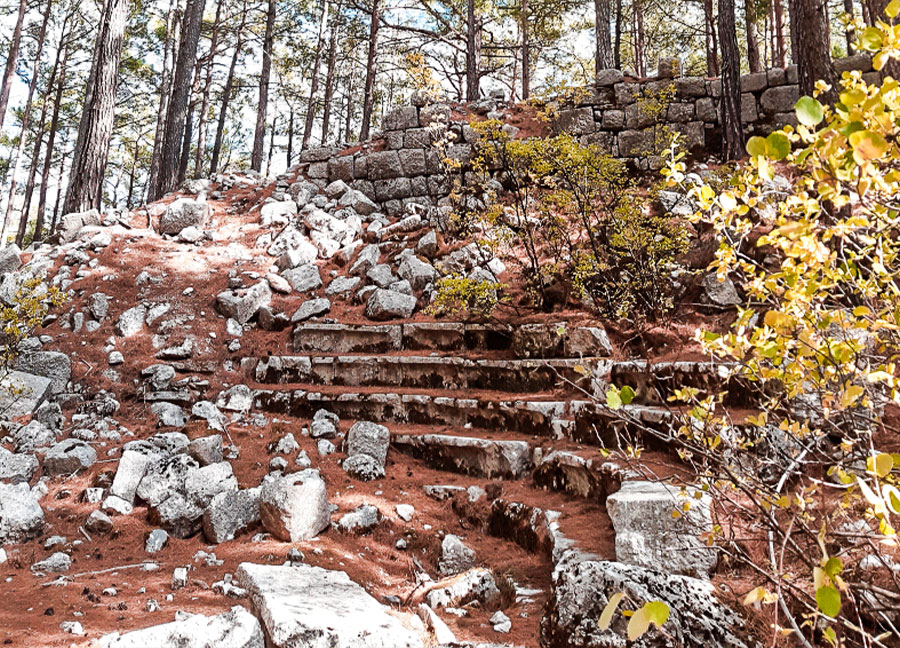
The Idebessos Ancient City is located in a completely natural environment inside the forests. Since no official excavations have been carried out in the city yet, the ruins are completely interwoven with nature. This gives visitors a genuine sense of “discovery.” During your visit, you can hear the sound of the Ak Dere flowing down the slopes and explore the endemic species of the region with our Lycian Flora guide. Do not forget to follow the website of the T.R. Ministry of Culture and Tourism for updated official information.
🏛️ Frequently Asked Questions (FAQ)
How do I get to Idebessos Ancient City?
You need to head north from the Kumluca district to reach the Karacaören-Kozağacı villages. From there, you can reach the city by following the forest road that leads to the Kırkpınar Highland. Since the final section of the road is unpaved, choosing a vehicle suitable for rough terrain is recommended.
Are there rock tombs in Idebessos Ancient City?
Interestingly, typical rock tombs that are widespread in other cities of Lycia are not present in Idebessos. Instead, sarcophagi and exedra-type tombs are common.
Where can I see the Kakasbos statuettes?
The 8 unique bronze statuettes unearthed from Idebessos are exhibited today in the collection of the Antalya Museum.
What is the best time to visit Idebessos Ancient City?
Since the city is located at an altitude of 1,050 meters, it remains cool even in the summer. However, the region can be under heavy snow during the winter. The most ideal time to visit is between April and October.