
Kyaneai Ancient City: The Magnificent and Generous Summit of Lycia
Rising upon the rugged cliffs of the Yavu plateau in the Demre district of Antalya, Kyaneai Ancient City hosts the most impressive “sea of sarcophagi” in the Land of Light, Lycia. Deriving its name from the ancient Greek word for “Deep Blue” (Kyaneos), this ancient city holds a prestigious place within the Lycian League, celebrated not only for its architecture but also for its wealthy and philanthropic citizens who provided financial aid to neighboring cities.
Stretching along a ridge approximately 450 meters above sea level, Kyaneai served in antiquity both as a well-protected fortress against pirate threats originating from the sea and as a hub managing the regional agricultural trade. Known to exist since the 4th century B.C., the city experienced its golden age during the Roman period.
The Mythological Origin of the Name: The “Clashing Rocks”
The name Kyaneai is not merely a definition of color but also a profound mythological reference. In ancient sources, it shares a name similarity with the Symplegades (Clashing Rocks), which were believed to sit at the entrance of the Bosphorus and were also known as the “Kyaneai Rocks”. Although this city is an inland settlement, it is thought that the emphasis on “deep blue” in its name comes from the shaded hue of the local limestone cliffs under the sun, or from that deep blue where the city’s horizon line merges with the Mediterranean.
The Symbol of Generosity: Lyciarch Jason and the Wealth of Kyaneai
Kyaneai is a city that experienced the pinnacle of economic prosperity and social justice in the ancient world. The honorary inscriptions found in the city document that the noble families of the settlement did not just beautify their own borders but also provided financial assistance to neighboring cities during times of crisis.
- Jason, Son of Nikostratos: The most famous figure of the city is the philanthropist Jason, who lived in the 2nd century A.S. (A.D.). Living during the same period as the famous billionaire Opramoas of Rhodiapolis, Jason held the title of “Lyciarch” (President of the Lycian League), the highest office within the Lycian League.
- Social Solidarity: The inscriptions detailing the immense wealth spent by Jason for the prosperity of the city and the league shed light on the civil society understanding of antiquity. You can find more details regarding this rich cultural heritage on our Lycian History page.
Archaeological Heritage: The Sea of Sarcophagi and the Theater
The Kyaneai Ancient City offers its visitors the most densely populated and best-preserved examples of Lycian funerary architecture. History bursts forth from every corner of the city:
1. The Largest Necropolis of Lycia
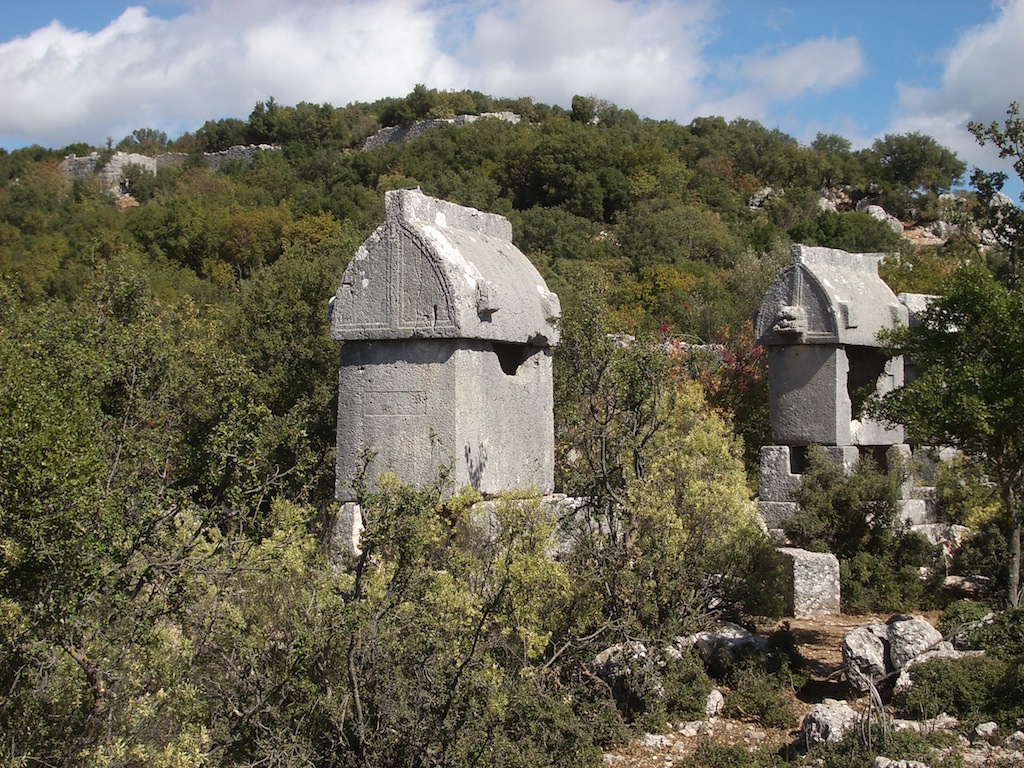
Kyaneai features the densest population of sarcophagi in the region. Spreading from the foothills of the acropolis down to the valley, more than 300 sarcophagi create the appearance of a literal “stone city.” Mostly dating to the Roman period, the bird depictions and warrior reliefs on these sarcophagi reflect the artistic understanding of the city. You can take a look at the connection of these figures with the wildlife of the region in our Lycian Fauna guide.
2. The Acropolis Theater
Carefully carved into the western slope of the city, the theater features approximately 25 rows of seats. Architecturally remaining highly intact, this structure offers its audience a magnificent valley view. The acoustics and positioning of the theater prove the importance given by the city to art and entertainment.
3. The Library and Public Buildings
The remains of a library located at the summit of the acropolis, along with cisterns and bathhouse structures, demonstrate that Kyaneai was not merely a military center but an intellectual hub as well. In particular, the massive rock-cut cisterns stand as engineering marvels of how water was smartly stored at this high altitude.
🏛️ The Generous Heirs of Lycia
The Kyaneai Ancient City is not just a pile of stones; it was a center where some of the wealthiest and most educated people of the region once resided. Pay close attention to the fine craftsmanship on the sarcophagi and the honorary inscriptions during your visit. You can use our Lycian Flora guide to discover the endemic plant diversity surrounding the city and follow the website of the T.R. Ministry of Culture and Tourism for current news for 2026.
🏛️ Frequently Asked Questions (FAQ)
Where is Kyaneai Ancient City and how is transportation provided?
The city is within the borders of Yavu Village on the Antalya-Kaş highway. It is 20 km away from Demre and approximately 25 km from Kaş. You can reach the slope of the city by entering Yavu Village from the main road and following the signs. The climb to the hill takes about 15–20 minutes.
How many sarcophagi are located in Kyaneai?
With more than 300 sarcophagi, Kyaneai possesses one of the largest necropolis areas in the Lycian region. Due to this feature, it is also known as the “City of Sarcophagi.”
Is there an entrance fee and is the Museum Pass (Müzekart) valid?
Currently, entrance to the Kyaneai archaeological site is free, and there is no ticket booth. However, the region is a registered protected site.
What is the best time to visit Kyaneai Ancient City?
The Yavu plateau can be quite hot during the summer months. The most ideal time is the spring months (April–May) when nature awakens.