
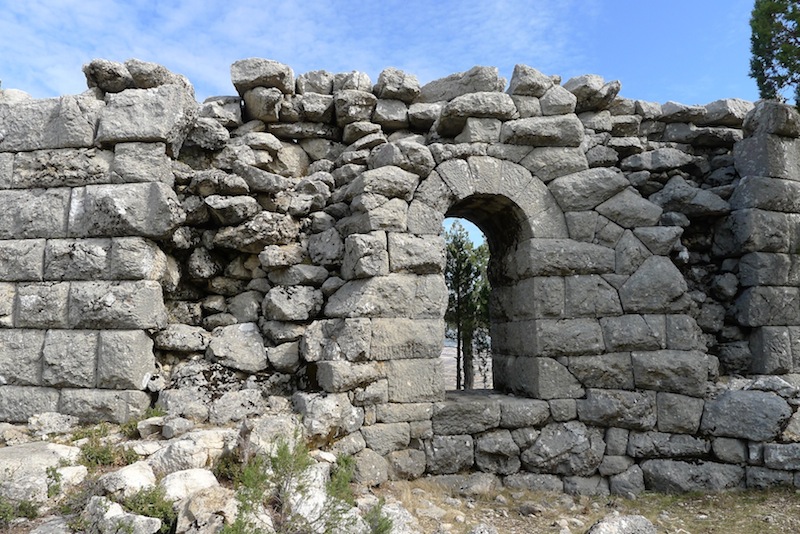

Oktapolis Ancient City: Eight Cities Rising on Steep Cliffs
Located on the steep slopes of the Kızılkaya Village in the Dalaman district of Muğla, Oktapolis Ancient City draws great attention due to the profound meaning carried by its name. Derived from the combination of the Ancient Greek words “Okto” (Eight) and “Polis” (City), this name symbolizes the administrative union of eight different surrounding settlements rather than a single urban center.
Situated at the intersection of the Lycian and Carian regions, Oktapolis witnessed the cultural interaction of these two great civilizations throughout history. Although transportation to the city is highly arduous today due to the rugged terrain, the panoramic view and historical fabric encountered upon reaching the summit are magnificent enough to make one forget all difficulties.
Historical Development: A Heritage Extending from Lycia to Byzantium
Although written documents regarding the definitive foundation date of Oktapolis are limited, unearthed inscriptions and tomb types prove that the city was settled from the 5th century B.C. onward. The most concrete data regarding the name of the city is hidden in inscriptions found in neighboring cities and phrases located on the fortification walls of the city itself.
- Political Union: Oktapolis was a small yet strategic member within the Lycian League. Being a union of eight cities demonstrates that the city acted with a collective mind in regional defense and agricultural management.
- Roman and Byzantine Period: A large portion of the remains of the city reaching the present day dates to the Roman and Byzantine eras. In particular, the late-period craftsmanship of the fortification walls indicates that the city was actively utilized for defensive purposes during the Middle Ages.
You can examine our Lycian History page for more information about this multi-layered historical structure of the city and its connections with other cities in the region.
⚠️ Safety Warning
Since Oktapolis Ancient City is established upon steep cliffs, exploration is highly challenging. Extreme caution must be exercised while moving along the rocks. Climbing to the summit is not recommended for those with a fear of heights or individuals lacking technical hiking experience.
Architectural Structures and Steep Rock-Cut Tombs
Oktapolis was constructed with an architectural understanding that challenged the topography. The ruins of the city spread along the slope with a vertical hierarchy:
1. Steep Rock-Cut Tombs (Lycian Type)
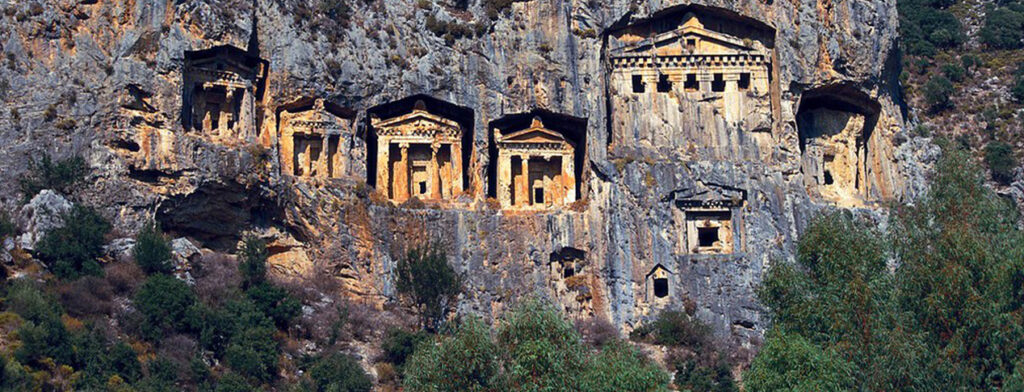
The most remarkable and visually powerful ruins of the city are the tombs carved into nearly vertical cliffs. These tombs reflect the typical Lycian “house-type” funerary architecture. The primary purpose of constructing these tombs at such steep points was both to protect the sacredness of the deceased and to create a natural obstacle against grave robbers.
2. Fortifications and Defense Systems
The fortification walls surrounding the acropolis reveal the defense strategy of the city. A portion of the walls, built from limestone blocks, still stands today in all its grandeur. Watchtowers located on the fortifications were utilized in antiquity to monitor the Dalaman Plain and riverbeds.
3. Cellars and Storage Areas
Large rooms carved into the rocks, referred to as “cellars,” are located in the city. It is estimated that these areas were used as food and water storage centers against the high altitude of the city and the possibilities of sieges. The strategic distribution of cisterns and cellars proves the survival success of the city under challenging natural conditions.
The Confederative Structure of Oktapolis
Oktapolis consists of the eight cities hidden within its name. Although research continues regarding which settlements these eight cities were, the general consensus is that the following surrounding settlements were included in this union:
- Elcik
- Bozbel
- Sabunlu
- Kızılkaya and other surrounding nomadic hamlets (oba).
In each of these settlements, small remains, wells, and cisterns belonging to the Oktapolis period are present. You can examine this complex yet organized structure from our Lycian Ancient Cities List guide by comparing it with other federations.
Technical Summary and Visitor Notes
| Criterion | Detail |
| Location | Muğla / Dalaman / Kızılkaya |
| Period | Hellenistic, Roman, Byzantine |
| Difficulty Level | Very Difficult (Steep Cliffs) |
| Structures to See | Rock Tombs, Fortifications, Cellars |
| Vegetation | Calabrian Pine (Kızılçam) and Maquis (Lycian Flora) |
🏛️ The Hidden Memory of Dalaman
The Oktapolis Ancient City has preserved its original fabric to a large extent thanks to remaining secluded from mass tourism. The scenery stretching down to the Dalaman River, filtering through the rock tombs of the city, confirms the aesthetic understanding of antiquity once more. You can visit our Lycian Fauna page to familiarize yourself with the wildlife of the region during your trip and follow the website of the T.R. Ministry of Culture and Tourism for current news for 2026.
🏛️ Frequently Asked Questions (FAQ)
Where is Oktapolis Ancient City and how is the transportation?
The city is in Kızılkaya Village, connected to the Dalaman district of Muğla. It is reached by heading in the Kızılkaya direction from Dalaman center. However, the actual ruins are on the steep cliffs above the village, and the climb requires professional equipment or an experienced guide.
What is the meaning of the name Oktapolis?
It means “Eight” (Okto) and “City” (Polis) in Ancient Greek. This name symbolizes that the city was formed by the combination of eight settlements.
Is there an admission fee and is the Museum Pass (Müzekart) valid?
Oktapolis does not possess a ticket booth with an official archaeological site status; admission is free. However, due to the location of the city, it is of vital importance for visitors to take security precautions.
What is the best time to visit Oktapolis Ancient City?
The extreme heat of Dalaman during the summer months can make climbing impossible. The most ideal visiting time is the spring (April–May) and autumn (September–October) months when the weather is cool.