
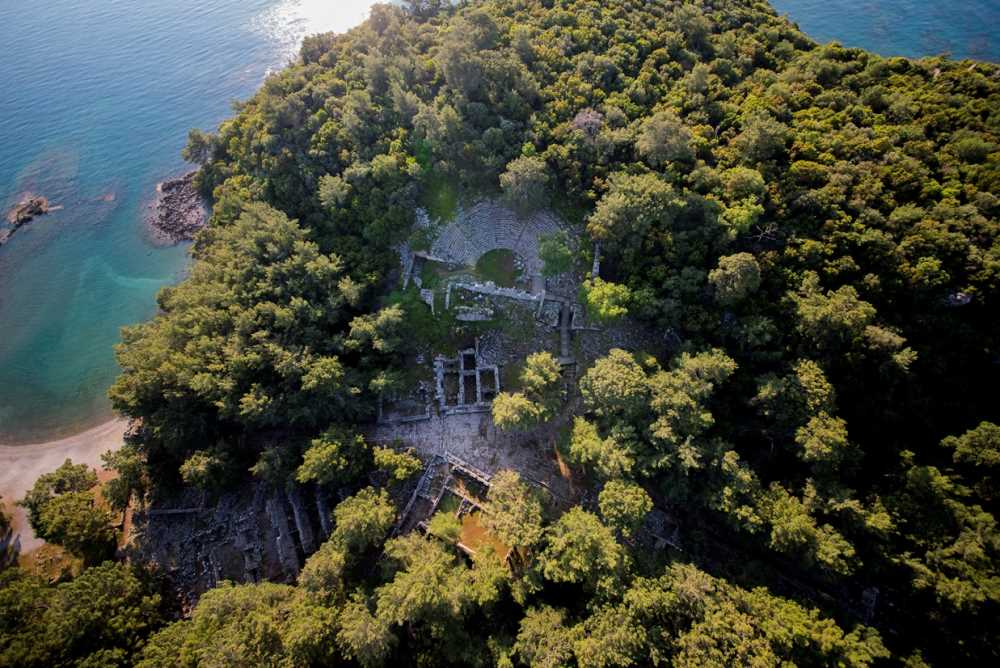

Phaselis Ancient City: The Flawless Meeting of Nature and History
Believed to have been established by Rhodian colonists in the 7th century B.C., Phaselis Ancient City is located within the Beydağları Coastal National Park, very close to the Kemer district today. The foundation story of the city relies on an intriguing legend reflecting the commercial wits of the ancient era: according to accounts, the colonists offered corn or dried fish to the local people in exchange for land, and the locals chose the fish. Having laid its foundations with this “fish trade,” Phaselis maintained its existence for centuries as a prosperous society deeply intertwined with the sea.
Lycia or Pamphylia? The City Beyond Borders
The geographical position of Phaselis has always been a subject of debate among ancient historians. While some sources map the city within the boundaries of Lycia, others incorporate it into Pamphylia. In reality, Phaselis was an independent-spirited harbor city with its gates wide open to both sides, carrying the cultural and commercial influences of both regions.
The historical chronology of the city is highly vibrant:
- Persian Period: The city came under Persian hegemony in the 5th century B.C.
- Carian and Lycian Rule: In the 4th century B.C., first the Carian Satrap Mausolus, and later King Pericles of Limyra ruled over the city.
- The Favorite of Alexander the Great: When Alexander the Great arrived here in 333 B.C., the people of Phaselis welcomed him with golden crowns. It is known that Alexander loved the city enough to spend the winter months here.
- Roman and Byzantine Eras: Becoming a member of the Lycian League under Roman sovereignty, the city was visited by Emperor Hadrian in 129 A.S. (A.D.), and a magnificent triumphal arch was constructed at the entrance of the city in his honor.
You can take a look at our Lycian History page for more information regarding this multi-layered administrative structure and its place in regional history.
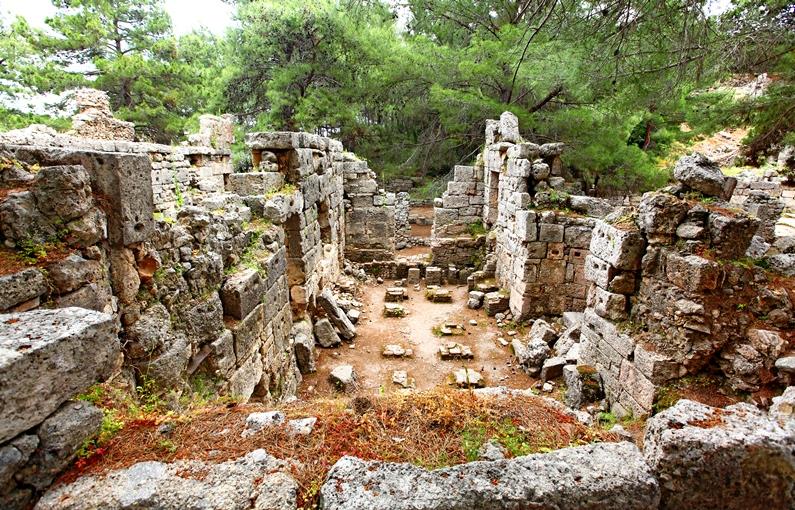
The Three Harbors of Phaselis: The Center of Trade and Navy
The greatest feature making Phaselis unique is its possession of three distinct harbors strategically positioned across a peninsula. These harbors provided a massive advantage to the city in the maritime traffic of the ancient world:
- The North Harbor: Located at the entrance of the city, this was the harbor where commercial vessels generally docked.
- The Military (Battle) Harbor: Protected by breakwaters, this narrower and well-sheltered harbor hosted the navy of the city.
- The South Harbor: Standing as the widest harbor, it is also utilized as a beach today. This harbor shouldered the primary commercial cargo load of the city during the Roman period.
Architectural Masterpieces: The Main Street and Aqueducts
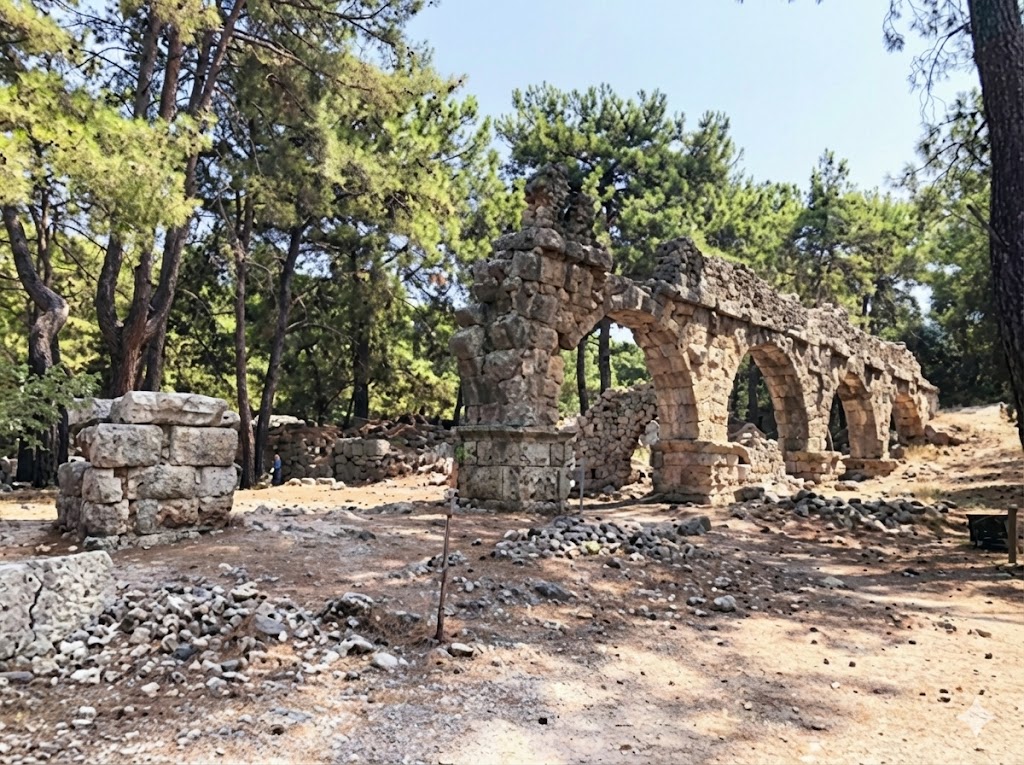
Walking through Phaselis makes you feel as though you are inside a massive open-air museum. The urban planning stands as one of the most aesthetic examples of Roman engineering.
1. Magnificent Aqueducts
The most monumental structure welcoming you at the entrance of Phaselis is its aqueducts. Constructed to bring water from the hills north of the city, these aqueducts have stood for centuries, documenting the engineering achievement of the city.
2. The Wide Main Street
Connecting the North and South harbors, the 24-meter-wide main street served as the social heart of the city. Lined on both sides of the avenue are shops, agoras, and public buildings. Traces of the ancient sewage system can still be seen beneath the paving stones of the street.
3. The Theater and the Acropolis
Arrived at by climbing the steps at the southern end of the main street, the theater is a typical Hellenistic period structure. Enhanced with a stage building (skene) added during the Roman period, the theater leans against the slope of the acropolis with a capacity of approximately 2,000 people. When viewed from the upper section of the theater, the scenery of the city integrated with the forest is spellbinding.
4. Bathhouses and Agoras
The remains of two different bathhouses located in the city square reflect the cleanliness culture of Rome. The heating systems (hypocaust) inside the large bathhouse complex can still be distinguished. Within the agoras, the remains of a small Byzantine basilica bear the traces of the city’s religious transformation.
The Lost Temple: The City of Athena
Phaselis was a city dedicated to Athena, the goddess of wisdom and war. Ancient sources state that the Temple of Athena—the most sacred structure of the city—along with the legendary spear of the hero Achilles was preserved here. Today, it is thought that this temple resides on the acropolis hill, which is covered with forest and has not yet been fully excavated.
You can visit our Lycian Flora guide for the plant species growing in this rugged and wooded structure of the region, and our Lycian Fauna page for the wildlife.
Technical Summary: Phaselis Travel Guide 2026
| Criterion | Detail |
| Location | Antalya / Kemer/ Tekirova |
| Number of Harbors | 3 (North, Military, South) |
| Structures to See | Aqueducts, Main Street, Theater, Bathhouses |
| Vegetation | Calabrian Pine, Cedar, Myrtle |
| Museum Pass (Müzekart) | Valid |
🏛️ The Crown of Alexander
The Phaselis Ancient City brought one of the greatest conquerors in history, Alexander the Great, to his knees not with military might, but with elegance. Alexander’s love for the city was so immense that he spent one of the brief breaks during his world conquest right here, personally participating in the artistic and athletic activities of the city. We recommend examining the page of the T.R. Ministry of Culture and Tourism to see current developments regarding Phaselis Ancient City.
🏛️ Frequently Asked Questions (FAQ)
How do I get to Phaselis Ancient City?
It is located at the 57th kilometer of the Antalya-Kumluca highway, approximately 12 km from the Kemer district center. You can go via private vehicle or reach it using Tekirova minibuses departing from Kemer.
Is swimming permitted in the sea?
Yes, one of the points making Phaselis special is that its ancient harbors are used as beaches today. With its shallow and calm waters, it is particularly suitable for families with children.
Is the Museum Pass (Müzekart) valid and is there an admission fee?
Yes, Phaselis holds official status as an archaeological site, and the Museum Pass (Müzekart) is valid at the entrance. Ticket sales are available for those without a pass.
What is the best time to visit?
Since it can be highly crowded during the summer months, the spring months (April–May and September–October) are the most ideal times to breathe in the historical fabric of the city in tranquility.