

Pinara Ancient City: The Land of Light Beneath the Round Acropolis
Possessing a deep-rooted history, Pinara Ancient City, located within the boundaries of the Minare Neighborhood in the Seydikemer district of Muğla province, was established by colonists originating from Xanthos. According to the legend relayed by the ancient writer Stephanus, when the population of Xanthos Ancient City grew excessively, the elders of the city decided to establish a new settlement on the summit of Mount Cragus. This new settlement was named “Pinale”, meaning “round” in the native Lycian language, due to the round rock mass upon which it towered.
Today, the fact that the village in the immediate vicinity of the city bears the name “Minare“ stands as the most beautiful proof of how the ancient name evolved over thousands of years to be preserved to the present day.
The Power of Pinara within the Lycian League
Pinara was one of the six grand cities holding three voting rights in the parliament of the Lycian League, the most developed federation of the ancient world. This status demonstrates that the city was not merely a religious or architectural hub, but a massive metropolis that held a significant voice in the political and military future of the region. You can find more strategic information regarding the Lycian League on our Lycian History page.
An Architectural Epic: The Upper and Lower Acropolis
In accordance with its geographical structure, Pinara is divided into two primary sections:
1. The Upper Acropolis: The City of Tombs
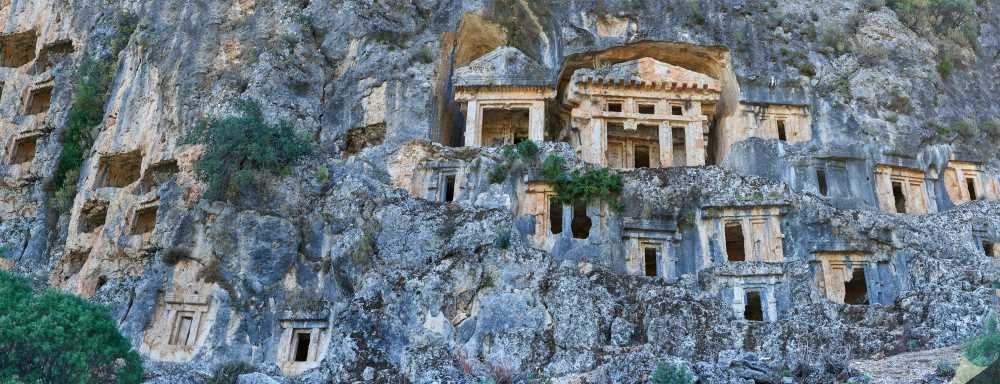
The most iconic landscape welcoming you as you approach the city is the steep eastern slope of the upper acropolis. This slope is carved with thousands of rock-cut tombs, literally resembling a beehive. Standing as the most original examples of Lycian civic architecture, these tombs reflect the ancient lifestyle and wooden house types onto stone.
2. The Lower Acropolis: The Social and Cultural Center
Over time, due to the difficulties of transportation, the settlement shifted toward the lower acropolis region. This section hosts structures that formed the social and religious heart of the city:
- The Odeon and Agora: Located on a terrace supported by fortification walls in the south of the city, the Odeon and the Agora extending right in front of it formed the cultural and commercial center of Pinara.
- The Pillar Tombs: Situated around the water spring at the lower part of the lower acropolis, these tombs carry the physical traces of ancient earthquakes.
Princes and Reliefs: A Royal Legacy
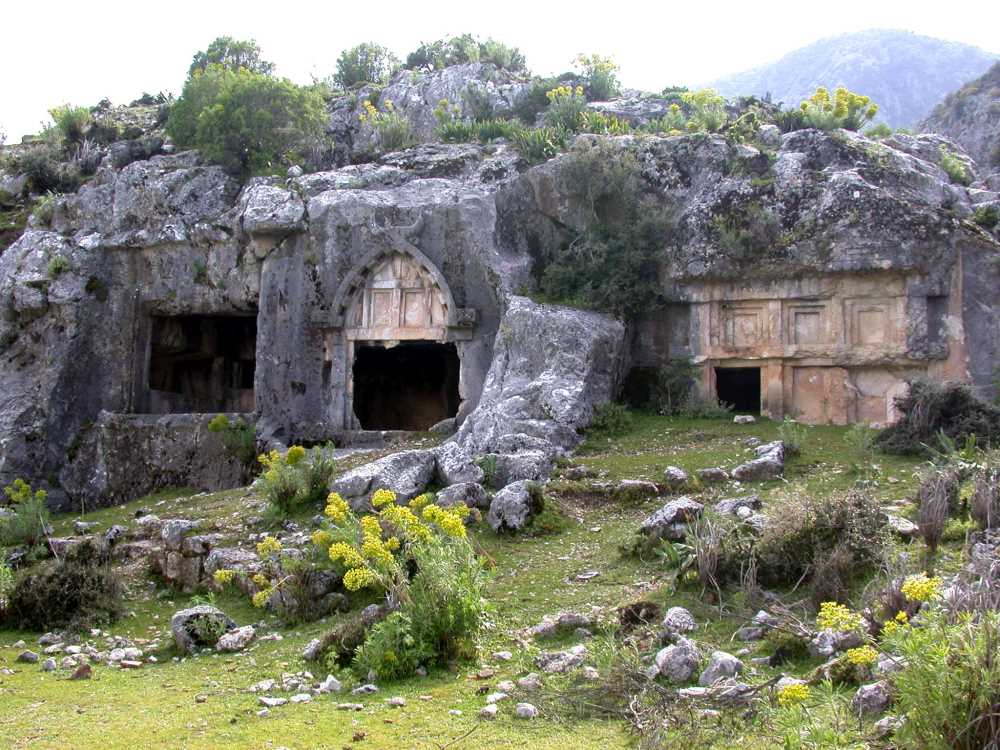
Among the rock-cut tombs in Pinara, there is one in particular that is completely unique to the entire world of archaeology. Drawing attention with its house-type architecture, the reliefs of this special tomb feature a detailed depiction of a walled city. This detail solidifies the consensus that the tomb belonged to a prince or a prominent ruler of Pinara.
The Roman Period Bathhouse and the Hellenistic Theater
The sections remaining outside the fortification walls show that Pinara continued to expand during the Roman and Hellenistic periods:
- The Roman Bathhouse: Located on the eastern slope of the lower acropolis, this structure is a distinguished example of typical Roman bath architecture in the Lycian region.
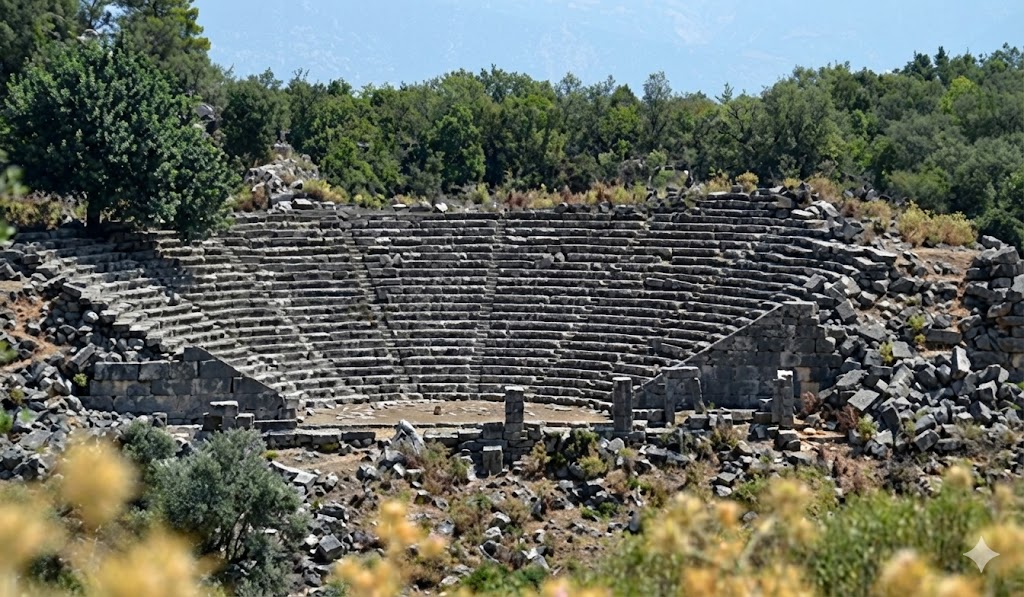
- The Ancient Theater: Leaning against the natural slope directly opposite the acropolis, the theater bears Hellenistic period characteristics and commands a magnificent view of the valley.
Pinara Ancient City Technical Summary
| Kriter | Detail |
| Location | Muğla / Seydikemer / Minare |
| Likçe Lycian Name | Pinale (Round) |
| UNESCO Status | World Heritage Tentative List |
| Highlight Monument | Royal Tomb with City Reliefs |
| Vegetation | Maquis and Calabrian Pine (Lycian Flora) |
🏛️ The Silent Witness of Lycia
The Pinara Ancient City forms one of the most mystical stages along the Lycian Way route. The sound of the wind you will hear while wandering the steep slopes of the city feels as though it carries the whispers of the Xanthos elders who once walked these streets. During your trip in 2026, do not forget to photograph the orange hue that the tombs on the upper acropolis take on, particularly during the sunset hours. You can follow the website of the T.R. Ministry of Culture and Tourism for current excavation results and visiting hours.
🏛️ Frequently Asked Questions (FAQ)
Where is Pinara Ancient City and how do I get there?
It is in the Minare Neighborhood of the Seydikemer district in Muğla. Following the signs that split off the Fethiye-Kaş highway, you can reach Minare Village via a journey of approximately 45 km, and arrive at the city after a short climb from there.
What does the name Pinara mean?
Its original name in Lycian is “Pinale”, and it translates to “Round” due to the round rock mass upon which the city was established.
Is there an admission fee and is the Museum Pass (Müzekart) valid?
Yes, Pinara holds official status as an archaeological site affiliated with the Ministry of Culture and Tourism, and the Museum Pass (Müzekart) is valid at the entrance.
What are the pigeon-hole tombs?
These rock-cut tombs shaped like small windows, thousands of which are found on the upper acropolis, were generally utilized as collective burial areas for the lower-class citizens of the city or specific family groups.