

A Living Heritage Among the Stones
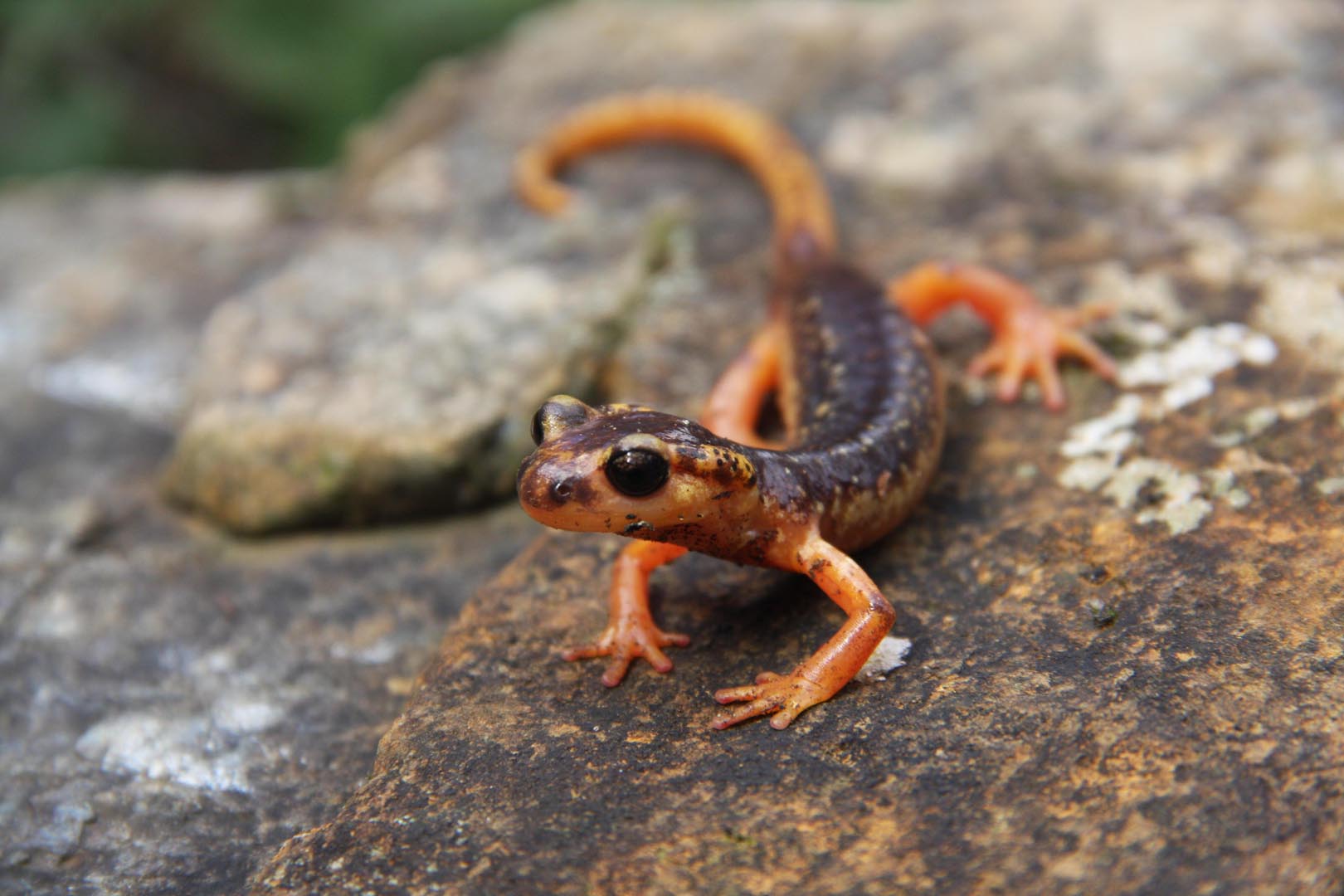
The Lycian Salamander is a small, brightly coloured creature that emerges from among limestone rocks on rainy winter nights. It lives only in the mountains of Lycia and on a few nearby islands. It gives birth to live young instead of laying eggs and lives its life independent of water, a trait that is extremely rare among amphibians.
In this article you will find the story of the Lycian Salamander’s discovery, which began among the ruins of an ancient city, along with its species, its way of life and the threats it faces.
📌 Contents
What Is the Lycian Salamander?
The Lycian Salamander is the common name for the salamander genus known to science as Lyciasalamandra, which takes its name from Lycia. Its species live almost exclusively in the limestone mountains of Türkiye’s southwest coast, along a narrow strip from Marmaris to Alanya, and on a few Greek islands offshore. Lycia lies at the heart of this strip.
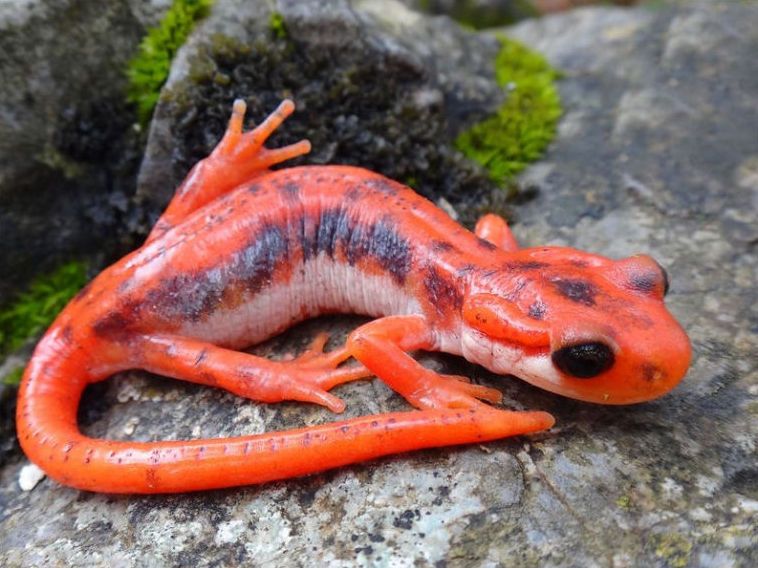
Lycian Salamanders are slender creatures, 10–15 centimetres long. Their colour varies from species to species: brown, copper, pinkish or black backs, sometimes with pale spots. Their skin secretions are toxic, and their bright colours warn predators to keep away.
A Discovery in an Ancient City
The scientific story of the Lycian Salamander begins in an ancient city. The first known species was described in 1891 by the Austrian zoologist Franz Steindachner, from specimens collected at “Dodurga Asarı”, the ruins of the ancient city of Sidyma near today’s village of Dodurga.
The species name luschani most likely honours Felix von Luschan, a member of the Austrian expeditions that excavated and explored Lycia in the 1880s. In other words, Lycia’s salamander was introduced to science during the journeys of an archaeological expedition studying the region’s ancient cities.
Species and Where They Live
Several species and many subspecies of this genus are known today, each living in its own small, separate area:
- Between Dalaman and Fethiye: Lyciasalamandra fazilae, listed as Endangered by the IUCN.
- Between Patara and Demre: Lyciasalamandra luschani, the first species described, also found on the island of Kastellorizo (Meis) offshore. A separate subspecies lives around Finike.
- The coastal mountains between Kemer and Tekirova: Lyciasalamandra billae. The entire range of some of its subspecies covers only a few square kilometres, and they are critically endangered.
- Around Antalya: Lyciasalamandra antalyana.
- Beyond Lycia: L. flavimembris lives around Marmaris, L. atifi around Alanya, and L. helverseni on the Greek island of Karpathos.
The differences between these species come from thousands of years of living apart on separate mountains and in separate valleys.
Way of Life
- Creatures of night and winter: Lycian Salamanders are nocturnal and most active in the damp winter months, roughly from November to April. They are seen especially on rainy nights and after rain.
- The dry summer: They spend the hot, dry summer in limestone crevices, under stones and underground.
- Live birth: Most amphibians lay their eggs in water. Lycian Salamanders instead give birth to live, fully formed young after a pregnancy of 5–8 months, usually two at a time. This frees them from needing water to breed, allowing them to live in the dry Mediterranean mountains.
- The males’ mark: Males have a small, protruding “spike” on the upper side of the tail near the body, which plays a role in courtship.
Why So Vulnerable?
- Tiny ranges: The entire range of some subspecies covers only a few square kilometres. A single building project, road or fire could wipe out a whole subspecies.
- Habitat loss: Coastal development, quarries and roads break up the rocky slopes where the salamanders live.
- Forest fires: Large fires are devastating for species with small ranges and slow reproduction.
- Climate change: Shorter, drier winters narrow the period in which these moisture-dependent creatures can be active.
- Collecting: Their rarity and bright colours can make them a target for collectors.
How Can We Protect It?
Protecting the Lycian Salamander begins with leaving it alone:
- Do not touch or take: Do not pick salamanders up, move them or ever take them home. Their skin secretions are also toxic.
- Leave stones in place: Do not lift stones to look for salamanders. If you do, put them back exactly as they were.
- Do not share locations: If you see a salamander, you can photograph it, but do not share where it is.
- Beware of fire: Never light fires in forests or on rocky slopes.
For other species unique to the region, see our Endemic and Rare Species of Lycia article, and for all our principles, our Sustainable Travel and Ethics Guide.
❓ Frequently Asked Questions
Is the Lycian Salamander poisonous?
Its skin secretions are toxic and serve as a defence against predators. They are not dangerous to people, but do not pick the salamander up; if you have touched one, wash your hands and avoid touching your eyes.
Where and when can I see a Lycian Salamander?
It can be seen among limestone rocks on rainy nights in the damp winter months, but to protect it we do not share where it lives.
Is it a lizard?
No. Although salamanders look like lizards, they are not reptiles but amphibians, like frogs. Their skin is smooth and moist, not scaly.