

Dolichiste Ancient City: A Ghost Hidden in the Blue of the Mediterranean
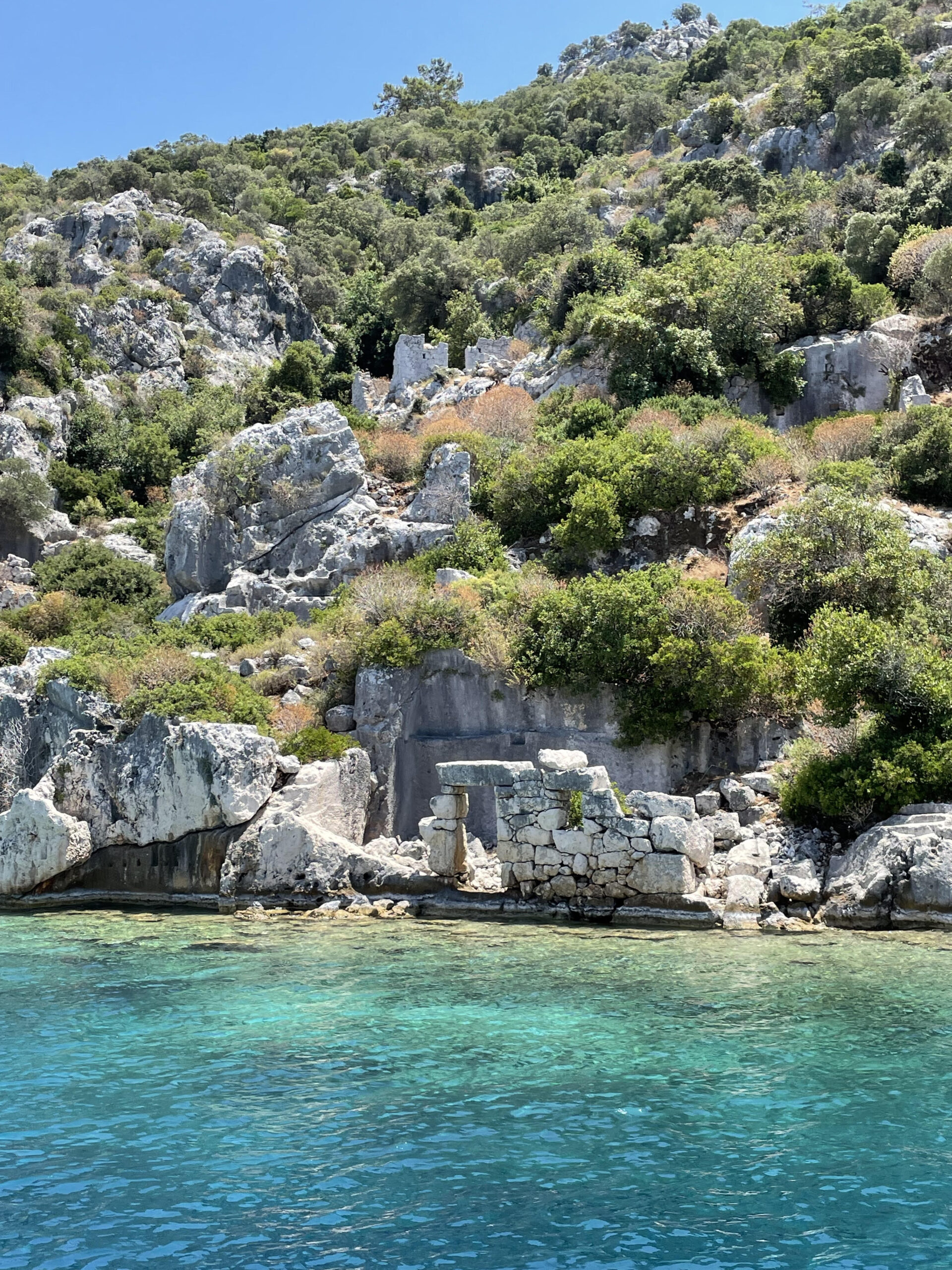
Located on the northern shores of Kekova Island, one of Turkey’s largest islands stretching between the Demre and Kaş districts of Antalya, Dolichiste Ancient City is widely known in the archaeological world as the “Sunken City”. Submerged under water as a result of severe earthquakes that occurred in the 2nd century A.S. (A.D.), this settlement represents a “frozen time,” through which glass-bottomed boats pass today, revealing every detail from walls to stairs.
Dolichiste is not merely a pile of ruins; it is a melancholic monument to the unbreakable bond that ancient people established with the sea and the inevitable transformation of nature.
🌊 A Geological Tragedy: How Did the City Sink?
The story of Dolichiste is directly linked to the turbulent geological structure of Lycia. Massive earthquakes that struck the region in 141 and 240 A.S. (A.D.) caused the northern coast of the island to drop below sea level due to a tectonic collapse.
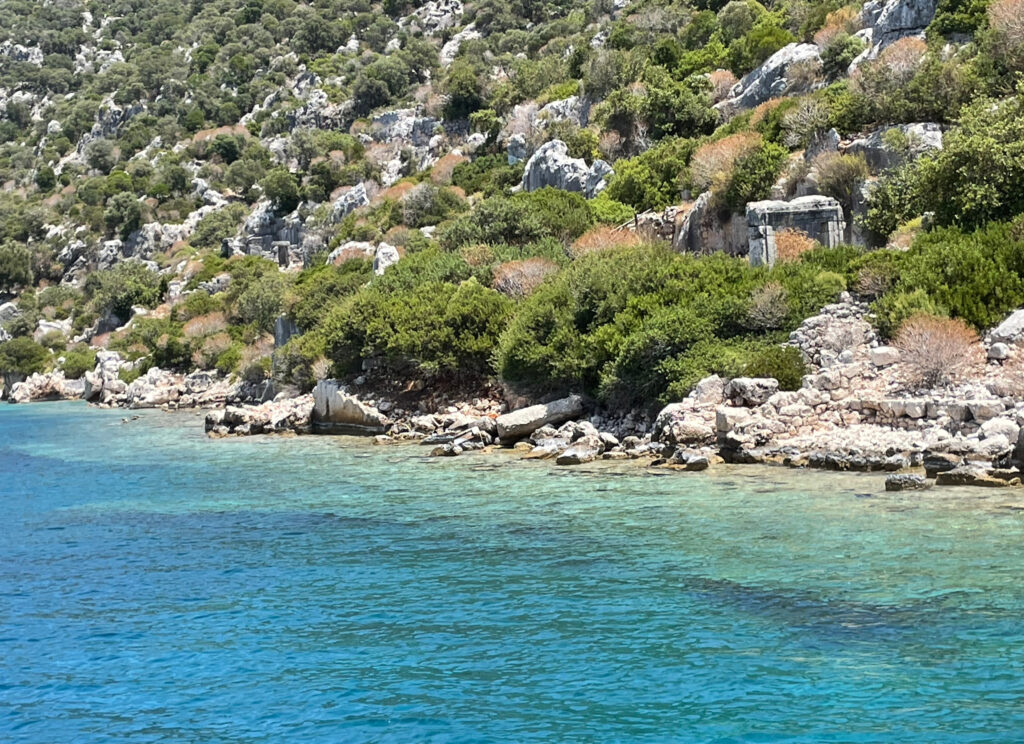
- Life Under Water: During these earthquakes, the city’s port facilities, commercial warehouses, and coastal houses were submerged to a depth of approximately 2 to 4 meters.
- Architectural Continuity: Thanks to the clarity of the water, even today it is possible to discern shop thresholds, stone-paved streets, and sewage systems 2 meters below the surface. For more technical data regarding the history of earthquakes in Lycia, you can browse our upcoming Lycian Geology and Earthquakes page.
Architectural Layout and Underwater Discoveries
Although Dolichiste Ancient City possessed a classical Lycian city plan, it featured a unique terracing system due to being established on the steep slopes of the island.
1. Stepped Streets and House Ruins
When approaching the shores of the island, the stone stairs rising out of the sea and continuing upward through the rocks are the most striking elements. These stairs provided the connection between the lower levels under the water and the upper levels on land. The foundations of houses, kitchen niches, and cistern remains prove how organized the daily life of the city was.
2. The Ancient Port and Commercial Warehouses
Dolichiste served as a strategic breakwater protecting especially the ports of Simena (Kaleköy) and Teimiussa (Üçağız) against waves coming from the open sea. Huge block stones under the water formed the quay structure of the ancient port. This was one of the most important stops on the maritime trade route of the Lycian League.
3. Byzantine Period Additions
The sinking of the city did not mean everything was over. During the Early Byzantine period, new settlements were established on the upper parts of the island, and basilicas and chapels were constructed. The church ruins and apse structures seen today on the hill of the island show that Dolichiste preserved its sanctity during the Christian era as well.
🏛️ 3 Essential Features You Should Know About Dolichiste
| Feature | Detail |
| Status | First-Degree Archaeological Site (Kekova Specially Protected Environmental Area). |
| Transportation | Accessible only by boat; landing on the shore is strictly prohibited. |
| Visual Feast | Windows and stairs of the underwater houses can still be discerned. |
🏛️ Political Connections: Aperlai and Sympoliteia
According to historical records, Dolichiste Ancient City acted together with other small surrounding cities rather than being a large independent province on its own. It was part of a four-city league (Sympoliteia) established under the leadership of Aperlai, consisting of Aperlai, Simena, Teimiussa, and Dolichiste. This partnership ensured the representation of the city within the Lycian League regarding economic and religious matters.
Nature and Preservation: Sustaining the Blue Heritage
The Kekova region has held the status of the Kekova Specially Protected Environmental Area since 1990. The northern coast of the island, where Dolichiste is located, is completely closed to swimming and diving in order to preserve the city and its underwater remains.
- Flora: It is possible to see characteristic members of the Lycian Flora on the island, such as maquis species unique to Lycia, wild olive trees, and sweetgum (sığla) trees.
- Fauna: This protected area is a safe haven for Caretta Caretta sea turtles and rare Mediterranean monk seals. You can visit our Lycian Fauna page for the wildlife in the region.
2026 Travel Notes and Recommendations
- Choose a Glass-Bottomed Boat: Boats with glass bottoms allow you to see the underwater stairs and shop doors clearly, as if you were looking into an aquarium.
- The Power of Light: The best hours to observe the sunken city are between 11:00 and 14:00, when the sun is directly overhead; when light hits the water perpendicularly, underwater visibility reaches its maximum.
- Photography Tip: If you use a lens with a polarizing filter, you can prevent reflections on the water’s surface and photograph the underwater ruins much more clearly.
🏛️ The Symphony of Silence
The Dolichiste Ancient City whispers to us that nature is both a giver and a taker. Those stairs where people walked joyfully thousands of years ago are today home to fish and corals. Observing this city means respecting the flow of history. Do not forget to follow the website of the T.R. Ministry of Culture and Tourism for updated preservation news and research data.
🏛️ Frequently Asked Questions (FAQ)
Is swimming allowed in the Sunken City (Dolichiste)?
No. In order to prevent damage to the ruins and protect the archaeological fabric, swimming, anchoring, and diving are strictly prohibited along the shores of Dolichiste. Boats are allowed to pass through this area at slow speeds while you observe.
How do I get to Dolichiste Ancient City?
You can go via daily boat tours departing from Kaş or Üçağız, or by renting a private boat. Glass-bottomed boats are the most ideal option for you to see the underwater details.
How deep are the ruins in Dolichiste Ancient City?
Most of the structures are at a depth between 1 and 4 meters. Some walls, however, still rise above the water level.
Are there guided tours available?
Most boat tour captains provide basic information about the region. However, for a detailed historical tour, it is recommended to work with a professional guide.