
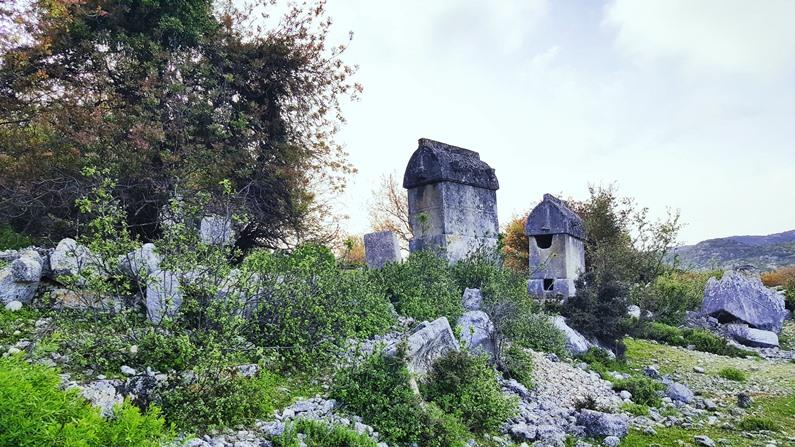

Istlada Ancient City: The Ancient Observer of Gökkaya Bay
Located at one of the most pristine points between the Kaş and Demre districts of Antalya, in a strategic position overlooking the deep blue Gökkaya Bay, Istlada Ancient City is one of the “boutique” settlements of the Land of Light, Lycia. Situated within the borders of Kapaklı Village in the Kaş district, this ancient city is not a massive metropolis, but a fortress crafted with art in every corner, managed by a local ruler (bey) or a noble dynasty.
Accessible via the Davazlar Village turnoff after passing Yavu Village on the Demre-Kaş highway, Istlada consists of a wide necropolis and acropolis area with ruins scattered across the Kapaklı, Hoyran, and Hayıtlı regions. The panoramic view offered by the city and its unique tomb types make it one of the most valuable stops along the Lycian Way.
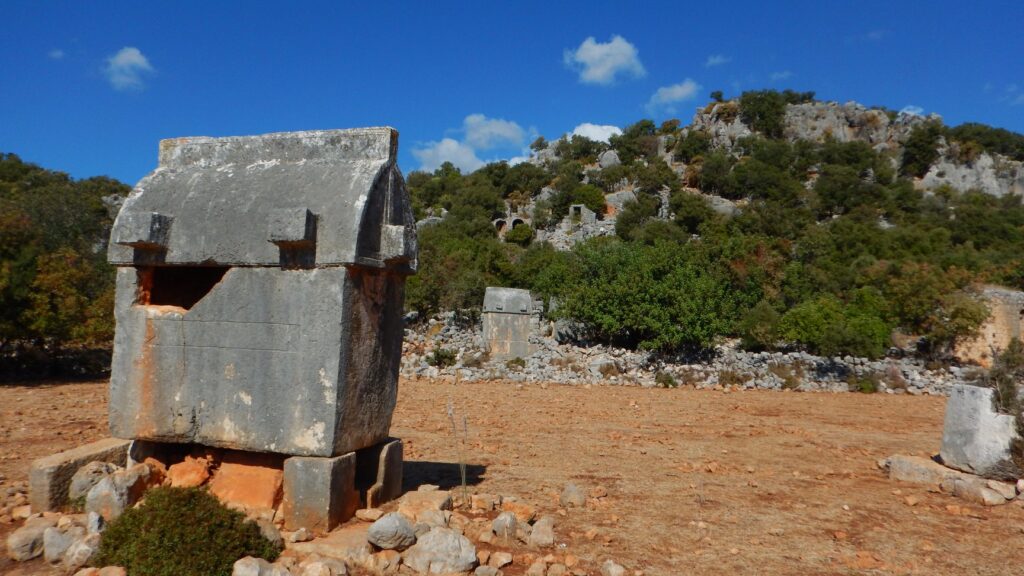
Uninterrupted History: A Heritage Extending from Lycia to Byzantium
As understood from archaeological finds, Istlada Ancient City witnessed continuous settlement not only during the Lycian period but also through the Hellenistic, Roman, and Byzantine eras. Bearing a local principality structure similar to other small surrounding settlements like Apollonia, Aperlai, Phellos, and Isinda, the city assumed the responsibility of monitoring maritime trade in the region.
The high-altitude position of the city provided it with both a defensive advantage and enabled it to control a natural harbor like Gökkaya Bay. Despite the destructive effects of time, you can examine the layered history of the city in more detail on our Lycian History page.
Architecture and Engineering: Fortifications and Water Management
The defensive architecture of Istlada adapts flawlessly to the rugged topography. The fortification walls of the city extend along the eastern and western directions of the acropolis, placing the settlement under protection.
- Strategic Fortress Gate: Located near the eastern end and providing entrance to the city, the main gate reflects the military discipline of the city. The watchtower ruin right next to the gate demonstrates how meticulously security checks were conducted in antiquity.
- Smart Aqueducts: The vital importance of water on high hills drove the people of Istlada to creative solutions. The redirection of rainwater into cisterns and wells through narrow channels carved into the rocks proves the engineering ingenuity of the city. You can check our Lycian Flora guide for species that grow in this rugged geography of the region and find life thanks to these ancient cisterns.
The Poetic Face of Archaeology: The Hoyran Monument and Bird Tombs
The Istlada Ancient City is particularly famous in the archaeological world for its monumental tomb located in Kapaklı Village, known as the “Hoyran Monument”. The eastern and northern slopes of the acropolis are filled with invaluable works of art carved from limestone:
- Tomb with Rooster and Pigeons: Dating back to the early 4th century B.C., this rock tomb is one of the oldest and most elegant examples of Lycian art with the bird depictions on it. You can look at our Lycian Fauna page for the connection of these symbols with the wildlife in the region.
- The Warrior Stele: Located in front of the typical rock tomb complex, this single-block stone (stele) featuring a relief of a standing warrior symbolizes the noble warrior culture of the city.
- Roman Period Sarcophagi: Unlike the rock tombs belonging to the Classical Era, all the sarcophagi in the region date to the Roman period. These structures show that the city preserved its importance for thousands of years.
Gökkaya Bay: The Blue Gate of Istlada
When you reach the summit of Istlada’s acropolis, you are greeted by Gökkaya Bay, the most striking view of the region. According to historians, Gökkaya served as the port of Istlada in antiquity. The islands protecting the bay and the indented coastline provided a safe haven for ancient mariners. Today, these deep blue waters, frequented by boats, explain at a single glance why the city was established on this strategic hill.
🏛️ Recommendations for Discovery Enthusiasts
The Istlada Ancient City is situated on one of the most popular legs of the Lycian Way between Demre (Andriake) and Kekova (Üçağız). If you are a hiker, you can take a break at the acropolis and trace the route of ancient mariners. Do not forget to visit the website of the T.R. Ministry of Culture and Tourism for current excavation statuses and museum information for 2026.
🏛️ Frequently Asked Questions (FAQ)
How do I get to Istlada Ancient City?
You can reach Kapaklı Village by entering the Davazlar Village turnoff on the Kaş-Demre highway. From there, you can arrive at the archaeological site following a roughly 20-minute climb by tracking the Lycian Way markers.
Where exactly is the Hoyran Monument located?
The famous Hoyran Monument is located within the Kapaklı Village settlement of Istlada. It is the most remarkable structure in the necropolis area of the main acropolis.
What is the best time to visit Istlada Ancient City?
Although the wind blowing from Gökkaya Bay is refreshing during the summer months, the spring months are the most ideal times for climbing. Sunset hours offer a magical light for photography enthusiasts.
Is there an admission fee and is the Museum Pass (Müzekart) valid?
Istlada currently does not possess a ticket booth system; therefore, entrance is free. However, the region is a first-degree archaeological site and must be meticulously protected.