

Isinda Ancient City:
A Lycian Principality on the Ridges of Belenli
Located on a strategic hill approximately 3 kilometers south of Belenli Village in the Kaş district of Antalya, Isinda Ancient City is a unique example for understanding the local administrative structure of the Land of Light, Lycia. Thanks to the inscribed tombs located at the summit of the hill and dated to the first half of the 4th century B.C., the history of the city can be traced back approximately 2,400 years from today.
Rather than being a massive metropolis, Isinda was likely a boutique settlement where a local ruler (bey) or a noble dynasty resided. Yet, despite its small size, it played a significant role in regional history through the political alliances it formed within the Lycian League.
The Political Union and the “Aperlites
from Isinda”
Instead of being represented individually in the assembly of the Lycian League, Isinda Ancient City gained a voice by joining forces with its neighbors. The city formed a Sympoliteia (political union) alongside Aperlai, Apollonia, and Simena.
The most fascinating proof of this union is the phrase “Aperlites from Isinda” encountered in ancient inscriptions. This definition demonstrates that the people of Isinda were legally and politically part of a federation centered in Aperlai. Just like its neighbor Apollonia, Isinda obtained a shared voting right in the Lycian League thanks to this partnership. You can examine this complex yet democratic political structure further on our Lycian History page.
The Lycian Signature in Architecture: Monumental House-Type Tombs
The most impressive and visually rewarding ruins of the city are two monumental tombs located just below the summit of the acropolis. These structures are among the most original architectural forms that Lycia introduced to world heritage:
- House-Type Tombs with Lycian Inscriptions: These tombs represent the stone-carved reflection of ancient Lycian wooden residential architecture. The Lycian inscriptions on their pediments document the deep-rooted past of the city.
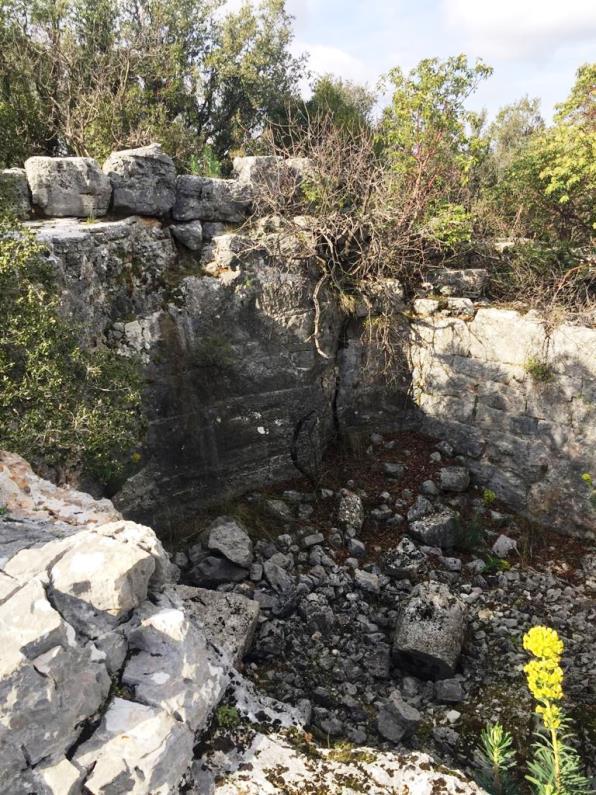
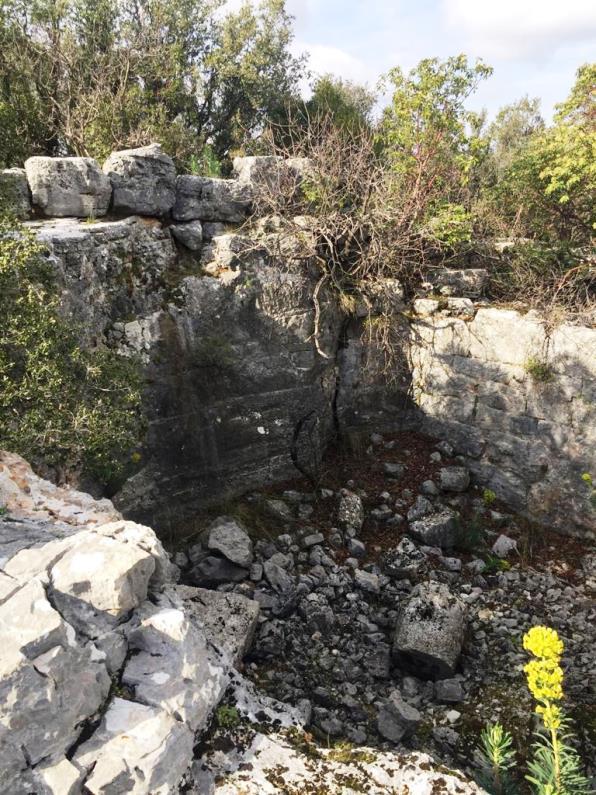
- Limestone Fortifications and Cisterns: The fortification walls surrounding the acropolis were constructed from block stones of hard limestone, which is the natural formation of the region. Deep cisterns and wells used to store rainwater at this high altitude, where water was of vital importance, can still be seen inside the walls.
- Sarcophagi: Classical Lycian-type sarcophagi dated to the Roman period are encountered along the road to Belenli Village and on the western slopes of the city. The decorations on these sarcophagi prove that the city maintained its existence under Roman rule as well.
To discover the floral balance between ancient ruins and the vegetation growing in this harsh geography of the region, you can browse our Lycian Flora guide.
Migration to Antiphellos and the Abandonment of the City
The withdrawal of Isinda from the stage of history is a story of “relocation” rather than destruction. During the Hellenistic and Roman periods, the coastal port city of Antiphellos (Kaş) experienced immense commercial growth.
Over time, the people of Isinda abandoned the difficulties of life on the steep hill and began migrating to Antiphellos to share in the wealth brought by the sea. This demographic shift caused Isinda to gradually sink into silence, transforming from a “center of a principality” into a “rural settlement.” You can examine this transformation of the city and its connection with other cities in the Kaş region on our Lycian Ancient Cities List.
🏛️ A Stop on the Lycian Way
The Isinda Ancient City is situated on the Belenli-Aperlai leg, which is one of the main stops of the world-famous Lycian Way route. If you are a hiker, we highly recommend allocating time to this small yet impressive city while passing through Belenli. You can visit our Lycian Fauna page for the wildlife and protected species around the city. Do not forget to follow the official website of the T.R. Ministry of Culture and Tourism for current travel notes and discoveries in the region.
🏛️ Frequently Asked Questions (FAQ)
Where is Isinda Ancient City and how is the transportation?
The city is in Belenli Village, located on the Antalya-Kaş highway. The summit can be reached from the village via a steep hike of approximately 30–40 minutes. The ascent route is a pathway, so appropriate footwear should be preferred.
Is there an admission fee and is the Museum Pass (Müzekart) valid?
Isinda currently does not have a ticket booth as it does not hold official archaeological site status; therefore, entrance is free. However, the region is a registered first-degree archaeological site.
What is the best time to visit Isinda Ancient City?
During the summer months, the heat of Kaş can make climbing the hill difficult. Therefore, the most ideal time is the spring months or sunny days in winter. The view from the hill is particularly magnificent near sunset hours.
What is the unique feature of the Isinda house-type tombs?
These tombs are stone structures that replicate the civil architecture (houses) of the Lycian people in antiquity. They are of invaluable worth for both art history and understanding the lifestyle of the era.