
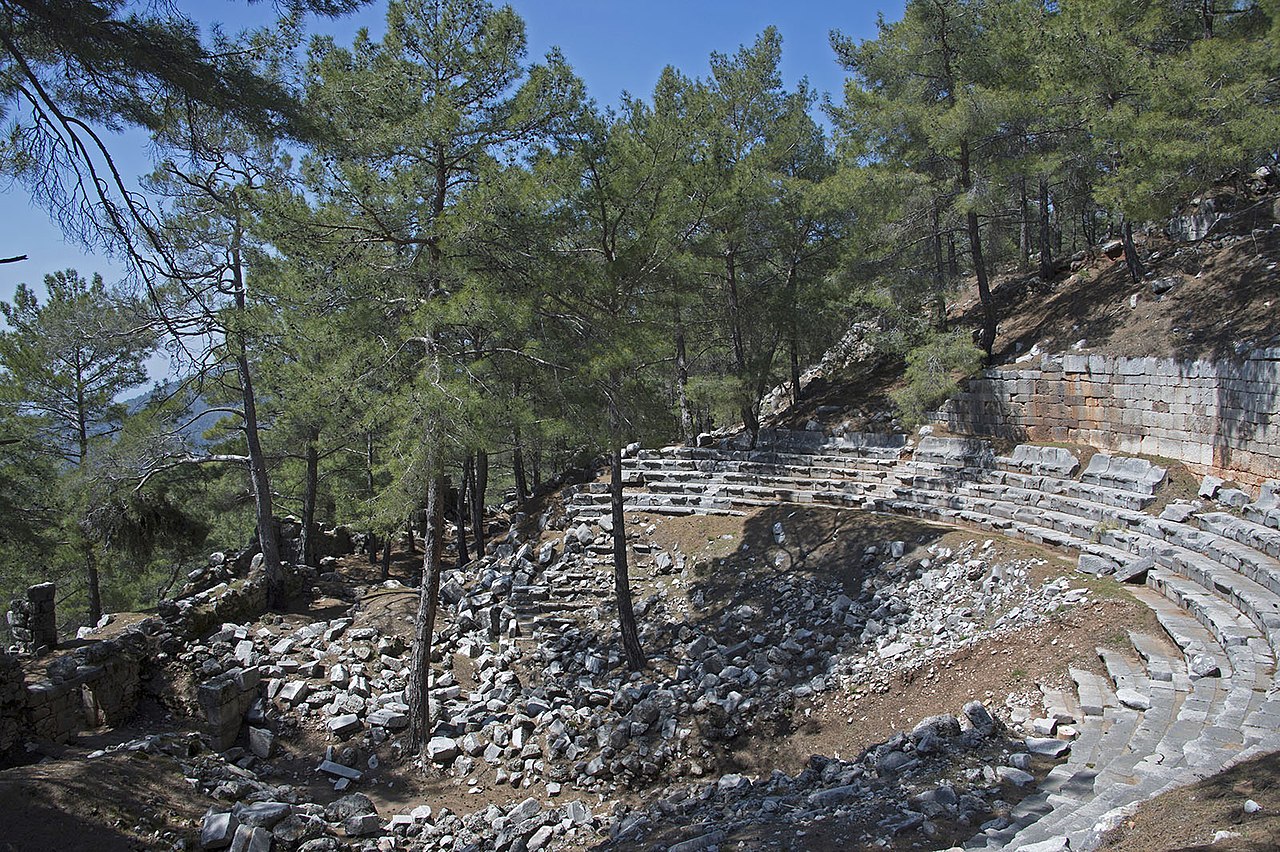

Kadyanda Ancient City: A Lycian Fortress in the Üzümlü Mountains
Rising southeast of the Üzümlü Town—famous for its vineyards and morel (kuzugöbeği) mushrooms—at a distance of 24 km from the Fethiye district of Muğla, Kadyanda Ancient City was a strategic observation point in the ancient world. Situated on the trade route between Kaunos and the Araxa Ancient City, the city is referred to as “Kadawanti” in Lycian inscriptions.
The suffix “-nd-“ at the end of its name proves that the roots of the city extend back to the 3000s B.C., namely to the ancient Luwian and Pelasgian eras. However, the monumental ruins that can be seen on the surface today mostly cover a time span stretching from the 5th century B.C. to the end of the Roman period.
A Living Tradition: The Kadyanda Stadium and the Races
The most important feature that distinguishes Kadyanda from many other ancient cities is the value it placed on sports culture. Located on the flat terrain of the city, the running track (stadium) hosted the athletic competitions of antiquity.
Interestingly, this ancient tradition continues today. The running races held within the scope of the Green Üzümlü Morel Mushroom Festival, organized every year in April, are still carried out on this thousands of years old track. Kadyanda is one of the rare settlements in the world that still functionally uses an ancient stadium. You can browse our Lycian History page for more information about this living culture of the region.
🏛️ The Architectural Ingenuity of Kadyanda and Traces of Kadawanti
The high altitude of Kadyanda (915 meters) not only provided a strategic defensive advantage in antiquity but also shaped the architectural fabric of the city. The massive retaining walls and terracing systems constructed on steep slopes demonstrate the superior capability of Lycian engineering in rugged terrains. The Lycian name of the city, Kadawanti, is interpreted by linguists as “Sacred Rock” or “The Settlement on High.” This situation suggests that the city was not only a military and athletic center but also a religious center of attraction for the regional population since prehistoric periods. As excavation works progress, the hidden Luwian traces of the city prior to the Hellenistic period are expected to come to light more clearly.
The Poetic Face of Archaeology: The Rider Tomb Monument
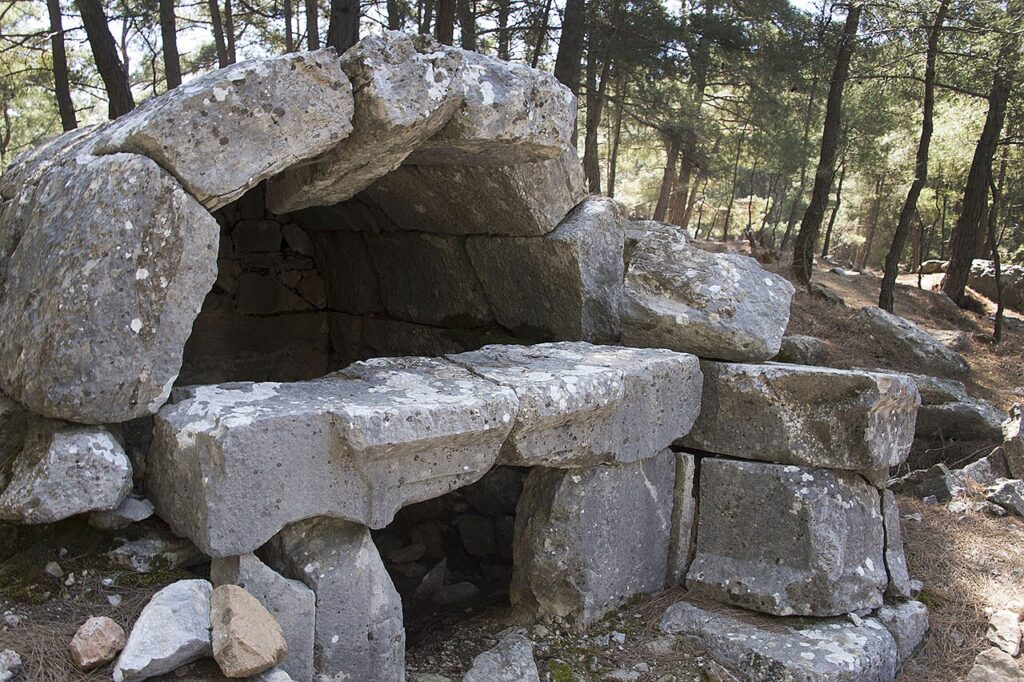
Hidden among the pines in the northern direction at the 4th kilometer of the forest road ascending to the Kadyanda archaeological site, the Rider Tomb Monument is the most valuable work of art in the city. This monumental tomb stands as one of the pinnacle examples of Lycian funerary architecture with its high craftsmanship:
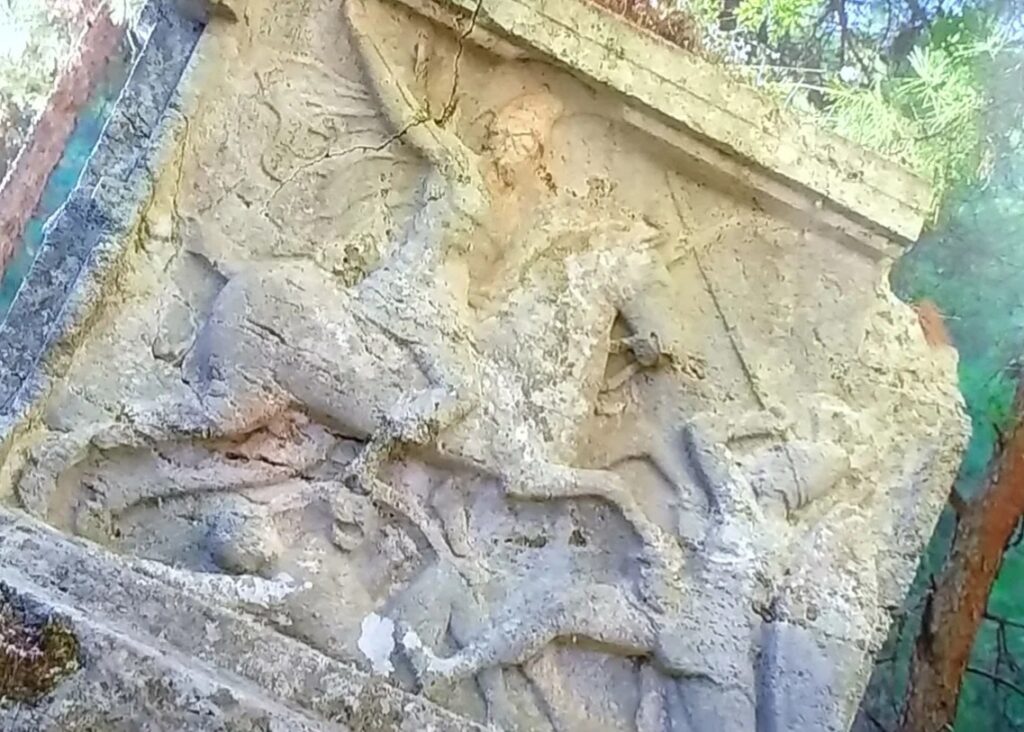
- The Hector Relief: While one facade of the tomb depicts a scene where the tomb owner reclines upon a couch, the other facade features an epic battle scene. Among the public and certain researchers, the figure here is believed to be Hector, the hero of the Trojan War.
- The Warrior Spirit: The detailed armor and weapon engravings on the reliefs reflect the military strength and artistic aesthetics of Kadyanda.
Main Structures and Architectural Fabric in the City
When you reach the summit of Kadyanda Ancient City, a quite extensive field of ruins awaits you. Despite the steep topography, the city was built with a meticulous urban plan:
- Hellenistic Theater: Restored and continued to be used during the Roman period, this theater was the social heart of the city with its structure leaning against the hillside.
- Agora and Temple: Right next to the agora, which was the administrative hub of the city, rise the remains of a temple whose dedication to a specific deity has not yet been finalized.
- Roman Bathhouse: Standing as an engineering marvel of the era, the bathhouse structure proves the prosperity experienced by the city during the Roman Imperial period.
- Fortifications and Rock Tombs: The defensive walls dating to the earliest periods of the city (5th century B.C.) and the rock tombs with Lycian inscriptions are the cornerstones of the Kadawanti identity.
You can examine our Lycian Flora guide for rare species growing in this high-altitude geography of the region, and our Lycian Fauna guide for the wildlife.
🏛️ Enjoy the View
The Kadyanda Ancient City is one of the highest points from which you can enjoy a bird’s-eye view of the Gulf of Fethiye and the Xanthos Valley. During your visit, make sure to climb to the top rows of the theater to watch this unique scenery. Do not forget to follow the websites of the T.R. Ministry of Culture and Tourism and the Muğla Provincial Directorate of Culture for updated travel notes and festival dates for 2026.
🏛️ Frequently Asked Questions (FAQ)
How do I get to Kadyanda Ancient City?
It is approximately 24 km away from Fethiye center. After reaching Üzümlü Town, you can reach the city via an 8-kilometer winding but scenic forest road. The final part of the road is somewhat steep, so it should be driven carefully.
What does the name Kadyanda mean?
It comes from the Lycian name Kadawanti. The suffix “-nd-“ at the end of the name is based on the Luwian language and symbolizes the prehistoric origins of the city.
Is there an entrance fee and is the Museum Pass (Müzekart) valid?
Yes, entrance to the Kadyanda archaeological site is paid, and the Museum Pass (Müzekart) is valid. Since the site is a registered archaeological area, it is open to visitors between specific hours.
Where is the Rider Tomb located?
The famous Rider Tomb is located approximately 4 km before arriving at the main entrance of the city, on the left side of the forest road, about 50–100 meters inside the trees. It has a small sign. It is one of the important ancient symbols located in Fethiye.
📸 Tip for Photography Enthusiasts: Capture the Best Shot
The Kadyanda Ancient City is one of the most rewarding stops along the Lycian Way for photographers. Especially when you climb to the upper rows of the theater located at the highest point of the city, you can capture the light filtering through the ancient stones to reach the Gulf of Fethiye. In the last two hours before sunset, known as the “Golden Hour,” the sunlight filtering through the pine trees makes the details especially on the Rider Tomb reliefs more pronounced. During your visit in 2026, keeping a wide-angle lens with you will help you fit both the massive fortification walls and the endless valley view into a single frame.