

Limyra Ancient City: The Capital of Waters and Heroes
Located approximately 7 kilometers northeast of the Finike district of Antalya, within the boundaries of the Saklısu Neighborhood, Limyra Ancient City was known in the ancient world by the name “Zemuri”. Extending from the southern slopes of Mount Toçak down to the fertile soil of the plains and cold water springs, this city was one of the most densely populated and highly developed settlements in Lycia.
Limyra left an indelible mark on history, particularly during the 4th century B.C. when it served as the capital of the Lycian League and the administrative headquarters of the legendary King Pericles. Today, scientific excavations conducted by Austrian teams since 1970 continue to bring the distinct layers of the city to light, drawing thousands of history enthusiasts to this city of waters every year.
From Zemuri to Limyra: A 2,500-Year Journey Through Time
Referred to as Zemuri in Lycian inscriptions, Limyra traces its roots back to at least the 5th century B.C. However, the golden age of the city began at the turn of the 4th century B.C. when King Pericles conquered the city and transformed it into the political hub of the Lycian League.
During the reign of Pericles, Limyra became not only a military fortress but also the heart of art and diplomacy. The power of the city during this era is proven by more than 400 rock-cut tombs that are still admired today. Many of these tombs carry the names of the deceased to the present day through inscriptions written in the native Lycian language. You can find more details regarding the historical development of the city and its status within the Lycian League on our Lycian History page.
An Architectural Masterpiece: The Heroon of Pericles
Located at the northernmost summit of the Limyra Acropolis, commanding a sweeping view of the city, the Heroon of Pericles stands as one of the pinnacle examples of Lycian funerary architecture. Dating back to the 4th century B.C., this monumental tomb bears a striking architectural resemblance to the famous Nereid Monument in the Xanthos Ancient City.
The marble reliefs of the Heroon depict the military victories and noble life of King Pericles. Although the most valuable pieces of this monument are exhibited today at the Antalya Museum, its remaining foundation structure on-site and its position overlooking the city whisper the former grandeur of the settlement to its visitors.
A Melancholic Memory of Rome: The Cenotaph of Gaius Caesar
Limyra hosted not only Lycian kings but also figures who shaped the destiny of the Roman Empire. The most significant Roman structure located on the flat terrain of the city is the Monumental Tomb (Cenotaph) of Gaius Caesar, the adopted son and heir of Emperor Augustus.
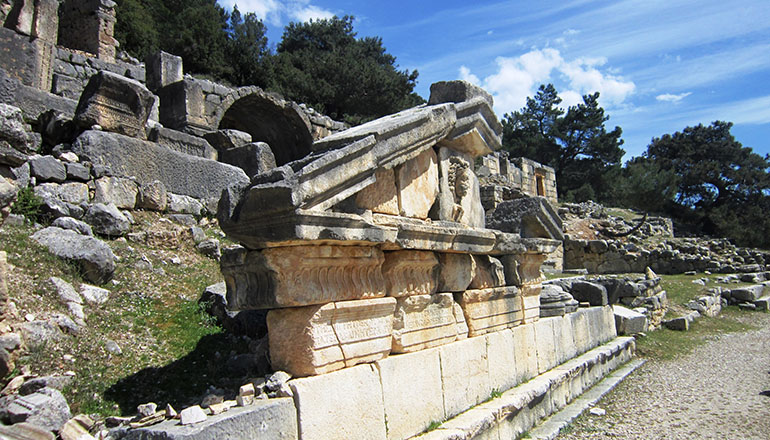
Constructed in 4 A.S. (A.D.), this monument carries a melancholic story: Gaius Caesar passed away in Limyra while returning to Rome from Jerusalem. Although his body was transported back to Rome, an empty monumental tomb (Cenotaph) was erected in Limyra to honor his memory. Renowned for its marble reliefs, this structure symbolizes the great importance Rome attributed to this city of waters.
The Layers of Limyra: The Theater, Ptolemaion, and Church
The topography of the city clearly separates its historical layers from one another. During your tour, make sure to see the following structures:
- Hellenistic Theater: Located at the point where the acropolis meets the plain, this structure—originally dating to the Hellenistic period—remains remarkably intact even in 2026.
- Ptolemaion: A monument built during the Hellenistic period in honor of the Egyptian-rooted Ptolemaic dynasty. The sculptures unearthed from this structure rank among the proudest collections of the Antalya Museum.
- Byzantine Fortifications and Churches: The episcopal church, indicating the importance of the city during the Christian era, along with the robust fortification walls surrounding the lower citadel, prove that the city remained active until the Middle Ages.
You can examine our Lycian Flora guide for rare plant species growing in this wetland and fertile geography of the region, and our Lycian Fauna guide for the waterfowl.
🏛️ The Water City of Lycia
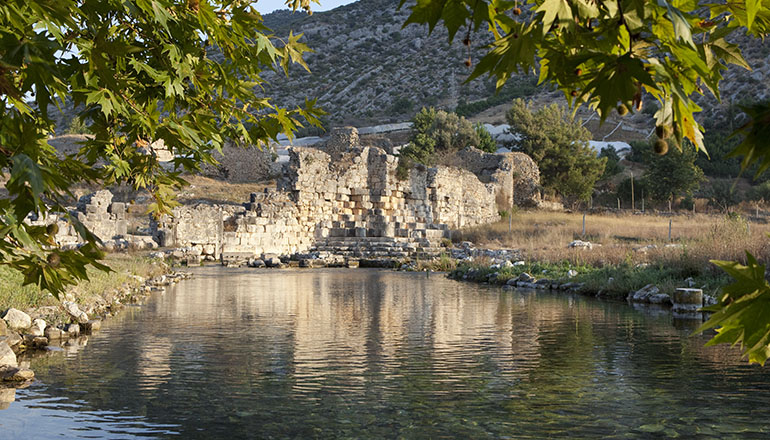
The Limyra Ancient City offers its visitors a cool sanctuary, especially during the summer months. The Saklısu springs, gushing right next to the ancient theater, flow through the ruins to form small crystal-clear ponds. It is known that this water was considered sacred in antiquity and formed an integral part of the city’s hydrological system. As you complete your tour, do not forget to walk along the colonnaded street on the western side of the city and photograph the landscapes along this stage of the Lycian Way route. You can follow the website of the T.R. Ministry of Culture and Tourism for current travel notes and excavation results for 2026.
🏛️ Frequently Asked Questions (FAQ)
Where is Limyra Ancient City and how is transportation provided?
The city is in the Saklısu Neighborhood, 7 km northeast of the Finike district of Antalya. It can be reached in about 10–15 minutes from Finike center via local minibuses (dolmuş) or private vehicles.
What is the most defining feature of Limyra?
Limyra is the city that possesses the highest number of rock-cut tombs (400+) in the Lycian region. Additionally, the natural water springs (Saklısu) flowing through the ruins of the city set it apart from other ancient sites.
What is the significance of the Gaius Caesar Monument?
It is an empty tomb (Cenotaph) built upon the death of Roman Emperor Augustus’s heir at this site. It stands as one of the most critical traces of Roman history in Anatolia.
Is the Museum Pass (Müzekart) valid and is there an admission fee?
Yes, Limyra holds the status of an official archaeological site, and the Museum Pass (Müzekart) is valid at the entrance. Visiting hours may vary seasonally.