

Phellos Ancient City: The Castle of Lycia in the Sky
Located in a quiet and mystical atmosphere far from the tourist crowds of Kaş, Phellos Ancient City stands as one of the most exceptional stops along the Lycian Way. Hearing its name for the first time around 500 B.C. from the geographer Hecataeus, this city fully deserves its Greek name “Phellos”, which translates to “Stony”. The city is a true “mountain settlement” where limestone cliffs are utilized like natural lines of defense and the acropolis leans against rugged slopes.
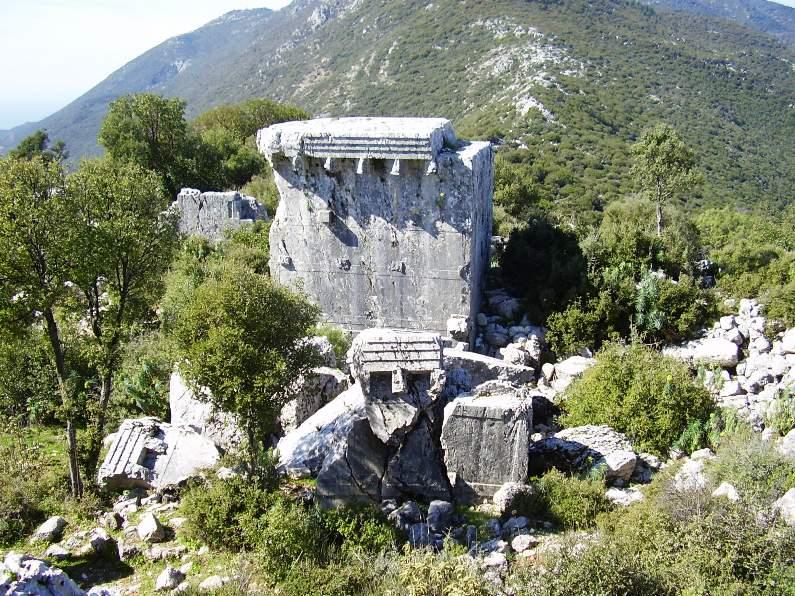
From Vehinda to Phellos: The Story of a Capital
Phellos was one of the most important power centers of the region during the 4th century B.C. Interestingly, the Antiphellos Ancient City located in modern-day central Kaş—which is globally recognized today—was originally established merely as a port for Phellos.
Over time, as maritime trade gained importance and transportation became easier, the population migrated to the coast. While Antiphellos grew wealthy, Phellos lost its significance as a defensive and observation fortress. However, this “abandonment” allowed Phellos to preserve its pure and untouched Lycian spirit to this day. The name Vehinda (or Wehinda in Lycian script) is the native Lycian language equivalent of the city’s Greek name, Phellos.
The Acropolis and Defensive Architecture
Architecturally, Phellos resembles a fortified military post rather than a standard residential area. The acropolis rising at the heart of the city is surrounded by fortification walls constructed from natural limestone blocks:
- Fortifications and Towers: Extending in the eastern and southern directions, the walls built with the rectangular technique reflect the military discipline of the city.
- Natural Fortification: Since the west side of the city is already surrounded by cliffs that are difficult to overcome, no fortification walls were required there.
- Rock-Cut Tombs: The house-type rock tomb located on the western edge of the acropolis stands as a rare example of how the famous wooden civic architecture of Lycia (Lycian houses) was flawlessly carved into stone.
The Necropolis Area: The Master of Sarcophagi
The true renown of Phellos Ancient City comes from its massive sarcophagi scattered across the valley north of the acropolis and along the skirts of the opposite hill. This area possesses one of the densest sarcophagi populations in the whole of Lycia.
The Famous Relief Sarcophagus (The Symposium Scene)
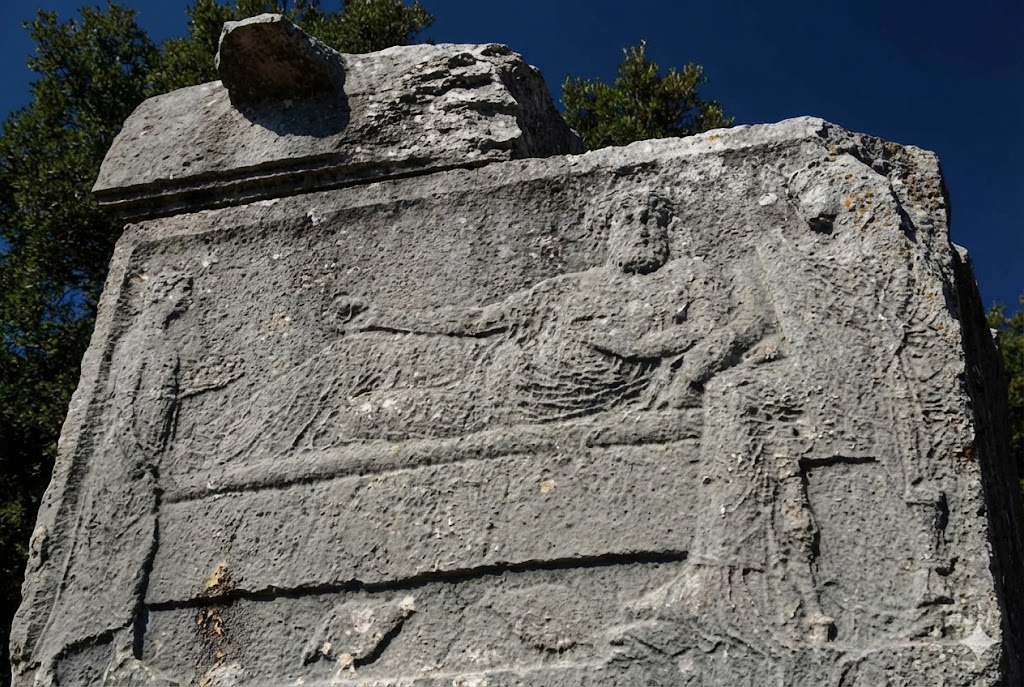
Accepted as the icon of Phellos, this sarcophagus left its mark on the period between 385 and 350 B.C. The details that make this monument unique include:
- The Tomb Owner: On one side of the sarcophagus, a tomb owner is depicted reclining on a kline (banquet couch) while holding a cup. This directly reflects the ancient “Symposium” (banquet) culture.
- Griffins: Facing griffin reliefs located on the pediment of the lid were carved as guardians of the tomb and symbols of nobility.
- Craftsmanship: Made of local limestone, this sarcophagus represents the pinnacle of Lycian art executed with the high-relief technique.
Geography and Nature: The Flora of the “Stony Country”
Situated at an altitude of 950 meters, Phellos is also unique in terms of its vegetation. Maquis species bursting through the rocks, centuries-old oaks, and endemic species specific to the region transform the city into a natural botanical garden.
You can visit our Lycian Flora guide for the plant species growing in this rugged and stony structure of the region, and our Lycian Fauna page for the local wildlife (especially predatory birds).
Technical Summary: Phellos Travel Guide 2026
| Criterion | Detail |
| Location | Antalya / Kaş / Çukurbağ (Vehinda) |
| Altitude | 950 Meters |
| Most Important Monument | Relief Sarcophagus (with Griffins) |
| Walking Distance | Approximately 20–30 minutes of climbing after vehicular access |
| Museum Pass (Müzekart) | Not valid (Entrance is Free) |
🏛️ History Embedded in Silence
The Phellos Ancient City is one of those rare settlements that has remained completely detached from mass tourism. When you climb to the highest point of the acropolis and look south, you see Kaş—which was once a “small port” of Phellos—and Kastellorizo (Meis) Island stretching beneath your feet. This view is the best vantage point to comprehend how the power balances of history shift over time. You can visit the official website of the T.R. Ministry of Culture and Tourism to access current information for 2026 regarding archaeological studies and official museum maps.
🏛️ Frequently Asked Questions (FAQ)
How do I get to Phellos Ancient City?
You need to turn towards the Çukurbağ direction from the Ağullu Neighborhood on the Kaş-Demre highway. Following the signs after Çukurbağ Village, you will reach the Phellen-Yayla locality. Since the final section of the road is unpaved (stabilized), choosing a high-clearance vehicle or walking from the skirts of the hill is highly recommended.
Is it on the Lycian Way route?
Yes, Phellos is located right along the Çukurbağ-Kaş route, which is one of the most enjoyable stages of the Lycian Way. Many hikers take a break on this hill to explore the ancient city before descending down into Kaş.
Is there an admission fee and is the Museum Pass (Müzekart) valid?
Currently, Phellos does not possess a ticket booth with an official archaeological site status; admission is free. However, protecting the nature and the ruins of the city remains the primary responsibility of the visitors.
What is the best time to visit?
While the center of Kaş scorches during the summer months, Phellos is cool and refreshing at an altitude of 950 meters. The most ideal times are April–May when nature awakens, or January–February when the winter sun warms the ancient stones.