

Podalia Ancient City: The Mystery on the Shores of Lake Avlan
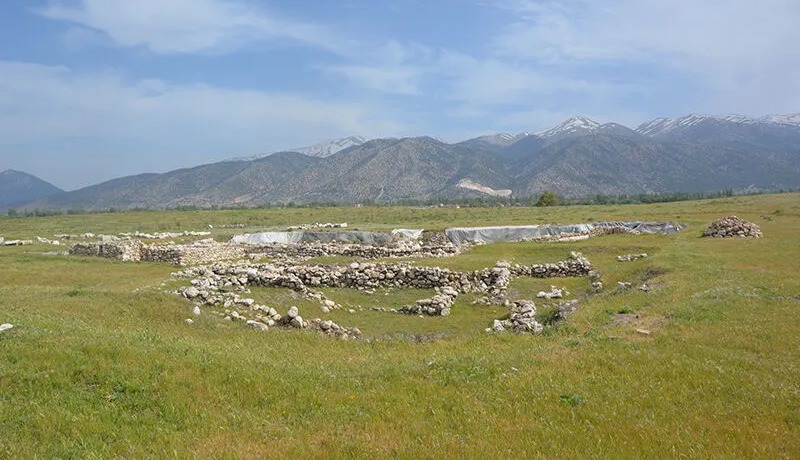
The silence prevailing over the locality of Lake Avlan—which was once fully covered with water—within the boundaries of Karamık Village in the Elmalı district of Antalya province, actually carries the subtle traces of an ancient city once full of vitality. Podalia Ancient City is a small but historically profound settlement established at a mountainous and strategic point on the northwestern border of Lycia.
Mentioned only in a limited manner within ancient and medieval written sources, Podalia did not reveal its definitive location to anyone for many years, remaining hidden beneath the soil. However, recent surface surveys and numismatic hoard discoveries have begun to clear the veil of mist surrounding this mysterious city.
A Numismatic Phenomenon: Fame through Coinage
Podalia is one of those rare ancient cities that gained great renown through its coinage long before its architectural remains were identified. The roots of this intriguing situation trace back to the 17th and 18th centuries.
The Mysterious Coin in the Medici Collection
A unique coin found within the collection of the famous Medici Family of Florence—the great patrons of the Renaissance—stands as the first concrete evidence to bring the name of Podalia to the global stage. This specific coin entered the academic literature by being published even before those of major Lycian metropolises like Limyra and Myra.
A Surprising Paradox
Despite gaining such early recognition in the history of research, very few coin specimens belonging to Podalia are known to exist today. This situation suggests that the city either minted coins for a very brief period or that a large portion of its minted coinage has yet to be discovered. Reassembling these rare coins, scattered across global museums and private collections, will open brand-new windows into the economic and political history of this lesser-known Lycian settlement.
The Discovery That Shook the Archaeological World: The Podalia Hoard
The primary event that firmly etched the name of Podalia into modern archaeological literature was a monumental discovery made in 1957. Discovered by chance in the region and subsequently named the “Podalia Hoard” (or Podalia Treasure), this find proved that the city was not merely a minor mountain town but also harbored significant wealth.
- Contents: The hoard consisted of a massive quantity of silver coins (staters and drachms) belonging to the Lycian League and neighboring city-states.
- Significance: This collective find provided priceless data for understanding the specific currencies in circulation throughout Lycia during the early 2nd century B.C., inter-city economic relations, and the financial structure of the Lycian League.
The Location Debate: Where is the City Hiding?
The definitive location of Podalia has been a subject of long-standing debate among archaeologists. The scarcity of written ancient sources combined with the lack of structural remains led to the emergence of differing theories.
The Strongest Theory: Buralye Hill
Today, the most widely accepted view among researchers is the location proposed by the 19th-century travelers Petersen and von Luschan. According to this premise, Podalia should be sought upon Buralye Hill, which:
- Sits along the strategic valley connecting the Elmalı Plain to the Arykanda Ancient City,
- Rises on the northern shore of Lake Avlan.
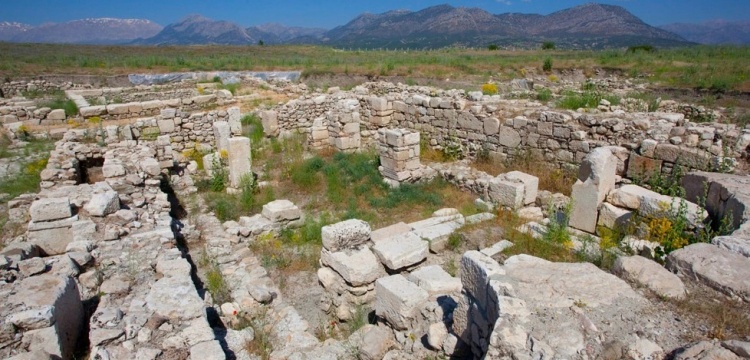
The strongest evidence supporting this theory is the phonetic name similarity between “Buralye” and “Podalia”, alongside unexcavated surface remains found at the foot of the hill. Traces of potential fortification walls and ceramic fragments on the hill point to a fortified settlement.
Lake Avlan and the Environmental Context
To fully comprehend Podalia, one must understand the geography in which it was established, particularly Lake Avlan. It is thought that the water level of the lake in antiquity was different than today, and the city might have possessed a port or a pier connection on the lake’s shore.
Although the karstic (limestone) structure of the region offers a highly suitable ground for typical Lycian rock-cut tombs, no monumental funerary structures have yet been encountered around Podalia. This suggests that the city either practiced a different burial tradition or its necropolis awaits discovery.
You can visit our Lycian Flora guide for the plant species growing in this high-altitude wetland geography of the region, and our Lycian Fauna page for the wildlife around the lake.
Technical Summary: Podalia Exploration Guide 2026
| Criterion | Detail |
| Location | Antalya / Elmalı / Karamık (Lake Avlan) |
| Probable Location | Buralye Hill |
| Most Important Find | Podalia Hoard (Silver Coins) |
| Current Status | Unexcavated (Surface Traces Only) |
| Museum Pass (Müzekart) | Not valid (Not an official archaeological site) |
🏛️ The Discovery of the Future
The Podalia Ancient City is like the “sleeping beauty” of Lycian archaeology. In a mysterious corner of the Elmalı Plain, theaters, agoras, and temples might be waiting to be discovered right beneath the soil. Although it appears today merely as a hill commanding a lake view, future scientific excavations will reveal the true face of this northern outpost of the Lycian League. Do not forget to follow the website of the T.R. Ministry of Culture and Tourism for current research news for 2026.
🏛️ Frequently Asked Questions (FAQ)
How do I get to Podalia Ancient City?
After reaching the Elmalı district of Antalya, you need to head towards the direction of Lake Avlan (Karamık Village) via the Finike highway. Buralye Hill stays to the north of the lake. However, there is no official entrance or signage for an archaeological site.
Are there any visible ruins to visit?
Currently, there are no monumental structures visible on the surface (such as a theater or temple). Visitors generally travel to the region to observe the strategic geographical positioning of Buralye Hill and enjoy the view of Lake Avlan.
Are there any active excavations being conducted?
No, systematic archaeological excavations have not yet been initiated in Podalia. Our knowledge remains strictly limited to surface surveys and coin hoards.
Where is the Podalia Hoard exhibited?
Unfortunately, pieces of the hoard were scattered after their discovery. A portion is preserved in Turkish museums (such as the Antalya Museum), while a significant number of pieces reside in overseas collections.