

Pydnai Ancient City: The Silent Guardian at the Western Gate of Patara
Located within the boundaries of the Seydikemer district of Muğla province, exactly at the westernmost tip of Patara Beach—one of the longest coastal stretches in the world—Pydnai Ancient City stands as one of the rare settlements where you can observe Lycian defensive architecture in its rawest form. While most travelers spend time on the sands of Patara completely unaware of its presence, this ancient settlement continues to challenge time with its fortress walls and typical Lycian sarcophagi.
The most significant feature setting Pydnai apart from other cities is the lack of extensive archaeological excavations or research conducted on-site to date. This untouched nature infuses the city with a mystical atmosphere, keeping the thrill of discovery alive with every step.
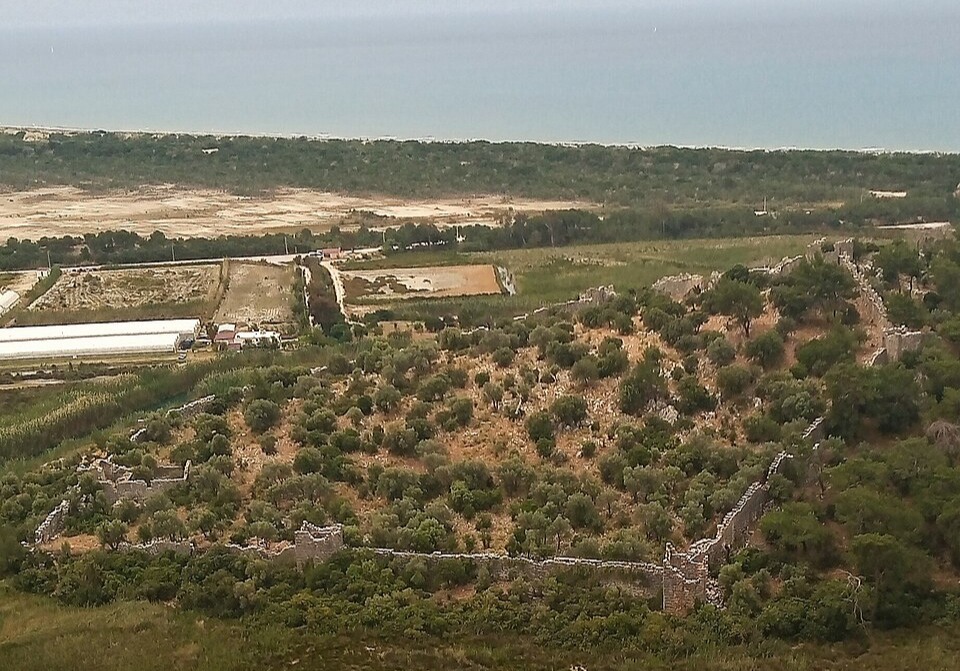
The Lycian Defense Line and Fortress Architecture
Rather than behaving as a grand metropolis, Pydnai possesses the identity of a strategic military garrison or an outpost city. The most prominent remaining feature of the town is its fortification walls, which wrap around the hill like a belt:
1. Magnificent Fortification Walls
The fortification walls of the city carry the characteristic traits of Lycian defensive architecture, seamlessly blending rectangular and polygonal masonry techniques. Bastions and watchtower remains visible at various intervals along the walls prove how well-prepared the city was against potential assaults launched from the sea.
2. Lycian Sarcophagi: Silent Witnessing
Lycian-type sarcophagi scattered along the slopes and around the fortress settlement indicate that Pydnai was not merely a military garrison but also hosted a permanent resident population. Although the decorative elements on the sarcophagi have eroded over time, their distinct forms whisper that this site was an inseparable part of the Land of Light.
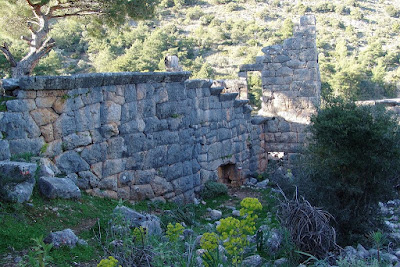
The Hidden Stop of the Lycian Way
Pydnai Ancient City stands as a critical checkpoint along the Lycian Way, ranked among the top long-distance hiking routes in the world. This intersection of nature, sport, and history generally features heavily on the itineraries of adventure-seeking backpackers.
- Significance for Hikers: For those trekking the Patara-Letoon stage, Pydnai serves as an ideal spot to catch one’s breath and immerse oneself in historical depth.
- The View: When you stand at the highest point of the fortress and look east, the endless view of the 18-kilometer Patara Beach welcomes you. This panoramic perspective is more than enough to comprehend exactly why the city was established on this specific hill.
You can check out our Lycian Flora guide for the vegetation growing in this rugged yet fertile geography, and our Lycian Fauna page for the surrounding bird species.
🏛️ The Connection Between Pydnai and Neighboring Cities
Rather than functioning as an isolated settlement, Pydnai operated as an external outpost protecting the major hubs of the Lycian League. The following table illustrates Pydnai’s relationship with the neighboring powerhouses:
| Neighboring City | Distance | Type of Relationship |
| Patara (Pttara) | 18 km by sea | Connection to the primary harbor and religious center. |
| Letoon (Elewina/Lada) | Approx. 6 km | Religious processional route and administrative protection. |
| Xanthos (Arñna) | Approx. 10 km | The primary defense line opening the capital to the sea. |
🔍 Why Pydnai? Secrets of a Lost Treasure
The absolute scarcity of written records has historically prevented Pydnai from achieving its well-deserved prominence on the stage of history. However, this absence transforms the city into a “lost treasure awaiting discovery.”
Although the name of the city is not explicitly emphasized in the records of the ancient writer Stephanus or native Lycian inscriptions, its logistical importance in the corridor between the Xanthos Ancient City and Letoon is undeniable. Future surface surveys and systematic excavations will likely unearth Pydnai’s true name or its exact administrative function within the Lycian League.
Technical Summary: Pydnai Travel
Notes 2026
| Criterion | Detail |
| Location | Muğla / Seydikemer / Karadere |
| Highlight Structure | Fortress Walls and Bastions |
| Transportation Difficulty | Moderate (Requires trail hiking) |
| Vegetation | Myrtle, Laurel, and Calabrian Pine |
| Museum Pass (Müzekart) | Not valid (Entrance is Free) |
🏛️ History Enfolded in Nature
The Pydnai Ancient City is one of those rare stops where mass tourism has not yet reached, and where silence stands face-to-face with history. While gazing at the sea from between the bastions of the fortress, it is completely possible to view the horizon through the exact eyes of a Lycian soldier scanning for pirate raids thousands of years ago. Do not forget to follow the website of the T.R. Ministry of Culture and Tourism for current research news for 2026.
🏛️ Frequently Asked Questions (FAQ)
How do I get to Pydnai Ancient City?
You can reach the site by traveling to the Karadere Neighborhood via Seydikemer. It is situated on the hill immediately adjacent to the Özlen Stream at the westernmost tip of Patara beach.
Is there an admission fee and is the Museum Pass (Müzekart) valid?
Pydnai does not currently hold the status of a organized archaeological site with a ticket booth; therefore, admission is entirely free. However, reaching the area may require crossing somewhat rugged terrain.
Is swimming permitted nearby?
Yes, the Karadere and Özlen coasts, which form the direct extension of Patara beach, lie right at the foot of the city. Following your historical excursion, you can cool off at the precise point where the ice-cold Özlen Stream empties into the sea.
Are there camping options available for Lycian Way hikers?
Camping grounds and local guesthouses are readily available in the Karadere locality situated in close proximity to the city.