

Teimiussa Ancient City: The Quiet and Dignified Legacy of Üçağız
While traveling from Antalya toward Kaş, turning off the main highway and winding down toward the sea brings you to modern-day Üçağız, known in antiquity as Teimiussa Ancient City. Located approximately 18 kilometers from Kaş and 20 kilometers from Demre, this settlement boasts one of the most sheltered natural harbors in Lycia. With a deep-rooted history stretching back to the 4th century B.C., Teimiussa functioned not as a massive city-state, but rather as a boutique port town renowned for its extensive necropolis and its role in providing logistical support to neighboring metropolises.
Today, walking through the village and seeing ancient ruins seamlessly intertwined with the walls of modern houses stands as concrete proof of how time has stood still on these lands.
The Lycian League and Teimiussa’s Political Role
Throughout history, rather than acting as an isolated entity, Teimiussa Ancient City maintained its existence within a sympolity (Sympoliteia) federation:
- The Four-City League: Teimiussa was part of a federation alongside Aperlai, Simena (Kaleköy), and Apollonia. Within this league, Aperlai assumed the role of the “capital,” while Teimiussa served as one of the safest gateways opening this alliance to the sea.
- Historical Evidence: Inscriptions and native Lycian scripts found in the region show that the city was already a mature settlement by the 4th century B.C. The origin of the city’s name is rooted in the ancient languages of Anatolia, proving it was a living center long before Hellenization. You can find more details regarding these linguistic roots in our Lycian Place Names guide.
🏛️ Architectural Remains: History Rising from the Sea
While Teimiussa does not offer a grand theater or massive temples, it holds a unique place in the world of archaeology due to its exceptional necropolis and ancient harbor structures:
1. The Massive Necropolis (Cemetery) Area
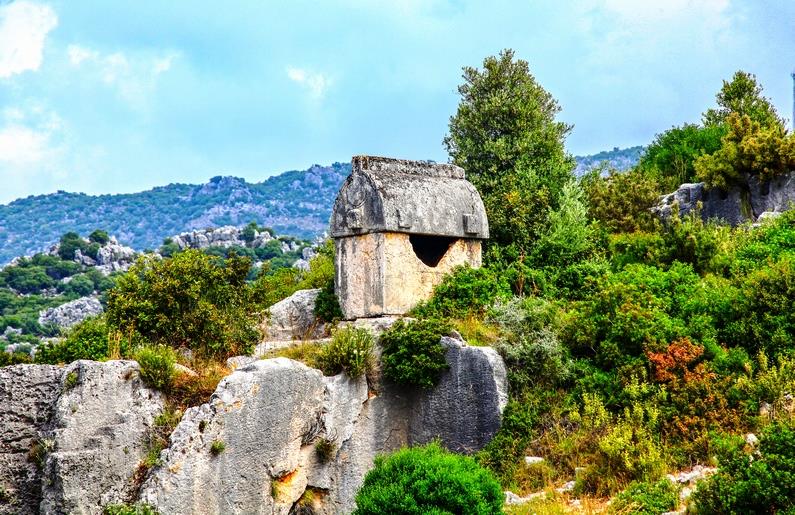
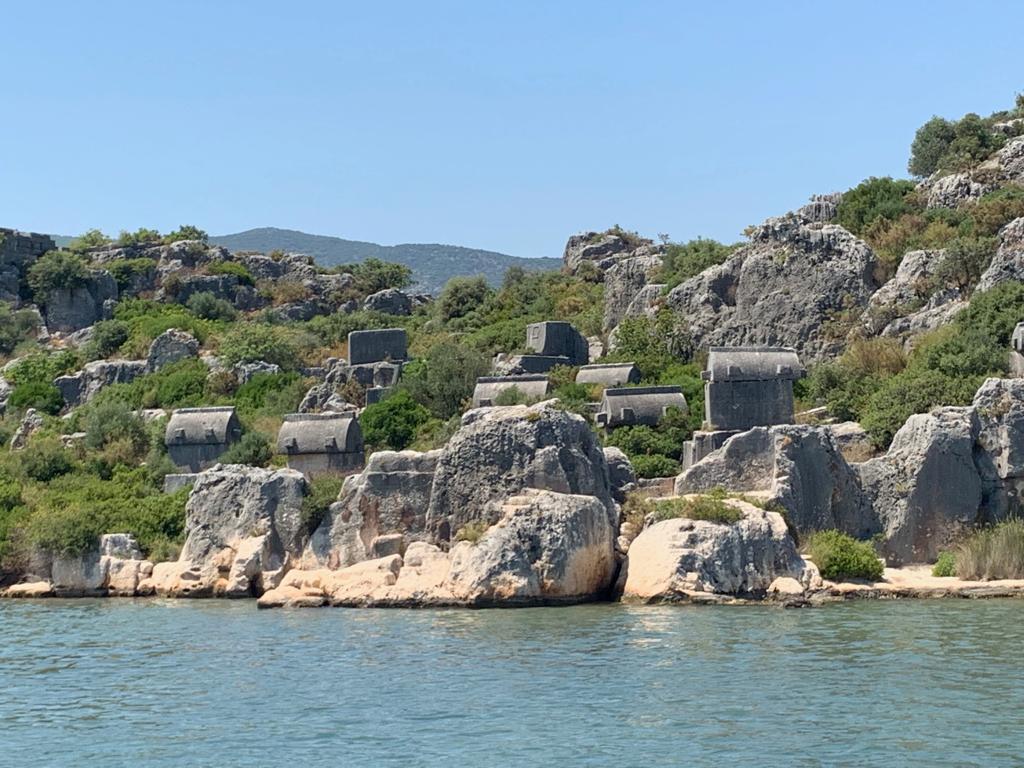
Welcoming you right from the entrance of the village, hundreds of sarcophagi define the true character of Teimiussa Ancient City. Dating predominantly to the Roman period and clustering heavily near the pier area, these sarcophagi are so numerous that they once caused the city to be referred to as a “city of the dead.”
- Sarcophagus Types: Most of the tombs reflect the traditional wooden house-type architecture of Lycia. The craftsmanship on the lids provides significant clues regarding the social status of the families who once lived here.
2. The Ancient Pier and Quay
On the eastern edge of the city lies a magnificent structure created by masterfully cutting into the natural bedrock. Measuring 28 meters long and 8 meters wide, this ancient pier demonstrates the maritime commercial capacity of Teimiussa Ancient City. Visible even today at sea level, this quay stands as a testament to the durability of ancient engineering.
3. The Fortress and Watchtower
Looking up toward the rocky hill overlooking the village, you can spot the remains of a small gate and watchtower left from the city’s defensive system. This tower was constructed at a strategic vantage point to keep both the harbor and any potential threats coming from Kekova Island under close surveillance.
🏛️ Four Defining Features to Know
About Teimiussa
| Feature | Detail |
| Positional Advantage | The most sheltered natural harbor in the Kekova region. |
| Funerary Culture | Hosts one of the densest sarcophagi populations in Lycia. |
| Engineering Marvel | Globally famous for its ancient pier, carved from a 28-meter monolithic rock. |
| Tourism Role | Fulfills its duty as the main departure point for Simena and Sunken City boat tours. |
Nature and Tourism: The Gateway
to Kekova
Today, thanks to its natural harbor, Üçağız has become one of the most popular hubs for yacht tourism. After wandering through the ruins of Teimiussa Ancient City, embarking on boat tours departing from the pier to explore Simena (Kaleköy) and Kekova Island is practically a must.
- Blue and Green: The region is situated within the Kekova Specially Protected Environmental Area. Observing the sunken ruins of the ancient harbor through glass-bottom boats beautifully illustrates how history and nature have merged.
- Flora and Fauna: The surrounding sweetgum trees (Liquidambar) and characteristic Mediterranean maquis represent beautiful examples of the Lycian Flora. If you are lucky, you might spot sea turtles (Caretta Caretta) swimming in the bay during your tour. You can check out our Lycian Fauna page for the diverse wildlife in the region.
2026 Travel Notes and Recommendations
- Morning Walk: Explore the necropolis area before the sun gets too high. The morning light filtering over the sarcophagi creates a spectacular atmosphere for photography.
- Local Flavors: In addition to fresh seafood at the village restaurants, do not forget to try the region’s signature carob molasses and freshly brewed wild sage tea.
- The Kayak Experience: If you have the time, renting a kayak from Üçağız and paddling past the half-submerged sarcophagi to Simena is the ultimate way to crown your visit to Teimiussa Ancient City.
🏛️ Stones Defying Time
The Teimiussa Ancient City reminds us that great empires were sustained not only by colossal temples but also by small, reliable harbor towns like this. Enjoying a cup of coffee at Üçağız today means you are sitting directly atop a trade and life route that has bustled for thousands of years. Do not forget to follow the official website of the T.R. Ministry of Culture and Tourism to keep up with current preservation efforts and restoration news for 2026.
🏛️ Frequently Asked Questions (FAQ)
How do I get to Teimiussa Ancient City (Üçağız)?
You can reach Üçağız via a scenic 10-to-15-minute drive after turning off at the Çevreli Village sign on the Antalya-Kaş highway. The views along the road are exceptionally striking.
Is there an admission fee and is the Museum Pass (Müzekart) valid?
Because Teimiussa is completely integrated with the modern village of Üçağız, it is an open site and admission is free. However, adhering to the guidelines set for protecting the ancient ruins is highly important.
Where is the ancient pier located?
Following the eastern shoreline of the village, you will easily spot a wide platform where the rocks have been cut vertically to meet the sea. This is the 2,400-year-old ancient pier.
Are there lodging options available?
Yes, Üçağız has a highly developed network of local guesthouses (pansiyons). Staying in boutique, seafront guesthouses in the shadow of ancient tombs is a truly unmatched experience.