
Lycian Travel Guide: When to Go, How to Get Around, What to See
This Lycian Travel Guide is for those who want to explore the Land of Light, stretching from Fethiye to Antalya, on their own terms. Here you will find how to divide the region into manageable parts, when to go, how to get around and a few sample routes of different lengths. For the history of each city, see our Ancient Cities pages; for walking, see our Lycian Way guide.
📌Contents
Lycian Travel Guide: Getting to Know the Region
Lycia is a mountainous peninsula between the Gulf of Fethiye and the Gulf of Antalya. The Taurus Mountains come right down to the sea, so the coast road is winding and even short distances take longer than you might expect. The easiest way to explore is to divide the region into four parts and use one town as a base in each.
Western Lycia (base: Fethiye or Kalkan)
The Eşen (Xanthos) valley, home to Lycia’s largest cities: Tlos, Pinara, Xanthos (capital of the League), the sanctuary of Letoon and Patara, where the League assembly met. Xanthos and Letoon are on the UNESCO World Heritage List. Saklıkent Gorge is close to Tlos.
Central Lycia (base: Kaş)
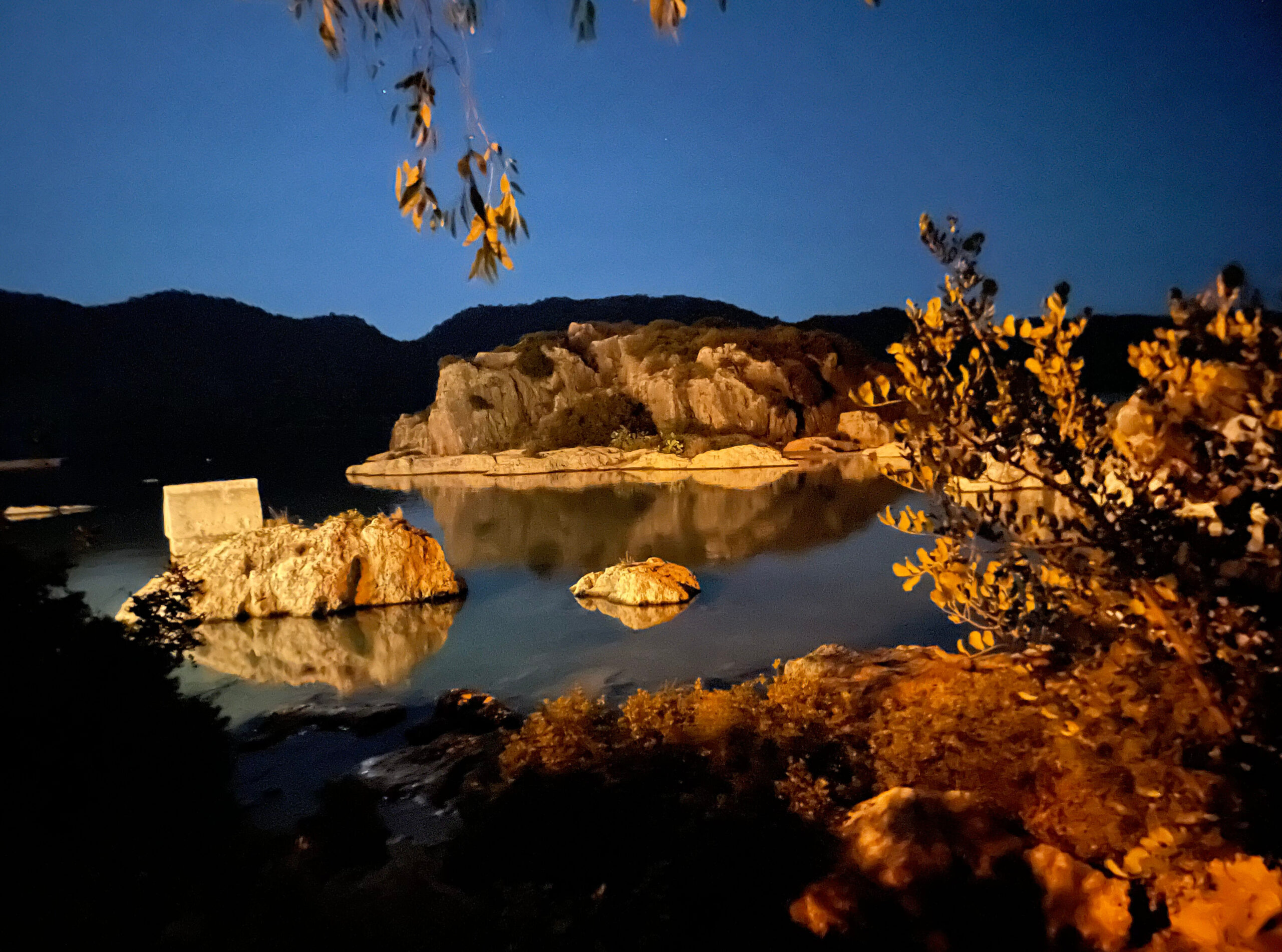
In Kaş, the theatre of ancient Antiphellos sits in the middle of town. At Kekova you will find the castle, small rock-cut theatre and sea-washed sarcophagi of Simena (Kaleköy). Demre has the rock-cut tombs of Myra, the Church of St Nicholas and the harbour of Andriake, whose granary now houses the Museum of Lycian Civilisations.
Eastern Lycia (base: Çıralı, Olympos or Kemer)
Limyra near Finike, Arykanda on its mountain slope, Olympos hidden in the forest, the eternal flames of Yanartaş (Chimaera) and Phaselis with its three harbours.
Inland Lycia and the Highlands (base: Elmalı)
Cool highlands, apple orchards and quiet ancient sites for those who want to escape the heat of the coast.
When to Go
- Spring (March–May): The best season for ancient sites and walking. The countryside is green, flowers are in bloom and temperatures are ideal. The sea warms up towards late May.
- Summer (June–August): Ideal for swimming and boat trips, but the heat is exhausting at shadeless sites. Visit early in the morning or late in the afternoon.
- Autumn (September–November): The sea is still warm and the crowds thin out. The most balanced season for both sightseeing and swimming.
- Winter (December–February): Mild but rainy on the coast, with snow in the mountains. Some businesses and boat trips close, but the sites are peaceful and the light is beautiful for photography.
Getting There and Getting Around
Airports: Dalaman is the closest airport to Western Lycia; Fethiye is about an hour away. Antalya Airport is closer to Eastern Lycia. Kaş lies roughly halfway between the two. Flying into one and out of the other lets you travel the whole coast in one direction.
By car: The D400 coast road runs the length of Lycia from Fethiye to Antalya, and many coastal sites are a short detour from it. Renting a car is the most comfortable option for inland sites such as Tlos, Pinara, Arykanda and the highland roads. Approximate driving times: Fethiye–Kaş 2 hours, Kaş–Demre 1 hour, Demre–Olympos 1.5 hours.
Public transport: Regular buses and minibuses (dolmuş) run along the D400 between Fethiye, Kalkan, Kaş, Demre, Finike and Antalya, reaching sites near the main road such as Xanthos, Patara and Myra. Sites further from the main road may require a taxi or a tour.
By sea: Day boats to Kekova leave from Kaş and Üçağız. The sunken remains and Simena are best seen from the water.
Sample Routes
3 Days: The Heart of Lycia (base: Kaş)
- Day 1: Xanthos, Letoon and Patara. Finish with sunset on Patara beach.
- Day 2: Boat from Üçağız to Kekova and Simena. Climb to the castle and its theatre.
- Day 3: In Demre, the rock-cut tombs of Myra, the Church of St Nicholas and the Museum of Lycian Civilisations at Andriake.
5 Days: West to Centre (2 nights Fethiye, 3 nights Kaş)
- Day 1: Tlos and Saklıkent Gorge.
- Day 2: Pinara, Xanthos and Letoon.
- Day 3: Patara, then on to Kaş via Kalkan.
- Day 4: Kekova and Simena.
- Day 5: Myra and Andriake. Back in Kaş, sunset at the theatre of Antiphellos.
7–10 Days: The Whole Coast
Add Eastern Lycia to the 5-day route, with 2–3 nights in Çıralı or Olympos.
- Day 6: Limyra near Finike and Arykanda on the mountain road.
- Day 7: The ancient city of Olympos. In the evening, the flames of Yanartaş.
- Day 8: Phaselis and its coves, then depart from Antalya.
Spend any extra days in the Elmalı highlands or on short day stages of the Lycian Way.
Entry to Archaeological Sites
Most ancient sites and museums in Lycia are run by the Ministry of Culture and Tourism. Entry fees and opening hours are updated every year, so check the official muze.gov.tr website before your visit.
- MüzeKart: An annual card for Turkish citizens, valid at most Ministry sites and museums, with discounted and free options for certain groups.
- Museum Pass: Time-limited cards for foreign visitors. Check the official website to see which card suits your route.
- Night openings: In recent summers, some sites have stayed open into the evening. The 2026 programme included Patara and the Museum of Lycian Civilisations in Demre. The list may change from year to year.
- Some places, such as the theatre of Antiphellos in Kaş, are open and free. Natural sites such as Saklıkent are run separately.
Site Tips and Responsible Travel
- Go early: Most sites have little shade. The first hours of the morning are both cooler and quieter.
- Water and a hat: Carry plenty of water. The Lycian sun is strong even in spring.
- Footwear: Ancient stones are slippery and paths uneven. Wear closed shoes with a good grip.
- Leave the stones as they are: Do not climb on tombs or walls, and never take stones, pottery or coin fragments. It is against the law and an irreversible loss of heritage.
- Drones: Flying a drone at archaeological sites requires a permit.
- Beaches: Patara and Çıralı are nesting beaches for Caretta caretta turtles. During the nesting season, stay off the beach at night and do not disturb nest markers.
- Kekova: The sunken remains are protected and swimming around them is prohibited. Enjoy them from the boat.
Where to Stay, What to Eat
Use the base towns in this guide as your starting point. For options in Fethiye, Kalkan, Kaş, Çıralı and Elmalı, see our Lycian Accommodation Guide. After a day of exploring, discover the region’s olive oil dishes, wild herbs and seafood in our Lycian Gastronomy guide.
❓ Frequently Asked Questions
How many days do I need to explore Lycia?
Three days are enough to get to know one region. Five days let you see Western and Central Lycia comfortably, and a week to ten days is ideal for the whole coast.
Can I visit the sites in summer?
Yes, but avoid the middle of the day. Early mornings and late afternoons are best, and sites in the night opening programme can be visited in the evening.
Is the MüzeKart valid for foreign visitors?
The MüzeKart is for Turkish citizens. Foreign visitors should look at the Museum Pass options. Current conditions are on muze.gov.tr.
Can I swim at the sunken remains in Kekova?
No. The area is protected and the remains can only be viewed from a boat. Swim in the coves where the boats stop instead.