
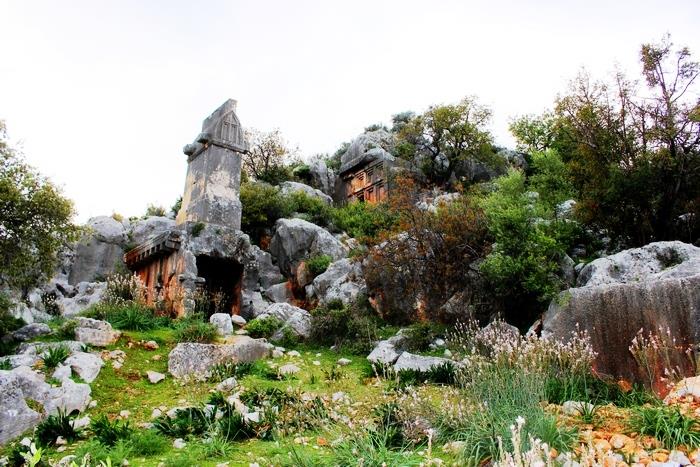

Sura Ancient City: The Sacred Oracle Gate of Myra
Located near the Demre district of Antalya, in the Çayağzı region situated just behind the Andriake Harbor, Sura Ancient City stands as one of the most unique settlements in the ancient Lycian geography. Entering the stage of history in the 4th century B.C., this city is referred to by a name meaning “the people of Soura” in the Hellenic tongue. Throughout history, Sura served not merely as a residential area, but specifically as the spiritual and sacred center of Myra and its surrounding territories.
As one of the rare ancient cities that preserves its original name to this day, Sura promises its visitors ancient knowledge of the future whispered from between the stones.
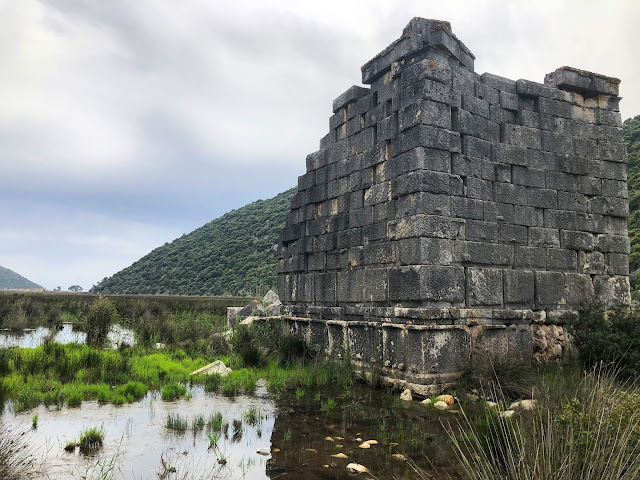
🐟 The Fish of Apollo: Sura Ancient City and the Curious Oracle Ritual
The most prominent feature that made Sura famous in the ancient world was the Oracle Center of Apollo located here. According to accounts by ancient writers (especially Aelianus and Pliny), a method unparalleled in the world was utilized here to foresee the future.
Details of the Ritual:
In this ceremony, performed at the source of the water spring in the deep valley feeding the oracle pool, priests would dip skewers laden with meat into the water. The manner in which the fish in the pool approached the meat—whether they swarmed in countless numbers or rejected the offering entirely—determined whether the prophecy would be auspicious or unfavorable. Sura Ancient City drew the attention of not only the local population but the entirety of the Lycian League with this mystical “fish oracle.”
The Architectural Treasures of Sura Ancient City
Despite being a small settlement, the ruins in Sura clearly manifest the religious and military significance of the city:
1. The Acropolis and Watchtower
The acropolis, forming the defense line of the city, is situated upon a strategic hill. The watchtower facing north allowed the city to keep both the sea (Andriake Harbor) and the land under surveillance.
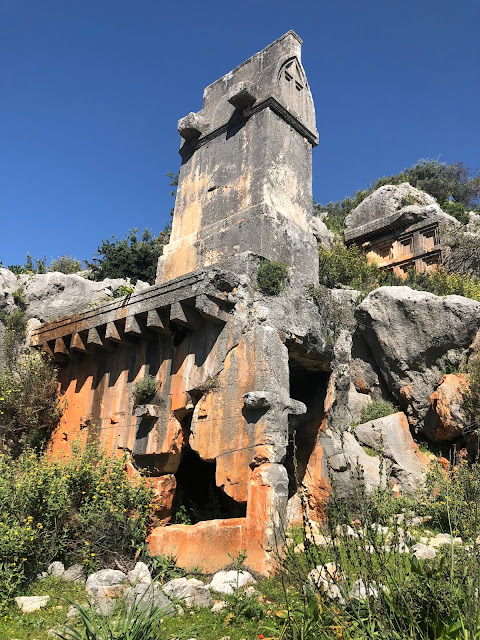
2. The Monumental Sarcophagus: The Giant Tomb
of Lycia
One of the most remarkable ruins in Sura is the monumental tomb, which stands as one of the largest known sarcophagi of the ancient era. This massive stone structure is concrete proof of the wealthy nobles the city once hosted.
3. The Temple of Apollo and the Oracle Pool
The temple ruins located within the deep depression of the valley and the pool where the oracle rituals were performed constitute the heart of the city. The sanctity of the water spring here is believed in even today.
4. The Byzantine Heritage
Sura was an important stop during the Christian era as well, not just during pagan times. The Byzantine church and residential ruins found in the city show that the settlement preserved its religious significance in later periods too.
🏛️ Three Defining Features to Know About Sura
| Feature | Detail |
| Type of Oracle | The only center in the world where “fish oracles” were practiced. |
| Proximity | Possesses a direct logistical connection with Myra and Andriake Ancient City. |
| Monumental Structure | Hosts one of the largest Lycian sarcophagi in the region. |
Geography and Nature: The Wetland Garden of Myra
Geographically, Sura was established over a wet and fertile valley. These water resources both fed the oracle pools and enriched the vegetation of the region. It is highly common to observe moisture-loving plant species of the Lycian Flora around Sura. Furthermore, due to its proximity to the Andriake bird sanctuary, it stands as an exceptionally rich observation point in terms of the Lycian Fauna.
2026 Travel Notes and Recommendations
- Find the Giant Sarcophagus: Make a short climb to find the famous giant sarcophagus located slightly above the road; its view is marvelous.
- Listen to the Silence: Sura is not as crowded as Myra. It is the most ideal place to sit by the ruins of the Temple of Apollo and listen to the whispers of antiquity.
- Combine with the Andriake Museum: Following your excursion to Sura, stop by the nearby Museum of Lycian Civilizations (Andriake) to see the artifacts recovered from the region.
🏛️ A Timeless Stop
The Sura Ancient City is not merely made of stones; it stands as a monument to ancient humanity’s curiosity and faith in the face of the unknown. Even though those fish are no longer in the pool today, Sura’s water spring continues to flow with the very same freshness. Do not forget to follow the website of the T.R. Ministry of Culture and Tourism to keep up with current research news for 2026.
🏛️ Frequently Asked Questions (FAQ)
How do I get to Sura Ancient City?
You can reach it on the slopes directly opposite the Çayağzı (Andriake) junction, at approximately the 5th kilometer while driving from Demre center toward Kaş. Sarcophagi by the roadside will herald the entrance to the city.
Is there an admission fee and is the Museum Pass (Müzekart) valid?
Currently, Sura is not an enclosed archaeological site, and there is no admission fee. However, because the ruins are scattered across a wide area, coming prepared is highly recommended.
Does the oracle pool still stand?
The traces of the water spring and pool structure within the valley where the Temple of Apollo is located can still be distinguished; however, they are not as prominent as they were in the ancient period.
Can Myra and Sura be visited on the
same day?
Absolutely. The distance between them is only a few kilometers. You can tour Myra and Andriake in the morning, and breathe in the mystical atmosphere of Sura towards sunset in the afternoon.