

Gagai Ancient City: The Power of Lycia Stemming from the “Earth”
Located near Yenice Village, approximately 10 km southeast of the Kumluca district of Antalya, Gagai Ancient City is one of the most strategic points on the eastern wing of the Land of Light, Lycia. Etymologically, the name of the city has a fascinating origin. While the word “Ga” directly means “Earth” or “Land” in the Hellenic language, Gagai is defined as “The People of Gaga” or, in a sense, “The City of Earth.”
Gagai was not just a settlement; it was a center that held a voice in regional politics within the Lycian League through political alliances established with important neighboring cities such as Rhodiapolis and Korydalla. Reaching its peak especially during the Roman period, the city reflects the grandeur of the era with its architectural structures spreading from the foothills of the hill to the plain.
Historical Development and Political Alliances
Although Gagai Ancient City maintained its existence since the Classical and Hellenistic periods, it experienced its true major development during the Roman Imperial Period. During this era, the city was not limited merely to the acropolis on top of the hill but expanded with large public structures spreading across the flatlands.
The most striking feature of the city in the political arena was the local alliance formed under the leadership of Korydalla. By uniting with Rhodiapolis and Korydalla, Gagai obtained a shared representative power within the Lycian League. This culture of solidarity also reinforced the economic independence of the city, enabling Gagai to join the ranks of cities that minted coins in their own name. You can find more detailed information regarding the historical chronology of the city on our Lycian History page.
The Goddess Athena and Gagai Coinage
Among the archaeological finds, the most remarkable are undoubtedly the coins minted by Gagai. The depictions of Athena on these coins provide historians with a clear clue as to who the protective deity of the city was. Athena’s wisdom and warrior spirit were accepted by the people of Gagai not just as a religious symbol, but also as a spiritual power defending the strategic location of the city.
Architecture of the City: From the Acropolises to the Lower City
Due to its topographical structure, Gagai Ancient City consists of different sections. Each section tells a distinct story regarding the defense and social life strategy of the city:
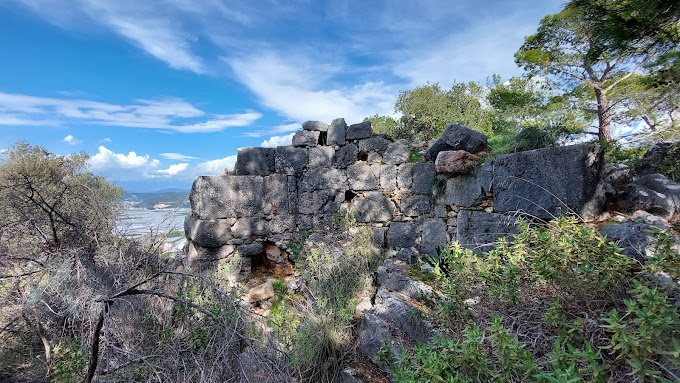
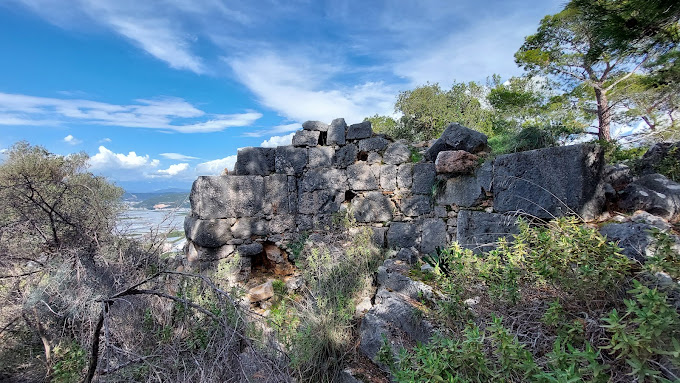
- The Upper Acropolis: Controlling the intersection of land and sea routes, this area houses the oldest structural remains of the city. Being the point where security was at the highest level, it served as a sort of administrative center.
- The Lower Acropolis: Located on the first hill rising from the sea, this region was the city’s initial point of contact with the outside world.
- Fortification Walls Against Arab Raids: It is estimated that a large part of the fortification walls seen in the city was constructed or reinforced during the Arab raids of the 6th and 7th centuries to protect the settlement.
- The City Center and Plains: Structures estimated to be a bathhouse, theater, aqueduct, and monumental fountain (nymphaion) are located on the plains west of the acropolis. Although the functions of these structures cannot be fully discerned today due to the destructive effects of time, they prove how rich the social fabric of the city was.
- The Necropolis Area: Tombs carved into the steep rocks on the northern slopes of the acropolis reflect the burial traditions of the city.
You can examine our Lycian Flora and Lycian Fauna guides for information on the vegetation and wildlife growing in this rugged geography of the region.
🏛️ A Strategic Observation Point
By virtue of its location, Gagai Ancient City was one of the most ideal places in antiquity to monitor the movements of mariners and caravans. Even today, when looking down from the hill, you can understand why the city was such an important defensive point. After completing your visit, you can expand your itinerary by browsing our Lycian Ancient Cities List. Do not forget to follow the website of the T.R. Ministry of Culture and Tourism for current archaeological works.
🏛️ Frequently Asked Questions (FAQ)
Where is Gagai Ancient City and how is the transportation?
It is within the borders of Yenice Village in the Kumluca district of Antalya. It can be reached by entering the Yenice Village turnoff while traveling from Kumluca toward Adrasan-Olympos. Since the ascent to the hill is somewhat strenuous, clothing suitable for hiking should be chosen.
What does the name Gagai mean?
It is derived from the root “Ga” (Earth) in the Hellenic language and means “The City of the Earth People” or “The Earth City.”
Which deity was worshipped in Gagai Ancient City?
Based on the figures found on the unearthed coins, it is believed that the chief goddess of the city was Athena.
Is there an admission fee and is the Museum Pass (Müzekart) valid?
Currently, entrance to the archaeological site is free, and there is no ticket booth. However, the region is a registered protected site.
What should be seen during a visit to Gagai?
In particular, the magnificent sea and plain view seen from the acropolis hill, the ancient fortification walls, and the bath remains on the plain should definitely be examined.