
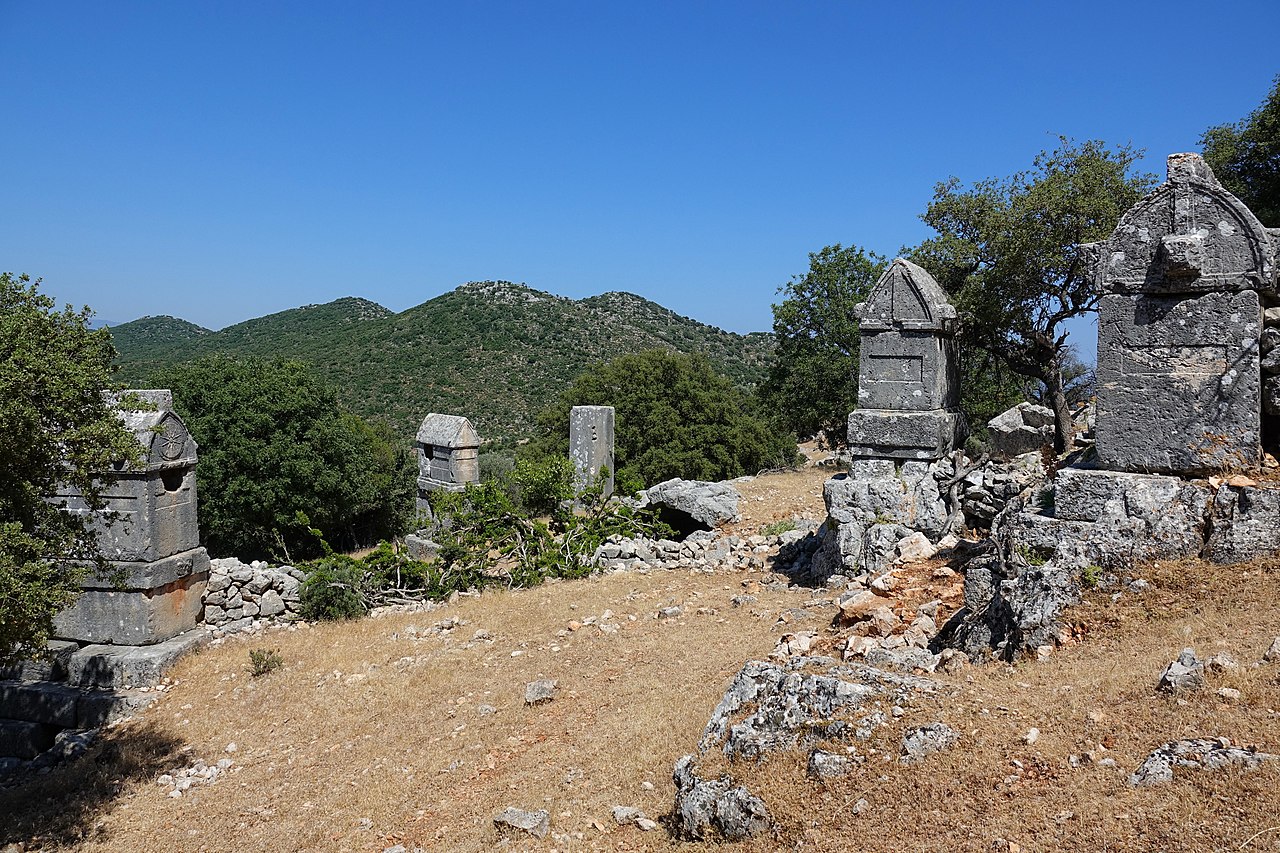

Apollonia Ancient City: The Hidden Slope of the Sun God
Located within the borders of Sahil Kılınçlı Village in the Kaş district of Antalya, in a locality known among locals as Asartepe, the Ancient City of Apollonia is one of the most authentic settlements of the Land of Light, Lycia. Situated on a strategic rocky outcrop just north of the Sıçak Peninsula, the city derives its name from Apollo, the supreme god of Lycia. The architectural texture and tomb types of the city are the most distinct features that set Apollonia apart from other Lycian cities.
Built upon a steep, L-shaped rocky hill, the settlement attracts attention with both its defensive advantage and its commanding view of the region. Today, parts of the walls surrounding the city and the remains of a massive cistern carved into the bedrock stand as proof of the level achieved by ancient engineering.
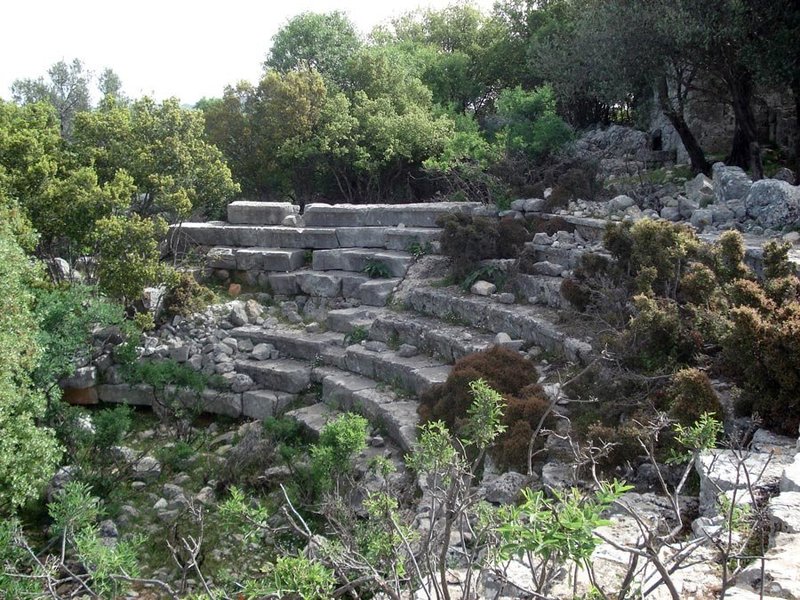
Apollonia’s Tomb Architecture: Traces of the Early Lycian Period
The necropolis (cemetery area) of the Ancient City of Apollonia holds a very special place among Lycian cities with its surviving tomb architecture. The tomb structures here are examples of what is called the “early period” of Lycia, reflecting the region’s unique character in its purest form.
- Pillar Tombs: The pillar tombs encountered in Apollonia are rare forms that can only be seen today in major metropolises like Xanthos and Pinara. This demonstrates the weight of Apollonia in early Lycian culture.
- The Heroon Monument: The most intriguing structure of the city, the Heroon, is a tomb monument with 6 prismatic bodies. This prismatic structural form does not appear in this way in any other ancient city in the world; it is a unique work specific to Apollonia.
- Rock Tomb with Offering Pits: At the western tip of the city, among the chamber tombs carved into the bedrock, there is a rock tomb featuring offering pits. These offering pits, which are not commonly found throughout Lycia, document how deep-rooted and distinct the city’s religious rituals were.
For a better understanding of these unique burial traditions of the region, you can examine our Lycian History page.
Sympoliteia and the Religious Role of Apollonia
By the 1st century A.D., Apollonia was part of a small local union (Sympoliteia) led by the Ancient City of Aperlai. This union also included cities such as Simena and Isinda. However, Apollonia stands out among these small union cities as the only settlement featuring a theater.
Archaeologists speak of the existence of a massive Temple of Apollo, the exact location of which has not yet been determined. The presence of the theater and the city’s name’s connection to the god Apollo strengthen the probability that Apollonia was the “cult center” of this small federation. It is believed that the city once hosted inhabitants of Aperlai as well, showing that it was an important stop in the region’s demographic mobility.
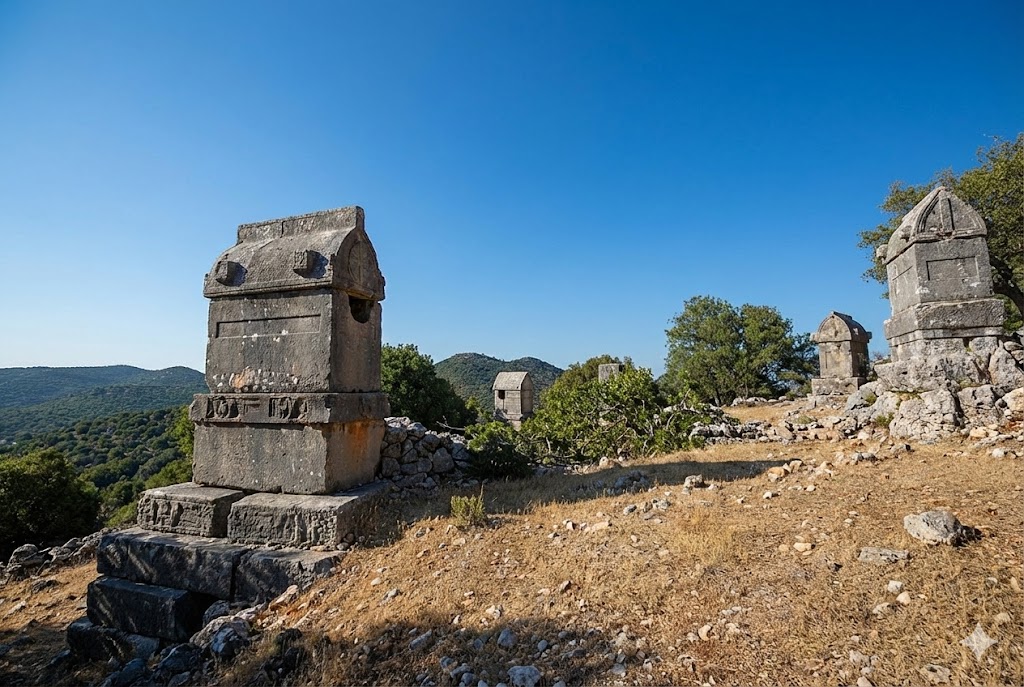
Byzantine and Ancient Structures to See in Apollonia
Not only traces of the Lycian period but also signs of the Byzantine era are quite evident in the city. The well-preserved Byzantine structure located west of the inner tower and the church remains dating to the same period demonstrate that the city maintained its importance during the Christian era.
- Church and Theater: Just west of the Byzantine church, the remains of an ancient theater that has succumbed to time can be seen. This theater was the center of the city’s social life.
- Main Rock Cistern: The massive cistern that met the city’s water needs inspires admiration with its craftsmanship.
- Rock Chambers: The rock chambers at the far western end provide clues about the city’s civil architecture and living spaces.
You can find detailed information about the vegetation you might encounter while wandering the steep slopes of Apollonia in our Lycian Flora guide.
🏛️ Apollonia Visit and Travel Recommendations
You can reach the Ancient City of Apollonia by turning into Sahil Kılınçlı village from the Kaş-Fethiye road. Since the city is located on a hill, it is recommended to choose appropriate walking shoes. You can visit the website of the T.R. Ministry of Culture and Tourism – Museum Card for archaeological updates and museum entrance information. The city is also a part of the world-renowned Lycian Way route.
🏛️ Frequently Asked Questions (FAQ)
Is there an entrance fee for the Ancient City of Apollonia?
For now, entrance to the site is free; however, up-to-date information should be followed regarding the site’s protected area status and regulations.
Why is the Heroon tomb monument so important?
Because this structural type, consisting of 6 prismatic bodies, is not seen anywhere else in the world’s archaeological literature outside of Apollonia.
Are there any excavation works in the city?
Rather than comprehensive excavations, Apollonia is a city that has been examined mostly through surface surveys and epigraphic studies; this indicates that it still contains mysteries waiting to be discovered.